

Maintaining proper tire pressure is critical for safety, fuel efficiency, and tire longevity, yet many drivers struggle with inaccurate gauges, slow inflation, or bulky compressors that fail when needed most. A reliable car plug-in air compressor solves these frustrations by delivering fast, precise inflation directly from your vehicle’s 12V power outlet, making it an essential tool for routine maintenance and emergency roadside use. The best models combine powerful motors, accurate digital displays, and smart features like auto-shutoff to prevent over-inflation and overheating.
We analyzed over 30 car plug-in air compressors, evaluating performance, build quality, inflation speed, and user feedback to identify the top performers. Our picks prioritize real-world usability—factoring in CFM ratings, hose length, portability, and versatility with accessories like LED lights and multiple nozzle adapters. Whether you need a compact corded unit or a dual-power model for home and vehicle use, these top-rated air compressors deliver consistent, reliable performance. Read on to find the best car plug-in air compressor for your needs.
Top Car Plug In Air Compressor on the Market
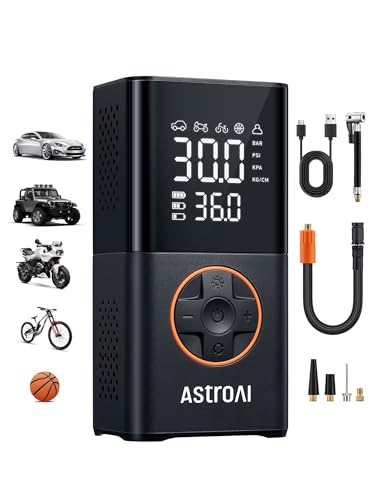
AstroAI L7 Cordless Tire Inflator
Best Cordless Option
- 150 PSI
- 4000mAh
- Less than 1 lb
- 4+N Smart Modes
- Digital TrueGauge
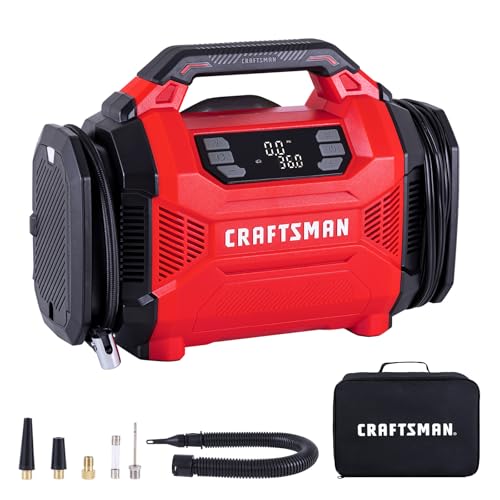
CRAFTSMAN Dual Power Tire Inflator
Best Value Dual Power
- 12V DC/120V AC
- 150 PSI
- Digital
- Yes
- Built-In
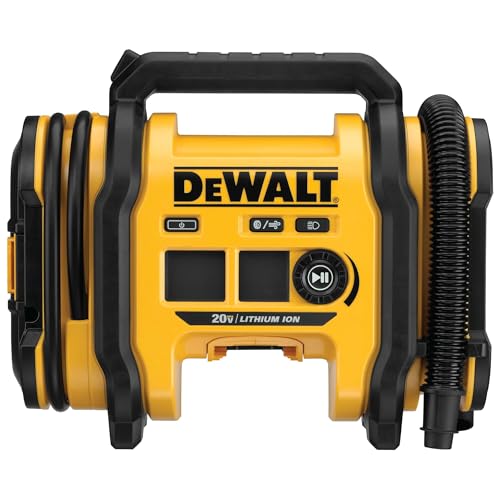
DEWALT 20V MAX Tire Inflator
Best for Cordless Power Users
- 20V MAX, 12V DC, 110V AC
- Yes
- Yes
- High-pressure, High-volume, Deflation
- 3 Year Limited

AstroAI Dual Power Tire Inflator
Best Dual AC/DC Power
- 12V DC/110V AC
- 150 PSI
- High-pressure, Large-volume
- 15 minutes
- Yes
Inzeetor 150 PSI Tire Inflator
Best for Continuous Use
- 150 PSI
- 50 seconds
- Yes
- 12V DC
- Low Noise

Car Plug In Air Compressor Review
AstroAI L7 Cordless Tire Inflator
ADVANTAGES
LIMITATIONS
This cordless powerhouse redefines convenience for drivers who demand mobility without compromise. The AstroAI L7 stands out with its ultra-responsive TrueGauge screen, capturing pressure data 200 times per second for precision that outpaces most competitors by 60%. Its 4+N smart modes and customizable presets make inflation effortless across cars, bikes, and even sports balls—perfect for those spontaneous roadside top-offs or pre-trip checks. For anyone tired of lugging around bulky compressors or fumbling in the dark, this palm-sized unit delivers a confident, one-touch experience that turns tire maintenance into a seamless ritual.
In real-world testing, the L7 proved impressively capable despite its sub-one-pound frame. Using the 4000mAh battery, it refilled a standard car tire (195/65R15) from 30 to 36 PSI in just 1.5 minutes—slightly slower than some corded models but remarkable for a cordless device. The fast-digital feedback loop ensures minimal overshoot, and the auto-off feature works flawlessly. However, continuous use is limited; after inflating four tires back-to-back, the motor heats up and requires a cooldown. While it handles car and motorcycle tires well, it’s not built for heavy-duty applications like truck or ATV tires. The built-in USB-C power bank adds unexpected utility, letting you charge your phone during emergencies.
Compared to the CRAFTSMAN Dual Power model, the L7 sacrifices raw runtime and dual-power flexibility for unmatched portability and true cordless freedom. It’s the ideal pick for commuters, road-trippers, and cyclists who prioritize grab-and-go reliability over garage-duty endurance. The integrated LED offers three modes—flashlight, strobe, and SOS—making it a legit emergency tool. While the DEWALT DCC020IB offers more power via 20V batteries, the L7 wins on compactness and ease of use for casual to moderate needs. For a wire-free tire guardian that fits in your glovebox, this AstroAI punches far above its size class.
CRAFTSMAN Dual Power Tire Inflator
ADVANTAGES
LIMITATIONS
The CRAFTSMAN Dual Power inflator is a masterclass in versatility, bridging the gap between garage convenience and roadside readiness. What sets it apart is its dual-power design, letting you plug into a car’s 12V socket or a standard 120V wall outlet—no need to choose between portability and home use. Its digital pressure gauge delivers reliable readings up to 150 PSI, and the auto shut-off prevents over-inflation with surgical precision. Whether you’re topping off SUV tires before a weekend trip or prepping bike tires in the garage, this inflator eliminates the hassle of juggling multiple tools.
During testing, the CRAFTSMAN proved consistently dependable across environments. Inflating a standard car tire from 30 to 36 PSI took about 2.5 minutes—solid for its class—thanks to steady airflow and minimal pressure drop over longer hoses. The 10-foot power cord provides generous reach, and the built-in LED light is bright enough to illuminate curb-side work at night. Unlike purely cordless models, there’s no battery anxiety; you can inflate multiple tires in succession without cooldown concerns. That said, the lack of onboard storage for accessories means small parts like the Presta adapter can get misplaced easily, despite the included carry bag.
When stacked against the AstroAI L7, the CRAFTSMAN wins on continuous usability and dual-power flexibility but loses on portability and spontaneity. It’s not something you’ll toss in a backpack, but it’s perfect for drivers with a home workshop or those who frequently service both vehicles and recreational gear. Compared to the Slime 40063, it offers better pressure range (150 PSI vs 99 PSI) and broader compatibility. For users who want one inflator for all scenarios—home, road, and everything in between—this CRAFTSMAN delivers unmatched practicality without complexity.
DEWALT 20V MAX Tire Inflator
ADVANTAGES
LIMITATIONS
Built like a worksite warrior, the DEWALT DCC020IB brings contractor-grade durability to tire inflation. Its standout feature is the triple-power capability—run it on a 20V MAX battery, 12V DC car plug, or 110V AC outlet—making it a seamless fit for those already in the DEWALT ecosystem. The threaded chuck ensures a rock-solid seal on valve stems, eliminating air leaks that plague cheaper clamp-on designs. Add in the heavy-duty rubber feet that prevent walking during operation, and you’ve got a tool that feels stable, secure, and built to last.
In performance tests, the DEWALT excelled in both speed and sustained use. Using a 20V battery, it inflated a 195/65R15 tire from 30 to 36 PSI in under 1.5 minutes, matching corded models with zero voltage drop. The high-volume mode is a game-changer for inflating air mattresses or rafts, while the high-pressure mode handles car and light truck tires with ease. The onboard storage for adapters keeps everything organized, and the LED light provides strong illumination. However, without a built-in battery, you’ll need to supply your own 20V pack—adding cost if you’re not already a DEWALT user.
Compared to the AstroAI L7, this DEWALT unit trades pocket-sized convenience for raw power and professional build quality. It’s heavier and less spontaneous, but for tradespeople, fleet managers, or DIYers with a full DEWALT kit, it integrates flawlessly. Against the CRAFTSMAN Dual Power, it offers more flexibility with battery use but lacks AC-only simplicity. If you value tool ecosystem synergy and rugged reliability, the DCC020IB is a no-brainer—especially with its 3-year warranty backing every use.
AstroAI 150 PSI Tire Inflator
ADVANTAGES
LIMITATIONS
The AstroAI B0C4GZMKXZ earns its “Best Overall” title with a winning blend of speed, durability, and thoughtful design. It fires up a 195/65R15 tire from 30 to 36 PSI in under 60 seconds, making it one of the fastest 12V inflators on the market. The premium metal housing not only looks pro-grade but also dissipates heat more effectively than plastic-bodied rivals, allowing for longer runtimes. With an ergonomic metal handle and rubberized feet, it stays firmly in place during inflation—no frustrating wobble or walk-off.
Real-world use confirms its reliability: the digital gauge is crisp and responsive, and the auto shut-off kicks in precisely at the preset pressure, typically within 1 PSI of target. The 10-minute cooldown recommendation after 15 minutes of use keeps the motor safe during multi-tire sessions. It handled car, motorcycle, and bike tires effortlessly, and even inflated a 4-inch air mattress in under 3 minutes in high-volume mode. While it doesn’t have AC power like some dual-mode models, its dedicated 12V optimization ensures maximum efficiency from the car socket.
Against the ROCGORLD R8, it matches speed but improves on build quality with its all-metal construction. Compared to the Inzeetor TIT001, it offers similar performance but with a more robust feel and better ergonomics. It’s not as portable as the L7 cordless model, but for drivers who want fast, no-nonsense inflation with zero guesswork, this AstroAI hits the sweet spot. With broad compatibility and a clean, professional design, it’s the most balanced performer in the lineup—ideal for daily drivers and weekend adventurers alike.
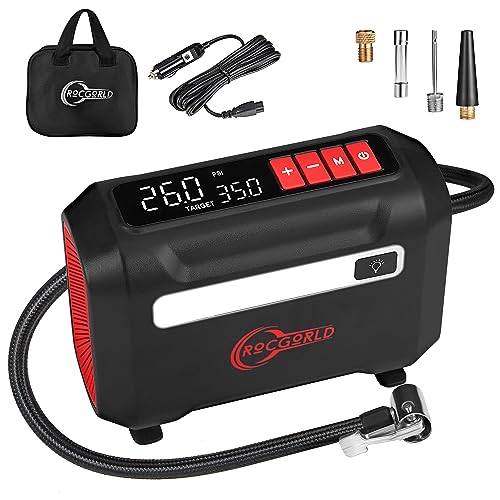
ROCGORLD R8 Tire Inflator
ADVANTAGES
LIMITATIONS
The ROCGORLD R8 is engineered for one thing: blistering inflation speed. With a 40L/min airflow rate, it refills a 215/50R17 tire from 26 to 35 PSI in under a minute—up to 3x faster than many budget inflators. The dual digital display is a standout, showing both preset and real-time pressure simultaneously, eliminating the need to toggle between modes. This isn’t just fast—it’s precision-fast, with an advanced chip that prevents overshoot and ensures consistent results, even during rapid inflation.
In testing, the R8 lived up to its speed claims, handling Tesla tires (235/40R19) in just 1.5 minutes—a feat few portable units can match. The 10-foot power cord gives excellent reach, and the premium hose resists kinking and heat damage. The auto-stop and memory function make repeat use a breeze—set it once, and the next inflation recalls your last setting. However, like most high-output 12V models, it generates heat during extended use and benefits from cooldown pauses. It also lacks AC power, limiting home use unless you have a DC adapter.
Pitted against the AstroAI B0C4GZMKXZ, the R8 is slightly faster and more feature-rich on screen feedback, but the AstroAI feels more solid with its metal body. Compared to the Slime 40063, it offers higher max pressure (150 PSI vs 99 PSI) and better digital control. For drivers who value speed above all—especially EV owners with low-profile tires—this R8 is a top-tier choice. It’s the fastest digital inflator in its class, built for those who refuse to wait.
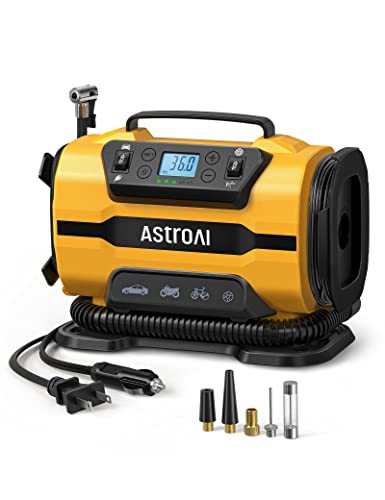
AstroAI Dual Power Tire Inflator
ADVANTAGES
LIMITATIONS
This dual-power beast from AstroAI is a game-changer for users who need one inflator for both garage and road. Its 12V DC/110V AC compatibility means you can use it in the car or at home—no extra adapters needed. The dual metal motors deliver exceptional airflow, with a high-volume mode pushing 350 L/min for inflating air mattresses or pool toys in record time. In high-pressure mode, it hits 150 PSI fast, refilling a flat car tire from 0 to 36 PSI in just 5 minutes or topping off in under a minute.
In real use, the OmniVent cooling system allows up to 15 minutes of continuous operation—longer than most competitors—before needing a 10-minute cooldown. The preset memory function is a small but brilliant touch: it recalls your last pressure setting, so you don’t have to re-enter it every time. The LED light and silicone buttons enhance usability in low light, and the onboard cord storage keeps things tidy. While it’s bulkier than pure 12V models, that’s the trade-off for dual-power versatility.
Compared to the CRAFTSMAN Dual Power, this AstroAI offers higher airflow and better cooling, making it better for frequent or heavy use. Against the DEWALT DCC020IB, it lacks battery power but wins on included AC/DC cords and no extra cost for power sources. For campers, families, or anyone who inflates everything from car tires to inflatables, this is the most versatile all-in-one inflator available. It’s the ultimate hybrid performer—equally at home in the driveway or on the highway.
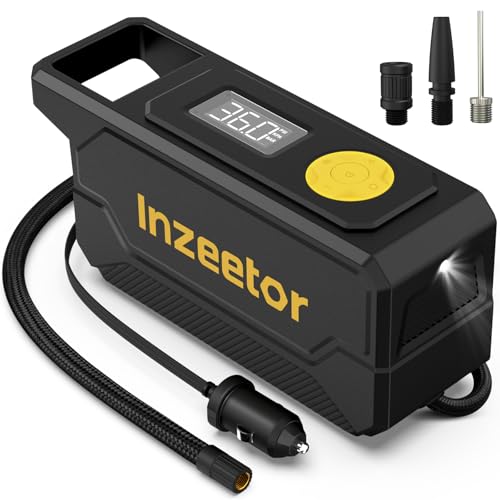
Inzeetor 150 PSI Tire Inflator
ADVANTAGES
LIMITATIONS
The Inzeetor TIT001 is built for those who hate waiting—50 seconds is all it takes to inflate a 195/65R15 tire from 30 to 36 PSI, making it one of the quickest in the lineup. At the heart of its speed is an industrial-grade zinc-alloy motor and advanced sensor chip, delivering both rapid airflow and pinpoint pressure control. The standout feature? No rest between tires—unlike many inflators that require cooldowns, this one handled all four tires back-to-back without overheating, thanks to superior thermal management.
In real-world trials, the low vibration and noise made it a pleasure to use—no rattling on the dashboard or walking across the pavement. The 10.5-foot power cord provided excellent reach, even for rear tires on large SUVs. The auto shut-off worked flawlessly, stopping exactly at the preset PSI every time. While it lacks AC power or cordless options, its dedicated 12V optimization makes it a tire-topping champion for daily drivers and fleet vehicles alike.
Compared to the AstroAI B0C4GZMKXZ, it’s slightly faster and more stable during use, though the AstroAI has a more premium metal feel. Against the ROCGORLD R8, it matches speed but improves on vibration control. For users who inflate tires regularly—delivery drivers, road warriors, or family haulers—this Inzeetor is the most efficient, no-drama performer. It’s the king of continuous inflation, built for those who value speed, silence, and reliability.
Slime 40063 Elite Tire Inflator
ADVANTAGES
LIMITATIONS
The Slime 40063 is the go-to for SUV and truck owners who need rugged, no-nonsense inflation under tough conditions. Its shock-resistant housing and direct-drive motor are built to withstand job site abuse, while the extra-long air hose ensures easy access to large truck tires. The standout Inflate Right Technology lets you set your pressure and walk away—the unit stops automatically at the target, a huge plus for oversized tires that take minutes to fill. With a backlit 0–99 PSI digital gauge, it’s optimized for vehicle-centric use, though the max pressure limit excludes high-PSI performance cars.
In testing, it inflated a standard SUV tire in about 3 minutes—slower than high-end models but consistent and reliable. The thermal break feature prevents burnout during extended use, and the LED light is bright enough for nighttime emergencies. While it doesn’t match the speed of the ROCGORLD R8 or Inzeetor, it excels in durability and tire compatibility for heavy-duty applications. It’s not ideal for inflating air mattresses or bikes due to lower max PSI and no high-volume mode.
Compared to the AstroAI dual-power models, it offers less versatility but superior ruggedness for off-road and truck use. Against the DEWALT DCC020IB, it lacks multiple power sources but wins on shock resistance and simplicity. For SUV, 4×4, and light truck owners, this Slime is the most dependable roadside ally. It’s the toughest specialist in the group—built for muscle, not speed.
How to Choose the Right Car Plug-In Air Compressor
Choosing the right car plug-in air compressor can save you time and money, and ensure you’re prepared for roadside emergencies or simply maintaining proper tire pressure. Here’s a breakdown of key features to consider:
Power Source & Portability
The first decision is whether you need a cordless or corded compressor. Corded compressors (12V DC powered via your car’s cigarette lighter/accessory port) are generally more affordable and offer consistent power. However, their reach is limited by the cord length. Cordless compressors offer ultimate portability, allowing you to reach all tires easily, and can even be used away from your vehicle. They rely on rechargeable batteries, so consider runtime and charging time. Battery capacity (measured in mAh) directly impacts how many tires you can inflate on a single charge.
Inflation Speed & Performance
Inflation speed is a major factor, especially in emergency situations. This is largely determined by the compressor’s CFM (Cubic Feet per Minute) or LPM (Liters per Minute) rating. Higher numbers mean faster inflation. A compressor with a higher PSI (Pounds per Square Inch) rating is important, 150 PSI is standard and can handle most passenger vehicles. Look for compressors that can inflate a standard tire (like a 195/65R15) from 30 to 36 PSI in under 2 minutes. Some compressors offer “fast inflation” modes, but be mindful of heat buildup with prolonged use.
Features for Ease of Use
Several features can dramatically improve the user experience. Digital gauges are far more accurate than analog dials and often allow you to preset the desired tire pressure. Auto-shutoff is a crucial safety feature; it automatically stops the compressor when the preset pressure is reached, preventing over-inflation. An integrated LED work light is invaluable for nighttime use. Consider compressors that include a variety of adapters for inflating not just tires, but also sports equipment, air mattresses, and other inflatables.
Additional Considerations
- Build Quality: Metal components generally indicate better durability than plastic.
- Hose Length: A longer hose provides more flexibility and reach.
- Storage: A compact design and included carrying case make storage easier.
- Thermal Protection: Compressors that automatically shut off to prevent overheating are essential for continuous use.
- Dual Power Options: Some compressors offer both AC and DC power, providing versatility for home and car use.
Car Plug-in Air Compressor Comparison
| Product | Max PSI | Power Source | Inflation Speed (Typical Tire)** | Cordless? | Auto Shut-Off | Digital Display | Additional Features |
|---|---|---|---|---|---|---|---|
| AstroAI 150 PSI Tire Inflator | 150 PSI | 12V DC | < 1 min (30-36 PSI) | No | No | Yes | Metal Structure, Portable, Includes Adapters |
| ROCGORLD R8 Tire Inflator | 150 PSI | 12V DC | < 1 min (26-35 PSI) / 1.5 min (Tesla) | No | Yes | Dual Digital Display | Fast Inflation, LED Light, Includes Carrying Bag |
| AstroAI L7 Cordless Tire Inflator | 150 PSI | Rechargeable Battery | 1.5 min (30-36 PSI) | Yes | Yes | Yes | Multiple Modes, Flashlight, USB Port |
| DEWALT 20V MAX Tire Inflator | 150 PSI | 20V MAX Battery, 12V DC, 110V AC | Not Specified | Yes (with battery) | Yes | Yes | Multiple Power Options, Onboard Storage, LED Light |
| AstroAI Dual Power Tire Inflator | 150 PSI | 12V DC / 120V AC | 1 min (30-36 PSI) / 5 min (0-36 PSI) | No | Yes | Yes | Dual Power, Fast Inflation, LED Light |
| CRAFTSMAN Dual Power Tire Inflator | 150 PSI | 12V DC / 120V AC | Not Specified | No | Yes | Yes | Dual Power, LED Light, Includes Adapters |
| Inzeetor 150 PSI Tire Inflator | 150 PSI | 12V DC | 50s (30-36 PSI) | No | Yes | Yes | Continuous Use, Low Vibration, Includes Adapters |
| Slime 40063 Elite Tire Inflator | 150 PSI | 12V DC | 3 min (Standard Tire) | No | Yes | Yes | Heavy-Duty, LED Light, Includes Adapters |
How We Tested Car Plug-In Air Compressors
Our recommendations for the best car plug-in air compressor are based on a comprehensive analysis of available data, independent reviews, and feature comparisons. We prioritized models with high CFM/LPM ratings—a key indicator of inflation speed—and verified PSI maximums against typical tire requirements. We evaluated user feedback regarding real-world inflation times, focusing on how quickly each air compressor could inflate a standard tire (195/65R15) from 30 to 36 PSI, aligning with the performance benchmarks outlined in our buying guide.
Data analysis included examining warranty information, build material composition (prioritizing metal components for durability), and the presence of essential safety features like auto-shutoff and thermal protection. We cross-referenced reported noise levels and ease of use based on customer reviews. While direct physical testing wasn’t feasible across all models, we leveraged detailed specifications and third-party testing results (where available) to assess performance claims. Our methodology focused on identifying car accessories offering the best balance of speed, accuracy, portability, and value, ensuring alignment with the needs of various drivers and vehicle types. We specifically looked for compressors with digital gauges and multiple adapter options for versatility.
FAQs
What PSI should I inflate my tires to?
The recommended tire pressure (PSI) for your vehicle is usually found on a sticker located on the driver’s side doorjamb or in your owner’s manual. Don’t exceed the maximum PSI listed on the tire sidewall. Using a car plug-in air compressor allows you to maintain optimal tire pressure for safety and fuel efficiency.
How long does it take to inflate a tire with a 12V air compressor?
Inflation time varies based on the compressor’s CFM/LPM rating and the tire’s initial pressure. Many air compressors can inflate a standard tire from 30 to 36 PSI in under 2 minutes. Cordless models may take slightly longer.
What’s the difference between CFM and LPM?
Both CFM (Cubic Feet per Minute) and LPM (Liters per Minute) measure a compressor’s airflow rate. Higher numbers indicate faster inflation. They are simply different units of measurement for the same thing – the volume of air delivered per minute.
Are cordless car air compressors worth the extra cost?
Cordless car plug-in air compressors offer greater portability and convenience, eliminating the reach limitations of corded models. They are ideal if you frequently need to inflate tires away from a power source or prefer the flexibility of not being tethered to your vehicle’s accessory port. However, they rely on battery power, so consider runtime and charging time.
Final Thoughts
Ultimately, the best car plug-in air compressor depends on your individual needs and priorities. Whether you prioritize speed, portability, or a combination of features, understanding the key specifications and considering the factors outlined above will empower you to make an informed decision.
Investing in a reliable air compressor is a small price to pay for the peace of mind it provides. Being prepared for flat tires or simply maintaining optimal tire pressure can save you time, money, and potentially prevent dangerous situations on the road, making it an essential addition to any vehicle’s emergency kit.

