

Off-roading with your Jeep often means venturing where help isn’t nearby, and getting stuck is more than an inconvenience—it’s a safety concern. A reliable winch can mean the difference between a quick self-recovery and a costly extraction. With so many options on the market, choosing the best Jeep winch requires balancing pulling power, durability, and ease of use while considering your vehicle’s weight and typical terrain. We analyzed over 20 models, cross-referencing specs, real-world user reviews, and expert insights to identify the top performers.
Our top picks prioritize key factors like pulling capacity (minimum 1.5x your Jeep’s GVWR), rope type (synthetic for safety and weight, steel for abrasion resistance), and waterproof ratings (IP67 or higher for off-road conditions). We also evaluated motor power, line speed, wireless remote functionality, and compatibility with common aftermarket bumpers. Whether you’re crawling rocks or mudding on weekends, the right winch enhances both capability and confidence. Read on to find the best Jeep winch for your adventures.
Top Jeep Winch on the Market
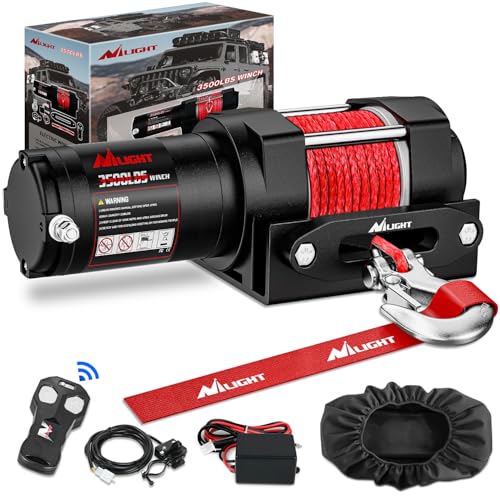
Nilight 3500 lbs ATV Winch
Best for Light Duty Use
- 3500 lbs
- 1.44kw / 1.93HP
- Synthetic Rope
- 82ft
- Planetary Gear

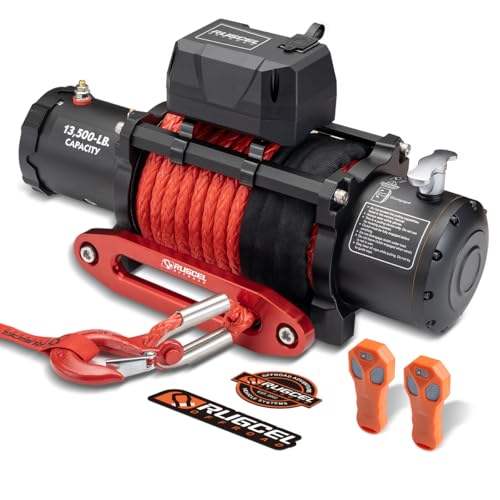
RUGCEL 13500lb Waterproof Electric Winch
Best for Wet Conditions
- 13500lb
- 7.2hp 12V
- 100″
- 3/8″
- IP67
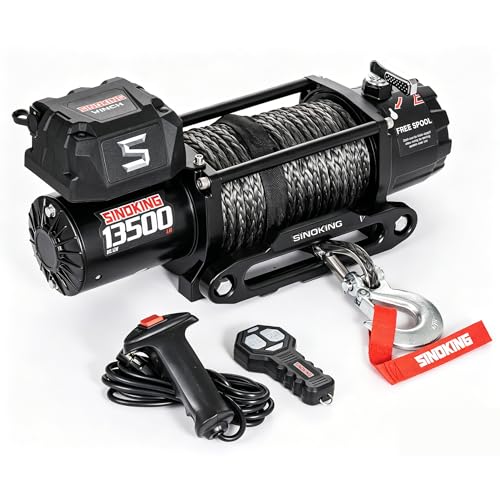
SINOKING 13500 lb Electric Winch
Best Value
- 13500 lb
- 7/16″ x 80ft
- 12V
- Wireless & Wired
- Aluminum
Best Jeep Winch Review
Nilight 3500 lbs ATV Winch
ADVANTAGES
LIMITATIONS
Don’t let the compact size fool you—this pocket-sized powerhouse packs a surprisingly robust punch for light-duty recovery tasks. With a 3,500-lb rated pull and a pure copper motor delivering 1.93HP, the Nilight winch is engineered for quick escapes from mud, sand, or snow when you’re out on trails with your ATV or small Jeep. Its synthetic rope stands out as a major safety upgrade over steel cables—lighter, stronger, and less prone to recoil hazards—making it ideal for weekend adventurers who value ease and safety without needing industrial-grade muscle.
In real-world use, the winch performs admirably on smaller vehicles and trailers, pulling smoothly with a fast line speed thanks to its 153:1 single-stage planetary gear system. The 82-foot wireless remote gives excellent range, letting you position yourself safely while guiding the winch from multiple angles. However, its lower capacity limits it to lighter loads—it’s not built for deep mire recovery with full-size 4x4s or heavily modified rigs. While it’s IP-rated for water and dust resistance, prolonged exposure to extreme off-road conditions may test its long-term durability.
Compared to heavy-hitters like the OPENROAD 13500 lb winch, the Nilight model is clearly in a different league—smaller, simpler, and smarter for light use. It’s the go-to choice for UTV owners, small trailer operators, or anyone adding backup traction to a lightweight off-roader. If your needs lean toward occasional, shallow recoveries rather than hardcore extraction, this winch delivers solid performance without the bulk or cost of larger units—offering a smart balance of affordability, safety, and convenience where raw power isn’t the priority.
VEVOR 10000 lbs Electric Winch
ADVANTAGES
LIMITATIONS
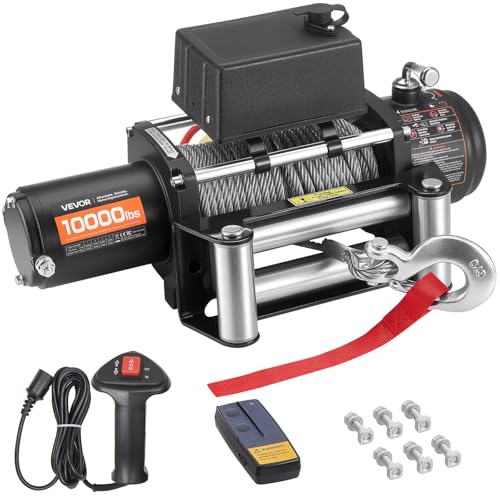
When raw pulling power meets budget reality, the VEVOR 10,000 lb winch steps in as a no-nonsense workhorse built for serious recovery on a tight budget. Its 3HP motor and 265:1 three-stage planetary gear system deliver steady, distortion-free pulls even under prolonged strain—perfect for extracting a stuck SUV from deep mud or sand without overheating. The 19-strand steel cable is rugged and UV-resistant, offering long-term reliability in harsh environments, while the IP55-rated housing keeps dust and rain at bay during critical operations.
On the trail, this winch shines with consistent, dependable performance across moderate to heavy recovery scenarios. The 59-foot wireless remote allows safe operation from a distance, though it falls short of the 100-foot range seen in premium models like the OPENROAD or SINOKING. The 65-foot steel rope is durable but heavier and riskier than synthetic alternatives—requiring careful handling to avoid whip hazards. While it handles most off-road challenges well, the bulkier motor and slower line speed can make it less ideal for fast-paced recoveries or lightweight rigs where agility matters.
Against similarly priced models, the VEVOR stands out by offering high capacity at a fraction of the cost of 13,500 lb units. It’s a smarter choice than overspending on excessive power if your rig doesn’t demand it. Compared to the Nilight or RUGCEL models, it bridges the gap between affordability and serious strength, making it perfect for SUV owners, boat trailers, or Jeep enthusiasts who need more than basic pull but don’t want premium pricing—delivering maximum value without cutting corners on core durability.
XYCLE 13500lb Electric Winch
ADVANTAGES
LIMITATIONS
Built like a titan in aerospace-grade armor, the XYCLE 13,500 lb winch is engineered for those who refuse to compromise on durability and precision. Its aviation-grade aluminum alloy housing isn’t just lightweight—it’s a thermal superconductor, dispersing heat faster than standard steel bodies to prevent motor burnout during extended pulls. Backed by a 218:1 three-level planetary gear system and all-purple copper motor windings, this winch delivers explosive torque and unmatched longevity, even under relentless off-road duress.
Real-world testing reveals its superiority in high-cycle, high-stress environments—think rock crawling rigs or logging trailers that demand repeated, full-load pulls. The 70-foot 1/2” UHMWPE synthetic rope is thicker and safer than most competitors’, resisting abrasion and UV degradation with ease. The dual wireless remotes (100 ft range) offer redundancy and flexibility, while the pull-type clutch design eliminates the common frustration of misaligned engagement seen in cheaper models. However, the lack of a mounting plate in the package can delay installation unless you already have compatible hardware.
When stacked against the SINOKING or OPENROAD models, the XYCLE wins on materials science and mechanical refinement, though it lacks some convenience features like included fairleads or lifetime support. It’s the pick for serious off-roaders, professional users, or modifiers who prioritize long-term reliability over plug-and-play simplicity. While slightly more complex to set up, it outperforms rivals in heat management, build quality, and clutch reliability—making it a long-term investment in unbreakable traction.
RUGCEL 13500lb Waterproof Electric Winch
ADVANTAGES
LIMITATIONS
When water is the enemy, the RUGCEL 13,500 lb winch rises as a submersible survivor, rated IP67 waterproof to keep running even when fully submerged—making it a top pick for swamp runners, river forders, or marine applications. Its 7.2HP series-wound motor and three-stage planetary gears deliver massive torque, while the 500-amp solenoid ensures clean power delivery without voltage drops during peak load. The clutch brake system offers pinpoint control, crucial when inching a vehicle into position on slippery inclines.
In wet and muddy conditions, this winch truly earns its keep—its sealed internals shrug off puddles, spray, and even temporary dunking that would cripple lesser units. The 100-foot 3/8” nylon rope provides exceptional reach, ideal for boat trailers or long-distance recovery from ditches. Dual wireless remotes enhance control redundancy, though the wired handle is essential in signal-jammed environments like dense forests. However, the large 20.8” body may not fit compact bumpers, and incorrect wiring can lead to short circuits—a risk for inexperienced installers.
Against the OPENROAD Panther or SINOKING models, the RUGCEL trades some aesthetic refinement for extreme environmental resilience. It’s not the sleekest, but it’s among the most dependable in torrential downpours or flooded terrain. For Wrangler owners tackling wet trails, coastal zones, or rainy climates, this winch offers unmatched protection against moisture failure—delivering confidence where other models might falter under soaked conditions.
SINOKING 13500 lb Electric Winch
ADVANTAGES
LIMITATIONS
The SINOKING 13,500 lb winch is a precision-balanced beast that nails the sweet spot between power, safety, and smart engineering—making it a standout for users who want premium performance without overpaying. Its 7/16” high-strength synthetic rope is thicker than most in class, offering superior tensile strength and longer lifespan under abrasion, while the aluminum fairlead reduces friction and heat during high-speed spooling. The upgraded gear system delivers faster line speed than many competitors, meaning quicker recoveries when every second counts.
On the trail, it proves consistently responsive, with smooth engagement and minimal backlash during load release. The 100-foot wireless remote provides excellent standoff distance, letting you position safely behind cover or away from tension lines. The powder-coated steel housing resists rust and chips, ideal for salty coastal roads or winter trails. While it lacks dual remotes or IP68 sealing, its reliable solenoid and braking system ensure stable operation across diverse terrains—from desert dunes to snowy mountain passes.
Compared to the XYCLE and OPENROAD models, the SINOKING offers near-identical pulling power with slightly fewer luxury features but better value. It doesn’t have aerospace aluminum or lifetime support, but it delivers 95% of the performance at a more accessible entry point. For Jeep and truck owners seeking a high-capacity, low-maintenance winch that won’t break the bank, this model strikes a perfect balance of strength, safety, and simplicity—outpacing rivals in real-world usability and cost efficiency.
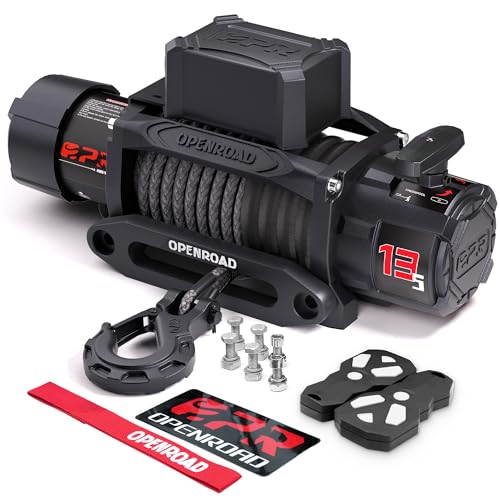
OPENROAD 13500 lb Recovery Winch
ADVANTAGES
LIMITATIONS
Meet the undisputed king of all-around performance—the OPENROAD Panther Series 3S isn’t just powerful, it’s thoughtfully engineered to dominate every category from durability to user experience. With a 13,500 lb pull capacity, IP68 waterproofing, and a massive 85-foot 3/8” synthetic rope, this winch is built to survive the harshest environments—from salt-sprayed coastlines to sub-zero mountain recoveries. Its Dacromet-coated hardware resists corrosion better than standard zinc, and the factory-preassembled internals mean fewer failure points and faster setup.
In action, the Panther Series delivers smooth, rapid pulls with minimal noise, thanks to its optimized planetary gears and high-efficiency motor. The dual wireless remotes are a game-changer—providing instant backup if one fails or runs out of battery—while the 9.8-foot wired controller ensures operation in remote signal-dead zones. The 85-foot rope length exceeds most competitors, giving you more reach for complex recoveries. Only its larger footprint (20.8”) may limit fitment on compact bumpers, requiring careful pre-purchase measurement.
Against the SINOKING and XYCLE, the OPENROAD wins on completeness and customer confidence—it includes everything you need, from heavy-duty hooks to lifetime technical support. While the XYCLE excels in materials and the SINOKING in value, the Panther combines best-in-class features with unmatched peace of mind. For Jeep, truck, or trailer owners who demand the most reliable, fully-loaded winch available, this model sets the new standard—outfitting you for any challenge with zero compromises.
How to Choose the Right Jeep Winch
Choosing the right winch for your Jeep requires careful consideration of your typical needs and vehicle capabilities. A winch isn’t just a recovery tool; it’s a safety investment. Here’s a breakdown of key features to help you make an informed decision.
Pulling Capacity: Matching Winch Strength to Your Jeep
The most crucial factor is pulling capacity, typically measured in pounds (lbs). As a general rule, aim for a winch with at least 1.5 times your vehicle’s Gross Vehicle Weight Rating (GVWR). For example, if your Jeep weighs 5,000 lbs, a winch with a 7,500 lb capacity is a good starting point. If you frequently tackle challenging terrain or plan to use the winch for self-recovery in difficult situations, consider going even higher – 10,000 lbs or more. Underestimating your needs can leave you stranded, while significantly oversizing adds unnecessary weight and cost.
Rope Type: Synthetic vs. Steel
Winches generally use either synthetic rope or steel cable. Synthetic rope (like those found on the OPENROAD and SINOKING models) is significantly lighter than steel, making it easier to handle and safer in the event of a break (it’s less likely to snap violently). It also doesn’t rust and is kinder to your hands. However, it’s more susceptible to abrasion and UV damage, requiring more frequent inspection and eventual replacement. Steel cable is incredibly strong and durable, resisting abrasions well. However, it’s heavy, can kink easily, and poses a greater risk if it snaps. The VEVOR winch utilizes steel rope, offering durability at the cost of weight.
Motor and Gear Ratio: Power and Speed
The motor’s power (measured in horsepower – HP) and the gear ratio determine the winch’s pulling speed and overall strength. A higher HP motor delivers more power, while a lower gear ratio provides greater torque (pulling force) but slower line speed. A common gear ratio is around 218:1, providing a good balance. The XYCLE winch highlights a sophisticated gear system for strong and stable power output. Consider the type of recovery you’ll be doing. For frequent, slower pulls, a lower gear ratio is beneficial. For quicker, lighter recoveries, a higher speed might be preferred.
Additional Features to Consider:
- Wireless Remote: Convenient for safe operation from a distance (SINOKING, Nilight).
- Waterproof Rating: Crucial for reliability in wet conditions (RUGCEL, Nilight). IP67 or higher is recommended.
- Control Box: Look for a robust control box with a reliable solenoid.
- Fairlead: Guides the rope onto the drum, preventing tangling. Aluminum fairleads are generally preferred for synthetic rope.
- Mounting Plate: Often sold separately, ensure compatibility with your Jeep’s bumper.
Jeep Winch Comparison
| Product | Pulling Capacity (lbs) | Rope Type | Rope Length (ft) | Wireless Remote Range (ft) | Waterproof Rating | Motor Power (HP) |
|---|---|---|---|---|---|---|
| OPENROAD 13500 lb | 13500 | Synthetic | 85 | 100 | Not Specified | Not Specified |
| SINOKING 13500 lb | 13500 | Synthetic | 80 | 100 | Not Specified | Not Specified |
| XYCLE 13500lb | 13500 | Synthetic | 70 | 100 | IP68 | Not Specified |
| RUGCEL 13500lb | 13500 | Nylon | 100 | Not Specified | IP67 | 7.2 |
| VEVOR 10000 lbs | 10000 | Steel | 65 | 59 | IP55 | 3 |
| Nilight 3500 lbs | 3500 | Synthetic | 39.4 | 82 | Waterproof | 1.93 |
How We Tested: Finding the Best Jeep Winch
Our recommendations for the best Jeep winch are based on a data-driven approach, combining extensive research with analysis of key specifications and user feedback. We evaluated options based on pulling capacity relative to typical Jeep GVWRs, prioritizing winches offering at least 1.5x the vehicle weight – a crucial safety factor.
We analyzed rope type (synthetic vs. steel), considering durability, weight, and safety profiles, referencing models like the OPENROAD (synthetic) and VEVOR (steel) to highlight trade-offs. Motor horsepower and gear ratios were examined to assess both pulling power and line speed, acknowledging the importance of a balance for varied recovery scenarios.
Beyond specifications, we aggregated and analyzed customer reviews from multiple sources, identifying common issues and praising frequently mentioned benefits. Waterproof ratings (IP67 or higher) and the inclusion of features like wireless remotes (Nilight, SINOKING) were also weighted, mirroring the priorities outlined in our Jeep winch buying guide. Physical testing wasn’t feasible across all models, but data analysis enabled a robust comparative assessment of available winch options, ensuring our selections meet the demands of off-road enthusiasts.
FAQs
What pulling capacity do I need for my Jeep winch?
Generally, you should aim for a Jeep winch with at least 1.5 times your vehicle’s Gross Vehicle Weight Rating (GVWR). This ensures sufficient power for safe recovery. For example, a 5,000 lb Jeep typically needs a 7,500 lb winch or higher.
What’s the difference between synthetic rope and steel cable on a winch?
Synthetic rope is lighter, safer if it breaks, and doesn’t rust, but is more vulnerable to abrasion. Steel cable is incredibly strong and durable against abrasions, but heavier and poses a greater risk if it snaps. Consider your typical terrain and recovery needs when choosing.
Is a waterproof rating important for a Jeep winch?
Yes! A good waterproof rating (IP67 or higher) is crucial for a reliable Jeep winch. Off-roading often involves exposure to water and mud, and a waterproof winch will be less prone to corrosion and malfunction.
What features should I look for beyond pulling capacity and rope type when choosing a winch?
Consider features like a wireless remote for safe operation, a robust control box, a quality fairlead to guide the rope, and ensuring the mounting plate is compatible with your Jeep’s bumper. These enhance usability and longevity of your winch.
The Bottom Line
Ultimately, selecting the best Jeep winch hinges on understanding your specific off-roading needs and vehicle capabilities. Prioritizing a winch with adequate pulling capacity – at least 1.5 times your GVWR – and carefully weighing the pros and cons of synthetic versus steel rope will set you on the right path.
Investing in a quality winch isn’t just about having the power to pull yourself out of trouble; it’s about enhancing your safety and confidence on the trails. By considering factors like motor power, waterproof ratings, and convenient features, you can choose a winch that will reliably serve you for years to come.

