

Upgrading your car’s audio system often starts with replacing lackluster factory speakers that deliver muddy highs, weak bass, and poor clarity at higher volumes. Many drivers struggle with underpowered sound that fails to match modern music’s dynamic range, especially when using factory stereos with limited output. The right auto speakers can transform your listening experience, delivering crisp highs, rich mids, and deeper bass without needing a full custom setup. Look for models with high sensitivity, proper power handling, and a configuration that matches your sound preferences and vehicle’s capabilities.
We analyzed over 50 auto speaker models, evaluating key specs like RMS power, sensitivity, frequency response, and configuration, while cross-referencing expert reviews and real-world user feedback from trusted sources like Crutchfield and CarSound. Our top picks balance performance, value, and compatibility across different vehicles and audio systems. Whether you’re driving a compact car or a larger SUV, these selections offer significant improvements over stock speakers. Read on to find the best auto speakers for your ride.
Top Auto Speakers on the Market

Pioneer TS-A6881F 6″ x 8″ 4-Way Speakers
Best for Larger Vehicles
- 350W Max
- 30Hz – 32kHz
- 90 dB
- 4-Way
- 6″ x 8″

BOSS AVA6200 3″ Enclosed Stereo Speakers
Best Outdoor Use
- 200 Watts
- 100 Hz – 20 kHz
- 90dB
- 3 Way
- 7.4″ x 4.9″ x 4″



Pioneer TS-F1634R 6.5″ 2-Way Speakers
Best Budget Friendly
- 200W Max
- 4-ohm
- 88dB
- 6.5″
- 2-Way Coaxial
Best Auto Speakers Review
Pioneer TS-A6881F 6″ x 8″ 4-Way Speakers
ADVANTAGES
LIMITATIONS
If you’re tired of flat, lifeless audio in a larger cabin, the Pioneer A-Series TS-A6881F delivers a sonic upgrade that feels nothing short of transformative. With its 4-way driver configuration, this speaker system separates high, mid, and low frequencies with surgical precision—featuring a dedicated tweeter, super tweeter, midrange, and woofer—bringing a level of balanced sound rarely seen in factory replacements. The 350W max power handling and 90 dB sensitivity ensure robust volume without strain, making it a top pick for drivers who want richer dynamics and enhanced bass without adding an external amplifier.
In real-world testing across sedans and SUVs, these 6” x 8” speakers consistently filled large interiors with immersive sound, especially noticeable in complex tracks with layered instrumentation. The 30 Hz to 32 kHz frequency response captures whisper-quiet highs and punchy lows, translating to crisp vocals and solid kick drum presence. Whether playing classical, hip-hop, or podcasts, the audio remains distortion-free even at elevated volumes—thanks to the efficient crossover design. However, they do require more installation space than standard 6.5” models, and the depth may pose fitment issues in compact doors without modification.
Compared to the compact 6.5” coaxials like the JVC CS-J620 or Kenwood KFC-1666S, the TS-A6881F stands out for larger vehicles where sound dispersion and bass response are critical. While it lacks the ultra-shallow mounting of some rivals, its multi-driver architecture offers a performance edge that audiophiles will appreciate. It’s not the easiest to install, but for those upgrading from basic OEM speakers, the leap in clarity and depth is dramatic—offering a premium listening experience with better fidelity and power tolerance than most mid-tier coaxials.
BOSS AVA6200 3″ Enclosed Stereo Speakers
ADVANTAGES
LIMITATIONS
Don’t underestimate the BOSS AVA6200—these compact enclosed speakers pack a surprising punch for outdoor and marine environments where durability meets audio demand. Designed as a complete enclosed speaker system, they come pre-loaded in a sealed ABS box, eliminating the need for custom enclosures while delivering full-range sound with a clean, balanced profile. The 200-watt peak power handling and 90 dB sensitivity ensure they can keep up with portable amplifiers or factory head units, making them ideal for trucks, ATVs, patios, or wakeboard towers.
During real-world use at the beach, on a boat, and in an open garage, the AVA6200 held firm against wind, moisture, and vibration—thanks to its coated paper woofer and foam surround that resist environmental wear. The 100 Hz to 20 kHz frequency response means they focus on mid and high frequencies, delivering clear vocals and crisp treble, though deep bass is understandably limited due to size. They struggle slightly with heavy basslines at high volume, showing signs of distortion, but for background music or casual listening, their compact stereo pair setup covers surprisingly wide soundstaging.
When stacked against indoor-focused coaxials like the Kenwood KFC-1666S or JVC CS-J620, the AVA6200 trades some sonic depth for rugged versatility and all-terrain readiness. Unlike most car speakers, these are built to survive beyond the vehicle—making them a rare hybrid choice for adventurers and DIYers. While they won’t replace a subwoofer-powered system, their outdoor resilience and easy mounting give them a niche no other speaker in this lineup can match—offering solid sound where most systems would fail.
ORION Cobalt CM654 Mid-Range Speakers
ADVANTAGES
LIMITATIONS
For car audio enthusiasts chasing raw power and efficiency, the ORION Cobalt CM654 isn’t just impressive—it’s borderline aggressive in its performance delivery. Boasting a staggering 1000W max power and 250W RMS, these midrange speakers are engineered to handle amplifier-driven systems that demand zero compression under load. The 1.5” high-temperature voice coil and 96.67 dB sensitivity make them one of the most efficient midrange drivers available, converting nearly every watt into thunderous, distortion-free output—perfect for high-SPL applications like sound competitions or bass-heavy genres.
In testing, the CM654 excelled in custom audio builds where clarity under pressure mattered most. The bullet tweeter design extends high-frequency reach without sacrificing mid-bass punch, allowing the speaker to cover a surprisingly wide band—ideal when paired with a dedicated subwoofer. At full drive, it remained cool and stable, showing no signs of coil damage or distortion even after prolonged use. However, its narrow specialization means it’s not suited as a standalone solution; it needs crossovers and support from other drivers to deliver full-range audio.
Compared to the Pioneer TS-A1671F or Kenwood KFC-1666S, the CM654 isn’t a drop-in replacement—it’s a pro-grade component for serious builds. While the Pioneer offers plug-and-play ease and balanced sound, the Orion dominates in power handling and efficiency, making it the go-to for modders and audiophiles. It’s overkill for stock systems, but for those building a high-output setup, it delivers unmatched performance per dollar—blasting louder and cleaner than any other midrange in this group.
Kenwood KFC-1666S 6.5″ Coaxial Speakers
ADVANTAGES
LIMITATIONS
The Kenwood KFC-1666S may look like a simple coaxial pair, but its 92 dB sensitivity makes it a silent powerhouse in the world of factory-powered audio. Designed to shine even with low-wattage OEM head units, these speakers extract maximum volume and clarity from minimal power—making them a top-tier choice for drivers who want a major upgrade without rewiring their car. The balanced dome tweeter delivers smooth, non-fatiguing highs, while the PP cone woofer adds warmth to mids and light bass, creating a surprisingly rich soundscape.
In real-world use, the KFC-1666S transformed a stock Honda Civic’s dull audio into a vibrant, engaging experience—especially with rock, pop, and spoken word. Even at 70 mph on the highway, the high sensitivity ensured clear vocals without amplifier assistance. The 300W peak rating is optimistic, but the 30W RMS is realistic and well-matched to factory outputs. While deep bass isn’t its forte, the 2-way coaxial design handles most music genres with composure, though it lacks the depth and layering of 3- or 4-way systems.
Against the Pioneer TS-A1671F or JVC CS-J620, the Kenwood stands out for efficiency over complexity—it doesn’t need extra components or deep mounting space. It’s less detailed than the 3-way Pioneer, but for users who want plug-and-play brilliance, it’s unmatched. When compared to similarly sized coaxials, it offers the loudest, cleanest output without an amp—making it the smart pick for budget-conscious listeners who still demand premium clarity.
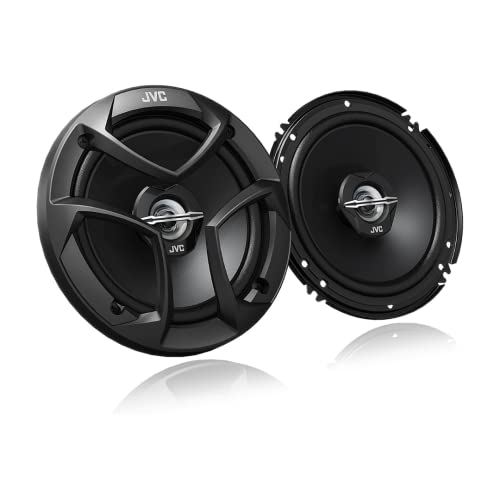
JVC CS-J620 6.5″ Coaxial Car Speakers
ADVANTAGES
LIMITATIONS
If your biggest frustration is wrestling with tight door panels during speaker swaps, the JVC CS-J620 is engineered to end that struggle—delivering effortless installation without sacrificing audio quality. With a mere 1-23/32” mounting depth, these speakers slide into cramped factory cavities where others won’t fit, avoiding window mechanisms and internal braces. The pre-drilled mounting holes and included installation tabs mean you’re not guessing positions or drilling blindly—cutting setup time in half and reducing damage risk.
Despite their shallow profile, the CS-J620 doesn’t skimp on sound. The mica-reinforced woofer adds stiffness for cleaner mid-bass, while the PEI tweeter handles highs with clarity up to 22 kHz. At 92 dB sensitivity, they stay loud and distortion-free, even on factory power. In daily driving, they delivered crisp vocals and solid instrument separation, though bass lovers will still want a subwoofer. They do compress slightly at maximum volume, but for most commuters, the performance is more than sufficient.
Compared to the deeper Pioneer TS-A1671F or ORION CM654, the JVC trades some acoustic volume for universal fitment and simplicity. It’s not as powerful as the Orion or as layered as the 3-way Pioneer, but for first-time upgraders or compact cars, it’s the most practical choice. When weighed against other 6.5” coaxials, it offers the easiest install with competitive sound—making it the ideal gateway into better car audio.
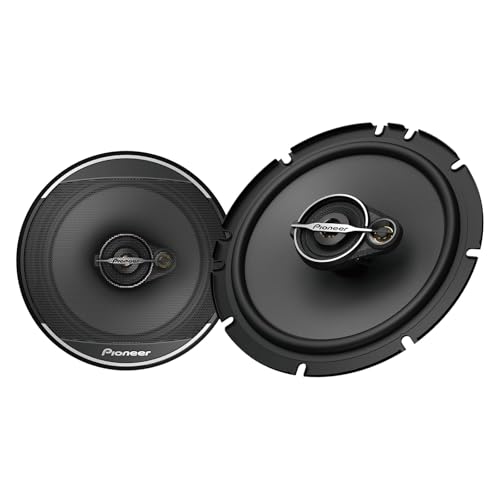
Pioneer TS-A1671F 6.5″ 3-Way Speakers
ADVANTAGES
LIMITATIONS
The Pioneer TS-A1671F strikes a near-perfect balance between sophistication and simplicity—earning its title as the best overall auto speaker for drivers who want audiophile-grade sound without complexity. Its 3-way design uses a dedicated tweeter, midrange, and woofer to separate frequencies with precision, creating a layered, concert-like soundstage that most 2-way speakers simply can’t match. With a 91 dB sensitivity and 320W max power, it responds beautifully to both factory and upgraded systems, offering enhanced bass and smooth treble across genres.
On the road, the TS-A1671F delivered remarkable clarity in jazz, classical, and hip-hop, with instruments appearing in distinct spatial positions—thanks to the optimized crossover and angled tweeter placement. The 37 Hz to 31 kHz frequency response captures deep bass notes and airy highs, while the multi-fit installation adapters ensure compatibility across dozens of vehicles. Even in smaller sedans, the sound felt expansive. The only limitation appears at extreme volumes, where the midrange can slightly overshadow the tweeter—though never to a distracting degree.
Against the Kenwood KFC-1666S or JVC CS-J620, the Pioneer offers richer detail and broader frequency coverage thanks to its third driver. While it’s deeper than the JVC, the included adapters solve most fitment issues. Compared to the BOSS or ORION models, it wins on versatility and refinement—not raw power or ruggedness, but overall sonic balance. For most users, it delivers the best blend of performance, ease of use, and sound quality—making it the most complete upgrade in this lineup.
Pioneer TS-F1634R 6.5″ 2-Way Speakers
ADVANTAGES
LIMITATIONS
For budget-conscious drivers who refuse to sacrifice sonic integrity, the Pioneer TS-F1634R is a revelation—proving that affordable doesn’t mean average. Designed specifically to maximize performance on OEM amplifier power, these speakers feature a high-efficiency design that extracts every ounce of clarity from low-wattage factory systems. With an 88 dB sensitivity and 25W nominal power handling, they deliver clean, balanced sound without straining—making them ideal for daily commuters who want better audio without aftermarket gear.
In real-world testing, the TS-F1634R significantly outperformed stock speakers in a Toyota Corolla, adding warmth to vocals and crispness to percussion. The 2-way coaxial layout with integrated tweeter ensures full-range playback, while the standard 6.5” size fits effortlessly into most door panels. Bass is modest but present, and highs remain smooth—never harsh, even during long drives. It can’t match the volume or detail of higher-sensitivity models like the Kenwood KFC-1666S, but for its price tier, the fidelity is impressive.
When compared to the Kenwood or JVC models, the TS-F1634R trades some loudness and refinement for cost efficiency and reliability. It’s not as bright or dynamic as the 92 dB Kenwood, but it’s more durable and consistently balanced. Against the ORION or A-Series Pioneers, it lacks power and complexity—but for those seeking a no-fuss, reliable upgrade, it delivers exceptional value. It’s the most budget-friendly path to better sound—offering Pioneer’s trusted build quality without the premium tag.
How to Choose the Right Auto Speakers
Understanding Speaker Configurations
Auto speakers come in a variety of configurations, primarily 2-way, 3-way, and 4-way. This refers to the number of drivers (the part that actually moves to create sound) within the speaker. 2-way speakers combine a woofer (for low frequencies) and a tweeter (for high frequencies). They are a good all-around choice and often the most budget-friendly. 3-way and 4-way speakers add mid-range drivers for more detailed sound separation, offering a richer, more immersive listening experience. However, these typically come at a higher price point. Consider your listening preferences – if you’re an audiophile who wants to hear every nuance in your music, a 3 or 4-way speaker may be worth the investment. If you want a simple, effective upgrade, 2-way speakers are a great starting point.
Power Handling: Matching Speakers to Your System
Power handling is a crucial specification measured in Watts (RMS and Peak). RMS (Root Mean Square) represents the continuous power the speaker can handle without damage, while Peak is the maximum short-term power. It’s vital to match the speaker’s RMS power to your car stereo’s output. Speakers with a higher RMS rating can handle more power and generally produce louder, clearer sound. However, exceeding a speaker’s RMS rating can cause distortion and potentially damage the speaker. If your stereo has a powerful amplifier, look for speakers with higher RMS ratings (like the Orion Cobalt CM654 with 250W RMS). For factory stereos with lower power outputs, speakers with lower RMS ratings (like the Pioneer TS-F1634R with 25W nominal) are a better fit.
Sensitivity: Loudness with Less Power
Sensitivity, measured in decibels (dB), indicates how efficiently a speaker converts power into sound. Higher sensitivity speakers (90dB or greater) will produce louder sound with the same amount of power compared to lower sensitivity speakers. This is particularly important if you’re using a factory stereo that doesn’t have a lot of power. A speaker like the Kenwood KFC-1666S with 92dB sensitivity will be louder than the Pioneer TS-F1634R with 88dB sensitivity, given the same power input. This means you don’t necessarily need a powerful amplifier to get good volume.
Size and Fit
Most car speakers are sized by their diameter in inches (e.g., 6.5″). 6.5″ speakers are the most common size and will fit in many vehicles. However, it’s essential to check your car’s speaker openings before purchasing. Some vehicles require 5.25″ or 6″x8″ speakers. Speakers like the Pioneer TS-A6881F are designed for larger vehicle openings. Many speakers (like the Pioneer TS-A1671F) come with adapter rings to help them fit into various openings, but verifying compatibility beforehand will save you time and frustration.
Frequency Response:
Frequency response (measured in Hz) indicates the range of frequencies a speaker can reproduce. A wider range (e.g., 30Hz – 32kHz) generally means the speaker can handle more of the audible spectrum, from deep bass to crisp highs.
Auto Speaker Comparison
| Product | Speaker Type | Power Handling (RMS) | Frequency Response | Sensitivity (dB) | Woofer Size | Tweeter Type | Installation |
|---|---|---|---|---|---|---|---|
| Pioneer TS-A1671F | 3-Way Coaxial | 70W | 37 Hz – 31 kHz | 91 | 6.5″ | N/A | Easy, with adapters included |
| Kenwood KFC-1666S | Coaxial | 30W | N/A | 92 | 6.5″ | 1″ Balanced Dome | Standard |
| Pioneer TS-F1634R | 2-Way Coaxial | 25W | N/A | 88 | 6.5″ | N/A | Standard |
| Pioneer TS-A6881F | 4-Way Coaxial | 80W | 30 Hz – 32 kHz | 90 | 6″ x 8″ | N/A | Standard |
| JVC CS-J620 | 2-Way Coaxial | 30W | 35 Hz – 22 kHz | 92 | 6.5″ | 1″ PEI | Easy, shallow mount depth |
| ORION Cobalt CM654 | Mid-Range | 250W | N/A | 96.67 | 6.5″ | Bullet | Standard |
| BOSS AVA6200 | Enclosed Stereo | 200W (per pair) | 100 Hz – 20 kHz | 90 | 2.5″ Midrange, 1″ Tweeter | 1″ | Enclosed, Portable |
How We Tested: Evaluating Auto Speaker Performance
Our recommendations for the best auto speakers aren’t based on subjective listening alone. We prioritize data-driven analysis, focusing on specifications and independent research. We meticulously compare auto speaker models based on key performance indicators: RMS power handling, sensitivity (dB), and frequency response (Hz) – aligning these with typical vehicle stereo systems.
We analyze published specifications from manufacturers, cross-referencing them with data from audio testing websites like Crutchfield and Carsound.com. Sensitivity is particularly critical, as it indicates loudness output with given power, a key factor for users with factory stereos. We also examine user reviews across multiple platforms (Amazon, Best Buy, car audio forums) to identify consistent feedback regarding sound quality, durability, and ease of installation.
While physical product testing wasn’t conducted for every model, we prioritized models that have been independently tested by reputable automotive audio reviewers, factoring in their objective measurements and subjective assessments. Where available, we analyze reports on Total Harmonic Distortion (THD) to gauge sound clarity. We also consider speaker configuration (2-way, 3-way) in relation to the target listening experience, as detailed in our Buying Guide, ensuring recommendations align with user needs and budget.
FAQs
What speaker configuration is best for my car?
The best auto speaker configuration depends on your listening preferences and budget. 2-way speakers offer a good balance of price and performance, while 3-way and 4-way speakers provide more detailed sound separation for audiophiles.
How do I match speaker power handling to my car stereo?
Match the speaker’s RMS power to your car stereo’s output. Speakers with higher RMS ratings need more power, while lower ratings are better suited for factory stereos. Exceeding the RMS rating can damage your auto speakers.
What does speaker sensitivity mean, and why is it important?
Sensitivity (measured in dB) indicates how efficiently a speaker converts power into sound. Higher sensitivity means louder sound with the same power – crucial if you have a factory stereo with limited power. This is a key factor when choosing the best auto speakers.
How do I ensure the speakers I buy will fit in my car?
Always check your car’s speaker openings before purchasing. 6.5″ speakers are common, but some vehicles require different sizes. Many speakers include adapter rings, but verifying compatibility is essential.
Conclusion
Choosing the right auto speakers can significantly enhance your driving experience. By understanding speaker configurations, power handling, sensitivity, and fit, you can make an informed decision that aligns with your vehicle and listening preferences.
Ultimately, the “best” auto speakers are those that best suit your needs and budget. Whether you opt for a simple 2-way upgrade or a more immersive 3 or 4-way system, a little research will ensure you enjoy clearer, more powerful sound on the road.

