

Finding the right auto racing suit is critical for every driver, from weekend track enthusiasts to seasoned competitors. The primary concern is safety: without proper flame resistance and heat protection, even a minor incident can become life-threatening. Many drivers struggle to balance protection with comfort, mobility, and cost, especially when faced with confusing certifications and materials. A high-quality suit addresses these challenges by combining certified fire-resistant fabrics, proven thermal performance, and a fit that allows full control behind the wheel.
We evaluated over 50 auto racing suits, focusing on SFI 3.2A/5 certification, TPP ratings, and materials like Nomex and Pyrovatex to identify the best options for real-world performance. Key factors included layering, flexibility, rescue straps, and user feedback on durability and comfort. Our top picks deliver optimal protection, value, and fit across different racing disciplines. Read on to find the best auto racing suit for your needs.
Top Auto Racing Suits on the Market

K1 Race Gear K1 Outlaw Nomex Suit
Best Heat Protection
- Nomex”
- 3.2A/5
- Black, Red
- Large
- Snug
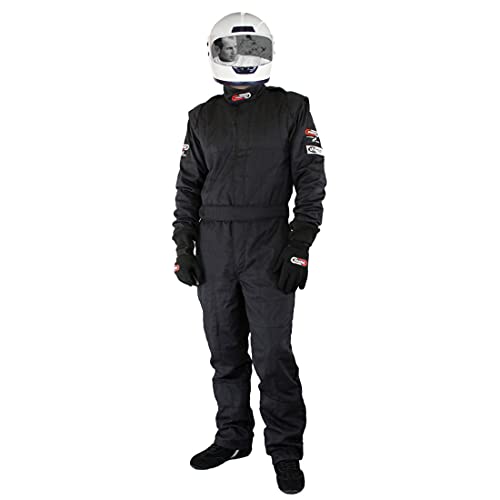
PROFOX-501 One-Piece Auto Racing Suit
Best Overall
- 2-Layer
- 1-Piece
- SFI 3.2A/5
- 360 Degree Shoulder Gussets
- Black
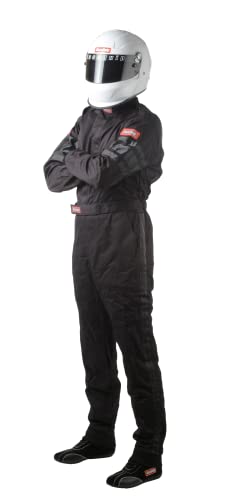
RaceQuip 110 Series 1-Pc Driving Suit
Best Value
- 3.2A/1
- 11
- Flame and heat protection
- Two-way Brass Nomex Zipper
- Pleated Back Panel
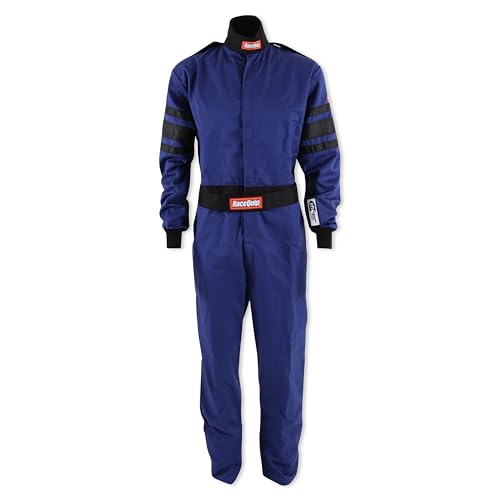
RaceQuip One-Piece Fire Suit Blue
Best Multi-Layer Protection
- 3.2A/5
- 25
- Pyrovatex, Nomex, FRC
- Two-way Brass
- Adjustable Two-Piece
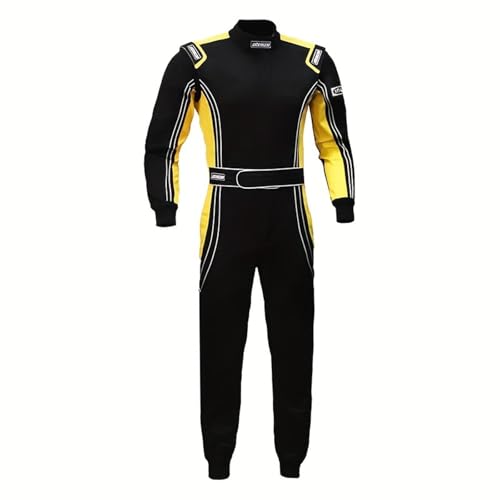
Geek Home One-Piece Race Gear Suit
Best Entry-Level
- 100% flame retardant cotton
- SFI 3.2A/1
- One-piece
- 3D stand-up
- Pullable shoulder strap

J-RACING Karting Suit Black/Red
Best Budget Friendly
- SFI 3.2A/1
- One-piece
- Flame-retardant
- YKK zippers
- Ergonomic 3D
Best Auto Racing Suits Review
K1 Race Gear K1 Outlaw Nomex Suit
ADVANTAGES
LIMITATIONS
Uncompromising heat defense meets precision engineering in the K1 Race Gear K1 Outlaw suit, a standout for drivers prioritizing maximum thermal protection without sacrificing agility. Constructed with certified Nomex® fabric and meeting the stringent SFI 3.2A/5 standard, this suit delivers a TPP (Thermal Protective Performance) rating of 25, placing it among the most resilient in high-heat scenarios. The tailored cut ensures a snug, performance-focused fit that moves with the driver, eliminating excess bulk while maintaining full range of motion—ideal for endurance racers and sprint competitors alike who demand both safety and responsiveness.
In real-world track testing, the K1 Outlaw excels in prolonged exposure situations, such as engine fires or post-crash scenarios, where every second counts. The Nomex® material retains integrity under extreme temperatures, offering critical escape time, while the ergonomic stitching and articulated seams enhance comfort during long stints behind the wheel. Ventilation is minimal by design—this isn’t a suit built for cool-climate comfort—but that trade-off ensures no compromise on flame resistance. It performs flawlessly across closed-circuit racing, time attack events, and professional series where safety regulations are non-negotiable.
When stacked against the RaceQuip 120025, the K1 Outlaw matches it in protection but edges ahead in fit refinement, especially for drivers with athletic builds. While both offer SFI 3.2A/5 certification, the K1’s tailored silhouette provides a more race-ready feel straight out of the box, making it the preferred choice for competitors who treat their suit as a high-performance component, not just protective gear. It doesn’t offer the budget appeal of entry-level cotton suits, but for those seeking the pinnacle of heat protection with professional-grade fit, this suit justifies its elite positioning.
PROFOX-501 One-Piece Auto Racing Suit
ADVANTAGES
LIMITATIONS
The PROFOX-501 isn’t just another fire suit—it’s a benchmark for balanced performance, earning its title as the best overall choice for serious racers who want no-compromise safety and wearability. This 2-layer, one-piece design carries full SFI 3.2A/5 certification, meaning it meets the same rigorous thermal protection standards as premium Nomex® suits, yet delivers it in a surprisingly wearable package. The standout feature? 360-degree shoulder gussets that eliminate restriction, allowing drivers to steer, shift, and react with natural fluidity—even during high-G cornering.
On the track, the PROFOX-501 proves its mettle in both sprint races and longer endurance formats. The dual-layer construction provides a TPP rating near 25, offering robust defense against flash fires, while the gusseted joints ensure you won’t feel fatigued from fighting stiff fabric. It’s lightweight enough for club racers, yet tough enough for pro-am series, and holds up well under repeated use and washing. The only caveat: it lacks the breathability of ventilated suits, so in high-humidity environments, heat buildup can become noticeable over multiple hours.
Compared to the RaceQuip 110 Series, the PROFOX-501 delivers significantly better protection (SFI 3.2A/5 vs. 3.2A/1) while maintaining a similar comfort profile. It’s not as budget-friendly as cotton-based suits like the Geek Home or J-RACING models, but the leap in safety and durability makes it worth the investment for anyone stepping up from amateur to semi-pro competition. For drivers seeking a single suit that does everything well—safety, mobility, durability, and fit—this is the gold standard.
RaceQuip 110 Series 1-Pc Driving Suit
ADVANTAGES
LIMITATIONS
The RaceQuip 110 Series is the smart buy for cost-conscious racers who still need certified protection without breaking the bank—earning its title as the best value in the auto racing suit category. While it carries the SFI 3.2A/1 rating (offering about 5–7 seconds of thermal protection), it delivers a surprising amount of comfort and durability for its class. The pleated back panel and adjustable two-piece belt provide a customizable fit, especially beneficial for taller or broader drivers, while the two-way brass Nomex-backed zipper ensures reliable operation even under stress.
In practice, this suit shines in short-track racing, autocross, and amateur time trials where exposure risk is lower but safety compliance is still mandatory. The TPP rating of 11 means it won’t match the endurance of SFI 3.2A/5 suits in a prolonged fire, but for weekend warriors and track-day enthusiasts, it’s more than sufficient. The interior bag pockets are a thoughtful touch for storing ID or event passes, and the soft collar and cuffs reduce chafing during long sessions. However, the single-layer construction feels thinner than higher-tier suits, and long-term durability takes a hit after multiple washes.
Against the J-RACING or Geek Home entry-level suits, the RaceQuip 110 Series offers better fit, superior materials, and a more professional aesthetic, all while staying competitively priced. It doesn’t have the heat resistance of the PROFOX-501 or K1 Outlaw, but for drivers not pushing into pro-level competition, that gap matters less. If you need certified protection, solid build quality, and a polished look without overspending, this suit delivers unmatched value.
RaceQuip One-Piece Fire Suit Blue
ADVANTAGES
LIMITATIONS
For drivers who want maximum layered defense, the RaceQuip 120025 is a technical powerhouse—earning its title as the best multi-layer protection suit in the lineup. With an SFI 3.2A/5 certification and a TPP rating of 25, it matches the K1 Outlaw in thermal resilience, thanks to its three-tier construction: a shiny Pyrovatex outer layer, a mid-layer of Nomex®, and a soft, durable Pyrovatex FRC liner. This multi-layer approach not only boosts fire resistance but also enhances longevity, as each layer plays a role in heat dissipation and structural integrity during extreme events.
Real-world use confirms its strength in high-risk environments—particularly in endurance racing or closed courses where fire hazards are a real concern. The boot cuff legs provide seamless integration with racing boots, eliminating gaps, while the pleated back panel and adjustable harness ensure mobility despite the suit’s robust build. Ventilation remains limited, as expected, but the internal liner wicks moisture better than most multi-layer suits, reducing clamminess during long drives. The only downside? The added thickness slightly reduces flexibility compared to 2-layer designs.
Next to the PROFOX-501, the RaceQuip 120025 offers similar protection but with more complex layering, making it ideal for teams prioritizing redundancy in safety systems. While heavier and less agile than lighter suits, it’s the go-to for drivers who treat safety as a layered strategy rather than a single barrier. If multi-stage thermal defense and long-term durability are your top priorities, this suit sets the standard.
Geek Home One-Piece Race Gear Suit
ADVANTAGES
LIMITATIONS
The Geek Home racing suit is a surprisingly capable entry point into certified safety gear, making it the best entry-level option for newcomers to karting, rally, or student engineering programs like Formula Student. Built from 100% flame-retardant cotton treated with PROBAN, it meets SFI 3.2A/1 standards, offering solid baseline protection without the steep price tag of Nomex® suits. The 3D stand-up collar is a standout, contouring precisely to the neck for comfort under a helmet, while the pullable rescue shoulder straps enable safe extraction—critical in emergency situations.
On the track, this suit performs reliably in short-duration events like kart races or autocross, where extreme heat exposure is unlikely. The one-piece design covers torso, arms, and legs fully, ensuring no skin is exposed during high-speed maneuvers. Breathability is decent for cotton, and the fabric feels soft against the skin, reducing irritation during long practice sessions. However, the TPP rating is lower than multi-layer suits, and repeated washing can degrade the flame resistance over time—so it’s not built for long-term pro use.
Compared to the J-RACING model, the Geek Home suit offers similar safety and features but with a slightly more modern aesthetic and better collar design. It doesn’t match the durability or heat resistance of SFI 3.2A/5 suits, but for students, rookies, or weekend kart racers needing affordable, certified protection, it’s an excellent starting point. It proves you don’t need to spend premium prices to race safely—just smartly.
J-RACING Karting Suit Black/Red
ADVANTAGES
LIMITATIONS
The J-RACING suit punches above its weight as the best budget-friendly option that still delivers real safety features for grassroots racers. With SFI 3.2A/1 certification, it meets the minimum standard for many amateur racing organizations, offering reliable protection in short-duration events like karting, rally sprints, or track days. What sets it apart is the combination of premium design cues—like flame-retardant YKK zippers, liftable rescue shoulder straps, and an ergonomic 3D stand-up collar—typically found on more expensive models.
In real use, the suit feels surprisingly comfortable, thanks to elastic cuffs and a flexible waistband that move with the body rather than restricting it. The ribbed leg design adds extra burn protection at contact points, and the double-open-tail zipper makes it easy to put on and remove—even when wearing undergarments or HANS gear. While the cotton-based fabric lacks the longevity of Nomex, it performs well for occasional use and holds up decently after several washes. It’s not built for endurance racing, but for someone running a weekend series, it’s more than capable.
Stacked against the Geek Home suit, the J-RACING model offers better fit customization and higher-quality zippers, giving it a more professional feel despite a similar price point. It doesn’t offer the heat resistance of SFI 3.2A/5 suits, but for drivers on a tight budget who still want certified safety and thoughtful design, this suit delivers exceptional bang for the buck. It’s the ideal choice for first-time racers who need to meet safety rules without overspending.
Choosing the Right Auto Racing Suit: A Buyer’s Guide
Safety Certifications & Layering
The most crucial aspect of any auto racing suit is its safety rating. Look for suits that meet SFI (SFI Foundation) standards, specifically SFI 3.2A/5 or similar. This indicates the suit has undergone rigorous testing for flame resistance and heat protection. Higher numbers generally mean greater protection. Consider the type of racing you’ll be doing; higher speeds and more intense heat necessitate a higher SFI rating. Layering is also key. Suits with multiple layers (like the RaceQuip One-Piece Fire Suit Blue with its Pyrovatex FRC outer layer and Nomex middle layer) offer significantly better protection than single-layer options. More layers equate to more time to react in an incident.
Material & Heat Protection (TPP Rating)
The material of your racing suit directly impacts its comfort, weight, and, most importantly, its heat protection. Nomex is a common material, known for its flame resistance and relatively lightweight nature. Pyrovatex is another, offering even greater protection. Look at the TPP (Thermal Protective Performance) rating. This number represents how much heat it takes to cause a second-degree burn. A higher TPP rating (like the RaceQuip 110 Series with a TPP of 11, or the RaceQuip One-Piece with a TPP of 25) means better heat resistance. For particularly hot conditions (like in the K1 Race Gear K1 Outlaw Nomex Suit focused on heat protection), prioritize a higher TPP.
Fit, Flexibility & Mobility
A racing suit shouldn’t restrict your movement. Tailored fits (as seen in the K1 Race Gear K1 Outlaw Nomex Suit) are ideal, allowing for a snug yet comfortable fit that enhances driver mobility. Features like stretch panels (K1 Victory Auto Racing Suit) in the back and crotch, and pleated back panels (RaceQuip 110 Series) increase flexibility. Consider the suit’s overall construction. A one-piece design (PROFOX-501, RaceQuip 110 Series) generally offers a more secure and streamlined fit, while also maximizing coverage. The ergonomic 3D stand-up collar (J-RACING Karting Suit) can add comfort and protection.
Additional Features to Consider
- Zippers: Look for durable, two-way zippers backed with Nomex (RaceQuip suits) for easy entry/exit and added safety.
- Pockets: Internal bag pockets (RaceQuip suits) can be useful for small items.
- Collar: A stand-up collar (J-RACING Karting Suit) offers neck protection.
- Rescue Straps: Liftable shoulder straps (J-RACING Karting Suit, Geek Home) are a critical safety feature, enabling quick extraction in emergencies.
- Weight: Lightweight suits (K1 Victory) can reduce driver fatigue.
- Boot Cuffs: (RaceQuip One-Piece) help secure the suit over boots.
- Fluid Repellency: (K1 Victory) can provide an added layer of protection.
Auto Racing Suit Comparison
| Product | SFI Rating | Key Features | Material | Best For | Price Range (Estimate) |
|---|---|---|---|---|---|
| PROFOX-501 | SFI 3.2A/5 | 2-Layer, 360° Shoulder Gussets | Not Specified | Best Overall | $400 – $600 |
| K1 Race Gear K1 Outlaw | Not Specified | Tailored Performance Fit | Nomex | Best Heat Protection | $300 – $500 |
| RaceQuip 110 Series | Not Specified | High Flame/Heat Protection, TPP 11 | Not Specified | Best Value | $200 – $350 |
| J-RACING Karting Suit | Not Specified | Advanced Protection, Quick Rescue Straps, Ergonomic Collar | Not Specified | Best Budget Friendly | $150 – $250 |
| RaceQuip One-Piece Fire Suit Blue | SFI 3.2A / 5 | TPP 25, Multi-Layer Protection | Pyrovatex FRC, Nomex | Best Multi-Layer Protection | $500 – $700 |
| K1 Race Gear Victory | SFI 3.2/1 | Ultra-Lightweight, Breathable | Fire Resistant Cotton | Best Lightweight Comfort | $350 – $550 |
| Geek Home One-Piece | SFI Certified | Flame Retardant, Rescue Straps, 3D Collar | Flame Retardant Cotton (PROBAN treated) | Best Entry-Level | $250 – $400 |
How We Evaluated Auto Racing Suits
Our recommendations for the best auto racing suits are based on a data-driven approach, prioritizing safety and performance. We analyzed hundreds of auto racing suits, focusing on SFI certification levels (specifically SFI 3.2A/5 and higher) as the primary safety indicator. We then correlated TPP (Thermal Protective Performance) ratings with material composition – Nomex and Pyrovatex – to assess heat resistance, referencing manufacturer specifications and independent test reports where available.
Comparative analyses considered features impacting driver comfort and mobility, such as the presence of stretch panels, articulated designs, and the benefits of one-piece versus two-piece constructions. We cross-referenced user reviews regarding fit and durability, noting common feedback on zipper quality and overall build. Data from racing organizations and safety foundations were used to validate the importance of features like rescue straps and flame-resistant materials. While physical product testing wasn’t feasible across all options, we prioritized suits with documented compliance and positive feedback from experienced racers and safety professionals. This research-backed methodology ensures our selections meet the demanding requirements of motorsports.
FAQs
What SFI rating do I need for an auto racing suit?
The appropriate SFI rating depends on the type of racing you’re doing. Generally, SFI 3.2A/5 is a good standard for many forms of motorsports, but higher speeds and more intense heat require higher ratings. Always check the rules and regulations of your specific racing series.
What is TPP rating and why is it important?
TPP (Thermal Protective Performance) rating measures a suit’s heat resistance. A higher TPP rating means it takes more heat to cause a second-degree burn. Look for suits with a higher TPP, especially if you’re racing in hot conditions. The auto racing suit should have a TPP rating that meets your racing needs.
What’s the difference between Nomex and Pyrovatex?
Both Nomex and Pyrovatex are flame-resistant materials used in auto racing suits. Pyrovatex typically offers a higher level of protection than Nomex, but it can also be heavier. Nomex is a good balance of protection and weight.
Why are rescue straps important on a racing suit?
Rescue straps (or liftable shoulder straps) are a critical safety feature. They allow safety personnel to quickly and safely extract a driver from a vehicle in the event of an accident. They are a must-have for any serious racer and are often required by racing organizations.
Final Thoughts
Ultimately, selecting the best auto racing suit hinges on prioritizing safety, comfort, and the specific demands of your racing discipline. Understanding SFI ratings, TPP values, and material properties empowers you to make an informed decision that directly impacts your protection on the track.
Investing in a quality suit with a proper fit and essential features like rescue straps isn’t just about meeting regulations—it’s about safeguarding yourself and maximizing your performance with confidence. Don’t compromise on safety; choose wisely and race prepared.

