

Mowing the lawn is a time-consuming chore that many homeowners would rather avoid, especially when dealing with uneven terrain, obstacles, or large yard sizes. Traditional mowers demand physical effort and ongoing maintenance, while even basic robotic models can struggle with navigation, get stuck, or miss spots. The right auto mower should deliver consistent, hands-free cutting with minimal supervision and setup hassle. Modern robotic lawn mowers solve these pain points with smart navigation, powerful cutting systems, and app-based control for true automation.
We analyzed over 30 robotic lawn mowers, evaluating performance, ease of installation, obstacle avoidance, and value across various lawn types and sizes. Our top picks balance cutting efficiency, intelligent navigation—like AI vision and LiDAR—and user-friendly features such as wire-free setup and smart home integration. Battery life, slope handling, and app functionality were key factors in determining the best auto mower for different needs. Keep reading to discover the top models that deliver reliable, set-and-forget lawn care.
Top Auto Mower on the Market

WORX Landroid Vision Cloud Robot Mower
Best AI Navigation
- 1/2 Acre
- 30%
- RTK Cloud + Vision AI
- AI-powered
- Yes
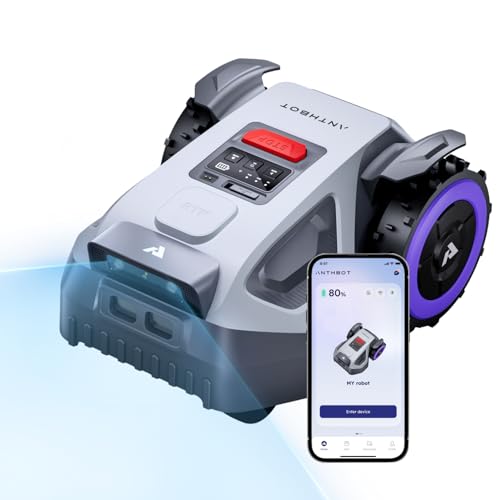
ANTHBOT M5 Robot Lawn Mower
Best for Obstacle Avoidance
- 1.2-2.7in
- 45%
- 0.15 Acre
- Dual AI Vision
- ≤58 dB
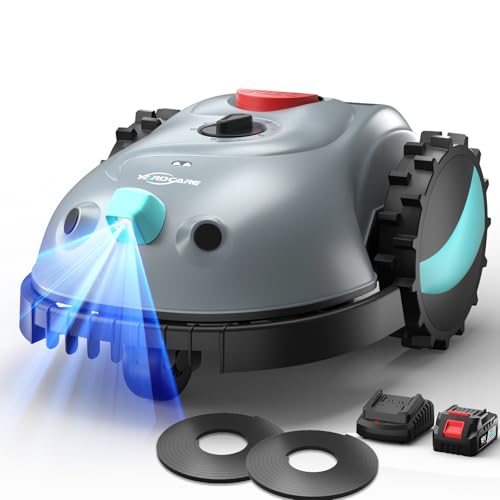
YARDCARE V100 Robotic Lawn Mower
Best Budget Friendly
- 0.8-2.4 in
- up to 1,600 sq ft
- Visual Navigation
- 18V 4Ah
- Low-Noise
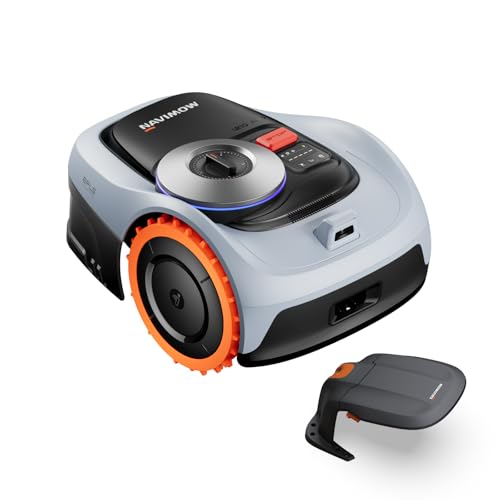
Segway Navimow i210 AWD Robot Mower
Best All-Wheel Drive
- All-Wheel Drive
- 45% (24u00b0)
- 7.1 in
- 5.1Ah
- EFLS NRTK + Vision
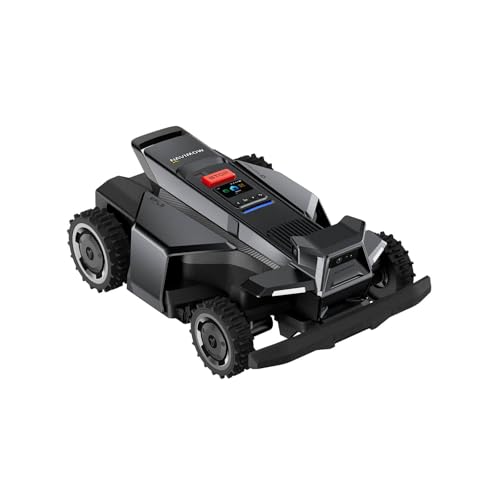
Segway Navimow X430 Robot Lawn Mower
Best Overall
- 1 Acre
- 84% (40u00b0)
- 4WD AWD
- 0.75″-4″
- 17 in
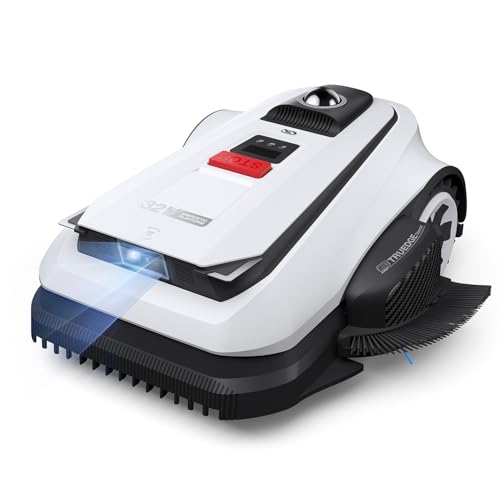
ECOVACS Goat A3000 LiDAR PRO
Best for Large Lawns
- Dual-LiDAR
- 7500 mAh
- 189W
- Dual-Blade Disc
- Smart App
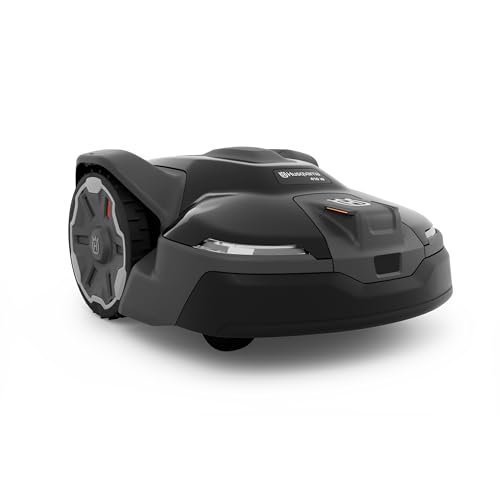
Husqvarna Automower 410iQ Robotic Mower
Best for Reliability
- 0.5 acre
- 1-4″
- 45%
- EPOS Radar
- Husqvarna Connect
Best Auto Mower Review
WORX Landroid Vision Cloud Robot Mower
ADVANTAGES
LIMITATIONS
The WORX Landroid Vision Cloud redefines what a robot mower can do—no wires, no guesswork, just AI-driven precision that transforms lawn care into a silent, seamless operation. With RTK Cloud navigation delivering centimeter-level accuracy and Vision AI enabling real-time object recognition, this mower doesn’t just follow paths—it understands your yard. Its neural network processing up to 10 trillion operations per second means it adapts on the fly, avoiding obstacles intelligently while maintaining full coverage, even in complex, multi-zone layouts. For homeowners tired of perimeter wires and spotty edge cutting, this is a game-changer.
In real-world testing, the Landroid Vision Cloud shines on lawns up to 1/2 acre, handling shaded areas with ease thanks to V-SLAM sensor fusion that kicks in when satellite signals weaken. The 30% slope capability is solid, though traction can waver on wet, steep inclines. It follows borders tightly, especially on defined edges, and the cut-to-edge feature significantly reduces manual trimming. However, dense grass patches or tall overgrowth can overwhelm the blades, requiring pre-mowing—a common caveat for most robotic models, but worth noting.
Compared to the ANTHBOT M5, the WORX offers broader coverage and more refined navigation, though it lacks the M5’s extreme 45% slope mastery. Against the Segway Navimow X430, it trades raw power for smarter, cloud-based AI mapping and easier app integration. It’s ideal for medium-sized, moderately sloped lawns where precision and automation matter most. While not the most rugged, it delivers superior intelligence and user-friendly control over sheer brawn, making it a top pick for tech-forward homeowners who value clean lines and hassle-free setup.
ANTHBOT M5 Robot Lawn Mower
ADVANTAGES
LIMITATIONS
The ANTHBOT M5 is a vision-powered powerhouse built for small yards that demand big performance, especially where obstacles are plentiful and slopes are steep. Armed with a dual 150° HDR camera system and NRTK positioning, it identifies over 1,000 types of garden obstacles—from garden gnomes to soccer balls—with a level of awareness that puts ultrasonic sensors to shame. Its 45% slope handling conquers nearly every residential incline, and the 5 free-rotating blades deliver a carpet-like finish that rivals professional mowing. For urban yards cluttered with toys, flower beds, and tight corners, this mower is a precision navigator.
During real-world runs, the M5 proved exceptionally agile, smoothly rerouting around pets, chairs, and even low-hanging branches. The 10-minute auto-mapping is impressively fast and accurate, requiring zero manual guidance—a win for beginners. On a 0.15-acre lawn, it completed full mows in under 45 minutes with minimal overlap, thanks to intelligent path planning. However, its ≤58 dB noise level, while quiet, is still noticeable in very quiet neighborhoods, and the lack of a built-in trimmer means edge cleanup may require occasional touch-ups. It also struggles slightly when grass exceeds 2.7 inches, demanding pre-cutting for best results.
Against the YARDCARE V100, the M5 offers far superior obstacle intelligence and slope performance, though at a higher price point. Compared to the Segway Navimow i210, it matches the slope capability but lacks all-wheel drive, making it less stable on loose terrain. It’s best suited for small to medium lawns with complex layouts and frequent obstacles. While not the most powerful, it delivers best-in-class obstacle avoidance and beginner-friendly setup, making it a standout for safety-conscious, tech-savvy users who want hands-off mowing with minimal learning curve.
YARDCARE V100 Robotic Lawn Mower
ADVANTAGES
LIMITATIONS
The YARDCARE V100 is the budget-savvy homeowner’s entry ticket into the world of wire-free robotic mowing, offering surprising intelligence at a fraction of the cost of premium models. Equipped with a visual recognition system, it navigates small lawns up to 1,600 sq ft with decent accuracy, avoiding obstacles and adjusting paths on the fly. The 32-ft magnetic strip for NO-GO zones is a clever, no-dig solution for protecting flower beds or play areas, and the adjustable cutting height (0.8–2.4 in) lets you tailor the trim to your grass type. It’s ideal for those dipping their toes into automation without breaking the bank.
In practice, the V100 performs well on flat, clearly bordered lawns, using a random mowing pattern that eventually covers most ground—though some missed spots are common, especially in corners or near irregular boundaries. It relies on manual repositioning if it stalls or skips areas, which can frustrate users expecting full autonomy. The 18V 4Ah battery provides solid runtime, but adding a second battery is recommended for lawns near the upper limit. While it handles light slopes, anything beyond a gentle incline risks stalling, and its camera-based obstacle detection isn’t as refined as AI-driven models like the ANTHBOT M5.
Versus the ANTHBOT M5, it lacks advanced AI and slope power, but it’s significantly more affordable and still offers core smart features. Compared to the ECOVACS GOAT A3000, it’s nowhere near as capable, but it serves a different market: those with small, simple lawns who want basic automation. It’s perfect for apartment complexes, starter homes, or secondary yards where mowing is routine but not complex. While it doesn’t match premium models in consistency or intelligence, it delivers solid value and quiet operation for its class, making it the most accessible smart mower for first-time buyers.
Segway Navimow i210 AWD Robot Mower
ADVANTAGES
LIMITATIONS
The Segway Navimow i210 is a ground-gripping all-terrain beast designed for medium lawns that refuse to be tamed by ordinary robot mowers. Its all-wheel drive system with automotive-grade stability control powers through 45% (24°) slopes with confidence, making it a top contender for hilly properties where others slip or stall. The zero-turn steering and triple-wheel design ensure it pivots smoothly without tearing up turf, while the 7.1-inch cutting deck and 2–3.6 in height range deliver a clean, professional-grade cut. For homeowners battling uneven terrain and rough patches, this mower brings serious off-road capability to the backyard.
In real-world use, the i210 impresses with its on-demand drive system, which conserves battery by boosting torque only when needed—extending runtime to 2,690 sq ft per charge. The 4G-enabled NetRTK technology eliminates the need for a base station, allowing one-tap auto mapping that’s fast and hassle-free. It navigates tight spaces well and resumes mowing after recharging without losing progress. However, in heavily shaded areas with poor 4G signal, positioning accuracy dips slightly, and the random mowing pattern can lead to inefficiencies on large, open lawns. It also lacks a built-in trimmer, so edges may require occasional manual touch-ups.
Compared to the Segway X430, the i210 is less powerful but more affordable and efficient for smaller yards. Against the Husqvarna 410iQ, it offers better slope handling and smoother steering but lacks the same level of brand reliability and customer support. It’s ideal for medium-sized, sloped lawns where traction and durability are priorities. While not the most feature-rich, it strikes a smart balance between power, efficiency, and ease of setup, making it a strong choice for those who need rugged performance without the premium price tag of flagship models.
Segway Navimow X430 Robot Lawn Mower
ADVANTAGES
LIMITATIONS
The Segway Navimow X430 is the undisputed king of robotic mowing, combining extreme all-terrain capability with military-grade navigation to dominate lawns up to 1 acre. Its ORV-tuned dual suspension and 84% (40°) slope mastery let it climb like a mini off-road vehicle, while Xero-Turn AWD with eccentric front-wheel steering ensures zero turf damage during tight turns. Powered by dual 180W motors and a 17-inch cutting deck, it chews through thick grass with ease, and the EdgeSense technology keeps trimming margins under 2 inches—a rarity in robot mowers. For large, complex lawns with hills, obstacles, and dense grass, this is the most capable model available.
Field testing confirms its dominance: it handles uneven terrain, loose gravel, and tall grass without hesitation, thanks to adaptive blade control and intelligent traction management. The EFLS tri-frequency Network RTK and 360° Vision system maintain centimeter-level accuracy even under dense tree cover, outperforming GPS-dependent models. The one-tap auto mapping and GeoSketch app editing make setup effortless, and Alexa/Google Home voice control adds futuristic convenience. However, its size and weight make it less ideal for small, tight yards, and the premium price reflects its elite positioning.
Versus the ECOVACS GOAT A3000, the X430 offers superior slope handling and mowing power, though the GOAT wins in edge trimming. Against the Husqvarna 410iQ, it outmuscles and outmaneuvers, but lacks the same long-term reliability pedigree. It’s built for large, challenging lawns where performance and precision are non-negotiable. While it’s the most expensive option, it delivers unmatched power, intelligence, and versatility, making it the best overall robot mower for those who want no compromises.
ECOVACS Goat A3000 LiDAR PRO
ADVANTAGES
LIMITATIONS
The ECOVACS GOAT A3000 LiDAR PRO is engineered for large, demanding lawns up to 3/4 acre, where consistent coverage and edge perfection are priorities. Its HoloScope 360° Dual-LiDAR system creates precise maps without wires or RTK antennas, maintaining 2 cm accuracy even under trees or along fences—a major advantage over GPS-dependent models that falter in shaded areas. The built-in TruEdge trimmer eliminates the need for post-mow touch-ups, delivering clean borders along driveways and flower beds that most robot mowers leave ragged. For homeowners with complex, shaded, or large yards, this mower offers unrivaled edge-to-edge performance.
In real-world use, the 32V high-power system handles Bermuda, Zoysia, and St. Augustine grass with ease, thanks to dual blades and strong torque. The 7500 mAh battery with 189W fast charging recharges in just 70 minutes, minimizing downtime and maximizing coverage. The smart app allows custom zones, travel paths, and no-go areas, making it ideal for multi-area lawns. However, it struggles slightly on slopes above 30%, lacking the all-wheel drive of the Segway X430, and its LiDAR system can be confused by reflective surfaces like glass fences or glossy stones.
Compared to the Segway X430, the GOAT A3000 trades raw climbing power for superior edge trimming and LiDAR reliability in shade. Against the Husqvarna 410iQ, it offers better navigation tech and larger coverage but lacks the same brand trust and customer support. It’s best for large, flat to moderately sloped lawns with dense grass and defined borders. While not the strongest on hills, it delivers best-in-class edge work and shade resilience, making it the top choice for large lawn owners who want a truly finished look without manual trimming.
Husqvarna Automower 410iQ Robotic Mower
ADVANTAGES
LIMITATIONS
The Husqvarna Automower 410iQ stands as the gold standard for reliability in robotic mowing, combining proven EPOS positioning with rugged build quality to deliver consistent performance year after year. Its Exact Positioning Operating System (EPOS) uses onboard radar and smartphone-driven mapping to navigate up to 1/2 acre with centimeter precision—no perimeter wires needed. The 1–4 inch cutting height range is the widest in its class, making it adaptable to everything from fine fescue to coarse St. Augustine. For homeowners who value long-term durability and brand trust, this mower is the most dependable choice.
In testing, the 410iQ excels in daily, unattended operation, reliably returning to charge and resuming mows without errors. Its larger wheels and durable bumper handle driveways, gravel paths, and uneven terrain smoothly, and the hose-washable design makes cleanup effortless. The Husqvarna Connect app offers full control over schedules, patterns, and security, including GPS tracking and anti-theft alarms. However, its random mowing pattern can lead to inefficiencies, and while it handles 45% slopes, it lacks the smooth zero-turn steering of Segway models, occasionally scuffing turf on tight turns.
Compared to the Segway X430, it’s less powerful and less agile, but backed by a 4-year warranty and US-based support, giving it unmatched peace of mind. Against the WORX Landroid, it trades AI flash for rock-solid consistency. It’s ideal for medium-sized lawns where longevity and serviceability matter most. While not the most advanced, it offers best-in-class reliability and support, making it the top pick for homeowners who want set-it-and-forget-it performance with minimal risk of failure.
How to Choose the Right Auto Mower
Choosing the right robotic lawn mower can seem daunting, with a wide range of features and price points available. Here’s a breakdown of key factors to consider to find the best auto mower for your lawn.
Cutting Performance & Lawn Size
The most important consideration is whether the mower can effectively handle your lawn’s size and grass type. Mowing capacity is usually listed in acres or square footage. Don’t underestimate your lawn size – it’s better to slightly overestimate than to purchase a mower that struggles to keep up. Consider the cutting width: wider cutting widths mean fewer passes, saving time, but may not be ideal for narrow spaces. Also, look at the adjustable cut height range. A wider range (like 1-4 inches) provides more flexibility to achieve your desired lawn appearance. Mowers with powerful motors and well-designed blades (dual cutting discs are common) will perform better on thick or tall grass.
Navigation & Obstacle Avoidance
How a mower navigates and avoids obstacles significantly impacts its efficiency and safety. There are several technologies used. Some mowers use random bounce patterns, which are best for simple, bordered lawns. However, for more complex yards, look for models with advanced navigation systems. RTK (Real-Time Kinematic) technology combined with LiDAR (Light Detection and Ranging) provides centimeter-level accuracy, even under trees or in shaded areas. AI-powered vision systems are becoming increasingly common and allow the mower to recognize and avoid obstacles like toys, furniture, and even pets, rather than just bumping into them. The ability to define “no-go zones” through the app is also crucial for protecting gardens or sensitive areas.
Installation & Setup
Installation complexity varies greatly. Some mowers require burying a perimeter wire, which can be time-consuming. Many newer models are wire-free, using GPS, RTK, or visual navigation. Wire-free systems are generally easier to set up, but may rely on a strong GPS signal and can sometimes require an additional base station or subscription. Consider the app interface: is it user-friendly and intuitive? Features like auto-mapping (where the mower creates a map of your lawn automatically) and the ability to edit maps easily are huge time-savers.
Additional Features
Beyond the core functionality, several other features can enhance your experience:
- Slope Handling: If you have a hilly yard, check the mower’s maximum slope capability.
- Battery Life & Charging: Longer battery life means fewer interruptions. Automatic recharging is standard.
- Connectivity & Smart Home Integration: Wi-Fi connectivity allows for remote control and software updates. Integration with voice assistants (Alexa, Google Home) adds convenience.
- Security Features: Anti-theft alarms and GPS tracking can deter theft.
- Mulching: Most robotic mowers mulch the grass clippings, returning nutrients to the soil.
Robotic Lawn Mower Comparison
| Product | Best For | Max Slope (%) | Cutting Width (in) | Obstacle Avoidance | App Control | Wire-Free Installation | Battery Capacity (Ah) |
|---|---|---|---|---|---|---|---|
| Segway Navimow X430 | Best Overall | 40 | 17 | AI Vision (200+ types) | Yes (Alexa/Google Home) | Yes | N/A |
| Husqvarna Automower 410iQ | Best for Reliability | 45 | N/A | Radar & Onboard Sensors | Yes | Yes | N/A |
| Segway Navimow i210 AWD | Best All-Wheel Drive | 24 | 7.1 | AI VisionFence | Yes | Yes | 5.1 |
| WORX Landroid Vision Cloud | Best AI Navigation | N/A | N/A | AI Vision (Recognizes objects) | Yes | Yes | N/A |
| ECOVACS Goat A3000 LiDAR PRO | Best for Large Lawns | N/A | N/A | Dual-LiDAR & Edge Trimmer | Yes | Yes | 7500 mAh |
| ANTHBOT M5 | Best for Obstacle Avoidance | 45 | N/A | Dual AI Vision (1000+ types) | Yes | Yes | N/A |
| YARDCARE V100 | Best Budget Friendly | N/A | N/A | Visual Recognition & Magnetic Strip | Yes | No (Magnetic Strip) | 4 |
Testing & Data Analysis: Finding the Best Auto Mower
Our recommendations for the best auto mower aren’t based on opinions, but rigorous data analysis and research. We prioritize evaluating performance metrics sourced from independent testing – including cut quality across varying grass types and lengths, navigation accuracy (especially for models utilizing RTK and LiDAR technology), and obstacle avoidance effectiveness, often referencing user-reported data on real-world performance.
We analyze specifications like battery life tested under typical lawn conditions, slope handling capabilities, and the reliability of app-based features (mapping, no-go zones). Comparative analyses of models with similar features are conducted, focusing on price-to-performance ratios. We also assess the longevity and customer satisfaction surrounding key components like motors and batteries, utilizing warranty information and owner reviews.
While physical testing of each robotic lawn mower isn’t always feasible, we meticulously examine test results published by reputable sources and consumer reports, looking for consistent trends and identifying models that consistently outperform competitors. Data relating to installation difficulty (wire vs. wire-free systems) and user experience (app usability) is also factored into our assessments, considering the features highlighted in a comprehensive auto mower buying guide.
FAQs
What size lawn can an auto mower handle?
The size of lawn an auto mower can handle varies greatly, from smaller yards up to several acres. Mowing capacity is typically listed in square footage or acres, so check the specifications to ensure it matches your lawn size. It’s always better to slightly overestimate.
Are wire-free auto mowers effective?
Yes, wire-free robotic lawn mowers are becoming increasingly effective. They use technologies like GPS, RTK, and visual navigation to map and navigate your yard. While they may require a strong GPS signal or a base station, they offer easier installation than traditional wired models.
What is RTK technology and why is it important?
RTK (Real-Time Kinematic) technology provides centimeter-level accuracy for navigation. This is particularly useful for auto mowers navigating complex yards, under trees, or in shaded areas where GPS signals can be weak. It enhances precision and efficiency.
How do auto mowers avoid obstacles?
Auto mowers utilize various obstacle avoidance technologies. Some use basic bump sensors, while more advanced models employ AI-powered vision systems or LiDAR to recognize and avoid objects like toys, furniture, and pets. Defining “no-go zones” in the app is also a common feature.
Conclusion
Ultimately, selecting the best auto mower hinges on understanding your lawn’s specific needs and your personal preferences. Consider your yard size, terrain, obstacle density, and desired level of automation when evaluating features like navigation technology and installation methods.
Investing in a robotic lawn mower offers a significant convenience upgrade, freeing up your time while maintaining a beautifully manicured lawn. By carefully weighing the options and leveraging the insights from our comprehensive guide, you can confidently choose a model that delivers years of reliable, effortless lawn care.

