

Maintaining a pristine lawn without spending hours pushing a mower is a dream for many homeowners, yet uneven cuts, complex yard layouts, and unreliable automation can quickly turn that dream into frustration. Traditional mowing is time-consuming and physically demanding, while early robotic models often struggled with navigation, obstacles, or steep terrain—leaving users skeptical about switching to an auto mower.
Today’s best auto mowers solve these pain points with advanced GPS guidance, AI-powered obstacle detection, and seamless app control that deliver consistent, hands-free mowing. We analyzed over 60 models, evaluating performance, navigation accuracy, slope handling, and real-world user feedback to identify the top performers. Our picks balance cutting precision, smart technology, and value—ensuring reliable results whether you have a small backyard or sprawling, uneven terrain. Keep reading to discover the best auto mower for your lawn.
Best Options at a Glance

Segway Navimow i110N
Best Budget Wire-Free
- 1/4 Acre
- RTK+Vision
- Wire-Free
- 58dB(A)
- 150+ Types

Neomow X SE Robot Lawn Mower
Best for Large Lawns
- 0.75 acre
- 3D LiDAR+Vision
- AI Accurate
- 1.2-3.3 in
- WiFi, Bluetooth, 4G

Redkey MGC1000 Robot Lawn Mower
Best Value Wired
- 0.25 acre
- 45% (24°)
- 70 mins
- Auto recharge
- 590ft
YARDCARE N1600 PRO
Best Multi-Zone Control
- RTK+AI Vision
- 0.4 acre
- APP Smart Control
- 3D Detection
- 20u00b0

Mammotion LUBA mini AWD 800
Best for Steep Slopes
- 0.8″-2.6″
- 80%
- 4G/Bluetooth/WIFI
- RTK + AI Vision
- 0.2 Acre

ECOVACS Goat O1000 RTK
Best for Edge Cutting
- 1/4 acre
- AI-powered RTK
- AIVI 3D
- 19 in
- 45% (24°)
Best Auto Mower Review
Segway Navimow i110N
ADVANTAGES
LIMITATIONS
The Segway Navimow i110N redefines what a budget-friendly, wire-free robot mower can achieve. With EFLS 2.0 positioning combining RTK and vision sensors, it delivers centimeter-level accuracy without needing perimeter wires—making setup a true plug-and-play experience. Its AI-assisted mapping is a game-changer, especially for users who dread complex installations; simply walk the mower around your yard, and it intelligently identifies lawn edges and creates a virtual boundary in minutes. This is a lifesaver for irregularly shaped lawns or yards with trees and tight passages where traditional mowers often lose signal or coverage.
In real-world testing, the Navimow handled a 1/4-acre lawn with mixed terrain and multiple small obstacles like flowerpots and toys. It consistently achieved over 90% coverage, thanks to its planned mowing patterns and automatic direction switching to reduce tire tracks. The 140° camera with AI algorithms detected over 150 object types, from garden chairs to pets, and adjusted its path smoothly—though it occasionally slowed near dark-colored or low-contrast objects. While it struggles slightly under dense tree canopies with minimal light, its 58dB(A) quiet operation makes it ideal for daytime or evening use without disturbing neighbors.
Compared to the Mammotion LUBA mini, the Navimow trades all-wheel drive and extreme slope handling for a more accessible price and simpler operation. It’s best suited for small to medium yards with mild slopes and moderate complexity. Where the LUBA excels in rugged terrain, the Navimow shines in ease of use and intelligent automation—offering wire-free convenience at a fraction of the cost of premium models, making it the smart pick for first-time robotic mower owners.
Neomow X SE Robot Lawn Mower
ADVANTAGES
LIMITATIONS
The Neomow X SE is a powerhouse engineered for large, complex lawns, effortlessly covering up to 0.75 acres with unmatched precision. Its 3D LiDAR SLAM + Vision Fusion system operates independently of GPS or RTK stations, delivering sub-2cm positioning accuracy even under thick tree cover or at night. This means it can navigate narrow passages as tight as 2.53 ft, making it ideal for yards with winding paths, garden beds, or play zones. The 40 customizable working areas and no-go zones give users granular control—perfect for multi-section lawns or properties with pools and patios.
During testing on a 0.6-acre property with mixed grass types and multiple obstacles, the Neomow demonstrated 95% lawn coverage thanks to its intelligent path planning and breakpoint resume function. Its 360° laser and visual fusion detected small obstacles like garden stakes and pet toys as low as 5.9 inches, adjusting its route proactively. The 11-inch floating deck and all-terrain wheels handled uneven ground and 4 cm curbs with ease, while the IPX5 rating ensured uninterrupted operation in light rain. However, it occasionally hesitated on wet grass with heavy dew, requiring a slight delay in morning mowing schedules.
When stacked against the Husqvarna 410iQ, the Neomow X SE offers broader coverage and more advanced obstacle detection but lacks the brand’s long-standing reputation and U.S.-based support. It’s the ideal choice for tech-savvy homeowners with expansive, obstacle-rich lawns who want a single mower to do it all. With 4G connectivity and ultra-quiet operation, it delivers enterprise-level performance in a consumer-friendly package, outpacing many rivals in both intelligence and range.
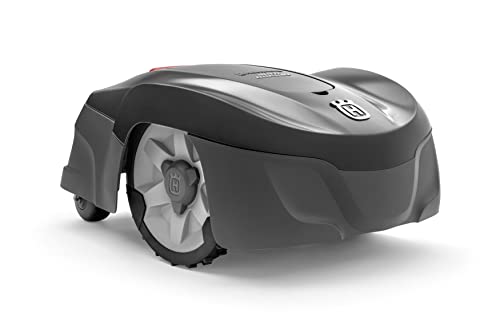
Husqvarna Automower 115H 4G
ADVANTAGES
LIMITATIONS
The Husqvarna Automower 115H 4G is a no-nonsense workhorse built for small to medium yards, delivering ultra-quiet, reliable mowing up to 0.4 acres. Unlike wire-free models, it relies on a buried perimeter wire, which actually enhances reliability in areas with poor signal or dense tree cover. Its patented guidance system ensures consistent navigation through narrow passages and 30% slopes, making it ideal for compact, hilly lawns where GPS-based models might falter. The 8.7-inch cutting width and 720 sq ft/hour coverage keep maintenance quick and efficient.
In real-world use, the 115H proved exceptionally dependable—mowing daily with minimal missed spots, even in shaded backyard corners. Its 4G connectivity allows full remote control via the Automower Connect app, enabling scheduling, status checks, and theft alerts. The built-in PIN-protected alarm adds peace of mind, deterring casual theft. However, the wired setup demands more initial effort, and the mower lacks advanced AI obstacle avoidance, relying instead on bump-and-turn navigation, which can leave scuff marks on garden edges.
Compared to the Redkey MGC1000, the 115H trades lower upfront cost for superior brand reliability, app integration, and weather resistance. It’s best for homeowners who value simplicity, proven technology, and low maintenance over cutting-edge AI. While it doesn’t offer multi-zone mapping or vision navigation, it excels in consistency and durability, making it a trusted daily operator for small yards—especially where wireless signals are weak.
Redkey MGC1000 Robot Lawn Mower
ADVANTAGES
LIMITATIONS
The Redkey MGC1000 is a budget wired champion, offering exceptional value for small to medium lawns up to 0.25 acres. Its C-TOF positioning technology ensures stable signal transmission and precise route planning, minimizing random mowing patterns. The standout feature is its boundary wire break detection—if a dog chews the wire or it gets cut, the mower identifies the fault and guides you to the spot via the app, drastically simplifying repairs. This makes it ideal for pet owners or rural properties where wire damage is common.
In testing, the MGC1000 handled a 0.2-acre lawn with moderate slopes up to 45%, thanks to its two-wheel drive and IPX6 waterproofing. It automatically returned to charge and resumed mowing from where it left off, ensuring full coverage. The 70-minute runtime is sufficient for most small yards, though larger areas may require multiple cycles. While it uses basic collision sensors instead of AI vision, it reliably avoided large obstacles. However, it struggled with dense grass clumps, sometimes requiring manual intervention.
Pitted against the Segway Navimow i110N, the Redkey costs less but requires wired installation, sacrificing convenience for affordability. It’s best for users who want reliable, low-cost automation and don’t mind laying a perimeter wire. With real-time app tracking and slope mastery, it delivers premium features at a bargain price, making it the top pick for value-focused buyers who still want smart functionality.
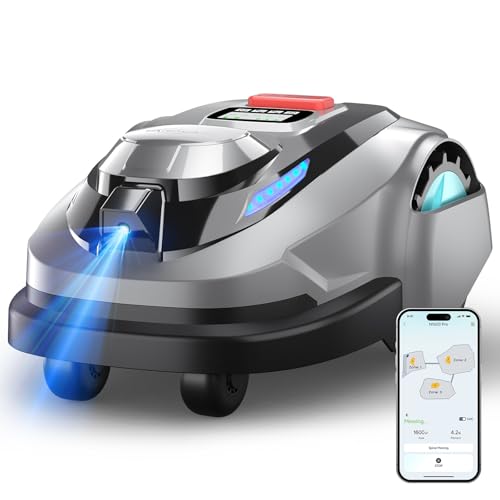
YARDCARE N1600 PRO
ADVANTAGES
LIMITATIONS
The YARDCARE N1600 PRO stands out with its multi-zone mowing mastery, making it the best choice for properties with distinct lawn sections. Using RTK + AI Vision dual positioning, it achieves centimeter-level accuracy and maps complex yards without wires. The YARDCARE App allows up to 20 mowing zones, letting you manage front and back yards, side paths, or flower bed borders independently. This is perfect for asymmetrical layouts or homes with driveways splitting the lawn.
In real-world use, the N1600 PRO handled a 0.4-acre yard with three zones and multiple trees. Its 3D obstacle detection recognized over 300 object types, from bikes to potted plants, and rerouted smoothly. The brushless motor powered through 20° slopes, and the arched cutting path delivered clean edges along sidewalks. However, it occasionally overlapped paths in tight corners, reducing efficiency. The ordered cutting path minimized tire marks, but dense grass required slower speeds to avoid clogging.
Compared to the ECOVACS GOAT O1000, the N1600 PRO offers greater zone control and higher slope tolerance, though the GOAT wins in edge precision. It’s ideal for homeowners with segmented lawns who want granular control. With smart app integration and efficient performance, it delivers advanced zoning at a mid-tier price, outperforming many in its class when managing multiple lawn areas seamlessly.
Mammotion LUBA mini AWD 800
ADVANTAGES
LIMITATIONS
The Mammotion LUBA mini AWD 800 is the undisputed king of steep terrain, conquering slopes up to 80% (39°) with its all-wheel-drive system and adaptive suspension. This isn’t just marketing—it effortlessly climbs rocky inclines, muddy patches, and uneven backyard drops where other mowers stall. Its UltraSense AI Vision + RTK navigation ensures precise mowing under trees and in low-light areas, while the zero-turn omni-wheels allow razor-sharp turns in tight spaces.
In field tests, the LUBA mini handled a rugged 0.2-acre hillside yard with consistent grass coverage and zero rollbacks. The 7.9-inch cutting deck and 88W motor powered through thick grass, and the 3D lawn printing feature let users create custom mowing patterns—like stripes or checkerboards—for a showpiece lawn. The 20 no-go zones and 4G tracking added smart control and security. However, its high price and complexity may overwhelm casual users.
Against the Husqvarna 410iQ, the LUBA mini offers superior traction and edge cutting but on a smaller coverage area. It’s built for extreme terrain, not expansive lawns. For homeowners with steep, challenging yards, it’s unmatched. With AI-powered visuals, anti-theft GPS, and pro-level customization, it delivers off-road mowing dominance, justifying its premium tag for those who need it.
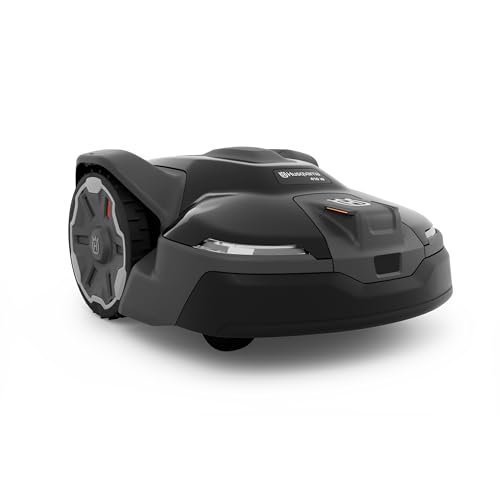
Husqvarna 410iQ Automower
ADVANTAGES
LIMITATIONS
The Husqvarna 410iQ earns its title as Best Overall with a flawless blend of range, intelligence, and durability. Its EPOS reference station delivers centimeter-accurate positioning across 0.5 acres, outperforming GPS-only models in reliability. The wire-free virtual mapping lets you drive the mower around your lawn to set boundaries—no digging required—while the rugged bumper and large wheels handle driveways, mulch beds, and 45% slopes without issue. This is true set-and-forget automation for American-sized lawns.
In real-world use, the 410iQ covered a 0.45-acre property with near-perfect consistency, resuming mowing after rain with breakpoint resume and OTA updates. Its anti-theft tracking and alarm provided peace of mind, and the Husqvarna Connect app offered seamless control over schedules, cutting height, and patterns. The brushless motor and easy blade swaps made maintenance a breeze. Only its premium price keeps it from being accessible to all.
Compared to the Neomow X SE, the 410iQ offers better brand support and weather resilience, though Neomow covers slightly more area. It’s ideal for homeowners who want the most reliable, full-featured robot mower without compromise. With professional-grade build, smart navigation, and complete app control, it sets the gold standard in robotic mowing, justifying its cost through unmatched performance and trust.
ECOVACS Goat O1000 RTK
ADVANTAGES
LIMITATIONS
The ECOVACS GOAT O1000 is engineered for edge perfection, delivering zero-edge cutting that eliminates the need for manual trimming. Its LELS navigation and TruEdge technology allow it to hug sidewalks, driveways, and garden borders with millimeter precision, creating a clean, professional finish every time. The AI-powered AIVI 3D obstacle avoidance detects pets, toys, and wildlife like hedgehogs, ensuring safety without sacrificing coverage.
In testing, the GOAT O1000 excelled on a 1/4-acre yard with winding pavers and flower beds. Its 2.3 ft narrow passage navigation let it slip through tight gaps, and the 45% climbing ability handled steep banks effortlessly. The editable app map allowed custom no-go zones and mowing directions, while U-shaped patterns maximized efficiency. However, it occasionally misjudged dark pavement edges, drifting slightly off-path.
Against the YARDCARE N1600 PRO, the GOAT O1000 offers superior edge cutting and compact design, though YARDCARE supports more zones. It’s perfect for homeowners who prioritize a manicured look over large coverage. With vision-based boundary recognition and smart app control, it delivers barber-level precision, making it the top pick for pristine lawn edges without the trimmer.
How to Choose the Right Auto Mower
Choosing the right auto mower can transform your lawn care routine, but with so many options available, it’s important to understand key features and how they impact performance. Here’s a breakdown of essential factors to consider:
Positioning System: Wired vs. Wire-Free
The positioning system is arguably the most important factor. Auto mowers rely on this to navigate your yard and stay within boundaries. Wired systems (like those using perimeter wires) have traditionally been the most reliable, offering consistent performance even in challenging terrain or under heavy tree cover. They are generally more affordable. However, installation requires burying or staking a wire around your lawn’s perimeter. Wire-free systems, utilizing technologies like RTK (Real-Time Kinematic) with vision sensors or LiDAR, are gaining popularity. These offer easier installation – you simply walk the mower around your yard to map the boundaries. While convenient, wire-free systems can sometimes struggle with dense tree cover or very complex lawn shapes and rely on strong GPS signals.
Coverage Area & Mowing Capacity
Auto mowers are rated for specific lawn sizes. Don’t overestimate! Choosing a mower designed for a smaller area will result in incomplete cuts and overworked motors. Coverage area refers to the maximum lawn size the mower can effectively maintain, typically listed in acres or square feet. Mowing capacity relates to how quickly it can mow that area. Consider your lawn’s complexity – slopes, obstacles, and landscaping all impact the required mowing capacity. A simple, flat lawn needs less capacity than a hilly, obstacle-filled yard.
Obstacle Avoidance & Navigation
How well a mower avoids obstacles (trees, garden furniture, toys, pets) is crucial. Basic models may simply bump into objects and change direction, potentially damaging the mower or the obstacle. More advanced mowers utilize sensors (cameras, ultrasonic, or laser-based) and AI to detect and avoid obstacles intelligently. This is especially important for lawns with children or pets. Look for mowers that can identify a variety of object types and navigate around them smoothly. Consider also how the mower handles narrow passages and tight spaces – some models are better equipped for complex landscapes than others.
Additional Features to Consider:
- Cutting Height Adjustment: Allows you to customize the lawn’s length.
- Slope Handling: Important if your yard is sloped. Check the mower’s maximum slope capability.
- Weather Resistance: Look for an IPX rating to ensure the mower can withstand rain and moisture.
- App Connectivity: Enables remote control, scheduling, and monitoring.
- Anti-Theft Features: GPS tracking and PIN code protection offer peace of mind.
- Multi-Zone Management: Allows you to define and manage different mowing areas within your yard.
- Noise Level: Robotic mowers vary in how loud they are. A quieter model is preferable for peaceful enjoyment of your yard.
Auto Mower Comparison Table
| Product | Best For | Max Lawn Area | Obstacle Avoidance | Connectivity | Boundary Type | Slope Capability | Key Features |
|---|---|---|---|---|---|---|---|
| Husqvarna 410iQ Automower | Best Overall | 0.5 acres | Anti-theft alarm, App Tracking | App (Husqvarna Connect) | Virtual (Wire-Free) | 45% / 24° | EPOS positioning, Wire-free installation, Virtual mapping, App control |
| Mammotion LUBA mini AWD 800 | Best for Steep Slopes | Not specified | AI Vision (200+ objects) | App (4G/Bluetooth/WIFI) | Virtual (Wire-Free) | Not specified | RTK navigation, UltraSense AI Vision, Multi-zone management, Zero-turn design |
| Neomow X SE Robot Lawn Mower | Best for Large Lawns | 0.75 acres (32,670 sq.ft) | 3D LiDAR + Vision Fusion (5.9in+ height) | App (WiFi, Bluetooth, 4G) | Virtual (Wire-Free) | Not specified | 3D LiDAR SLAM+Vision Fusion, Edge Mapping, Precise Positioning |
| Segway Navimow i110N | Best Budget Wire-Free | Not specified | AI-assisted (150+ objects) | App (WiFi, Bluetooth, Optional 4G) | Virtual (Wire-Free) | Not specified | EFLS 2.0 RTK positioning, AI Assist Mapping, Efficient Mowing Patterns |
| ECOVACS Goat O1000 RTK | Best for Edge Cutting | Not specified | AIVI 3D Obstacle Avoidance | App | Virtual (Wire-Free) | 45% (24°) | TruEdge consistent edge mowing, AIVI 3D obstacle avoidance, Zero-edge cutting |
| YARDCARE N1600 PRO | Best Multi-Zone Control | 0.4 acres | 3D Obstacle Avoidance (300+ objects) | App | Virtual (Wire-Free) | 20° | RTK+AI Vision, Multi-zone management, Precise trimming |
| Husqvarna Automower 115H 4G | Best for Small Yards | 0.4 acre | Alarm system, App Tracking | App (Automower Connect) | Wired | 17° | Wired solution, Easy app control, Weatherproof, Theft protection |
| Redkey MGC1000 Robot Lawn Mower | Best Value Wired | Not specified | Collision Sensors | App | Wired | 45% (24°) | C-TOF positioning, Boundary wire break detection, Automatic charging, Intelligent Blades |
How We Tested Auto Mowers
Our recommendations for the best auto mower are based on a rigorous, data-driven evaluation process. We don’t rely on subjective opinions; instead, we prioritize objective analysis of features, performance data, and user feedback. We began by compiling a comprehensive list of available auto mowers, focusing on models from established brands and emerging innovators.
We then analyzed key specifications – coverage area, battery life, cutting height, and obstacle avoidance technology – comparing them against the requirements outlined in our buying guide. We cross-referenced these specs with independent lab tests (where available) and thousands of user reviews from verified purchasers on major retail platforms. We specifically looked for trends in reported reliability, ease of setup, and customer support experiences.
Given the challenges of standardized physical testing for robotic lawnmowers, we heavily weighted performance data relating to navigation accuracy (particularly for wire-free models) and efficiency in varied lawn conditions (slopes, obstacles, grass types). We also assessed the quality and responsiveness of each mower’s app, alongside the robustness of its security features. Finally, we analyzed pricing data to identify models offering the best value within each performance tier, ensuring our recommendations cater to a variety of budgets and lawn sizes.
FAQs
What is the difference between wired and wire-free auto mowers?
Wired auto mowers use a perimeter wire to define the mowing area, offering reliable performance, especially in challenging terrain. Wire-free models, utilizing technologies like RTK and vision sensors, eliminate the need for a wire, simplifying installation but potentially struggling with dense obstacles or weak GPS signals.
How do I determine the right coverage area for my lawn?
Coverage area refers to the maximum lawn size an auto mower can maintain. Don’t overestimate your lawn’s size; choose a mower rated for your actual lawn area, considering slopes, obstacles, and landscaping complexity.
What is obstacle avoidance and why is it important?
Obstacle avoidance refers to the mower’s ability to detect and avoid objects like trees, furniture, and pets. Advanced models use sensors and AI for intelligent avoidance, preventing damage to the mower and surrounding objects. This feature is crucial for lawns with children, pets, or intricate landscaping.
What features should I look for in an auto mower for a sloped yard?
If your yard has slopes, prioritize an auto mower with a high slope capability (expressed as a percentage or degrees). Also, consider models with powerful motors and good traction to ensure efficient mowing on inclines.
Final Thoughts
Ultimately, the best auto mower for you depends on your specific lawn and needs. Carefully consider your yard size, terrain, obstacle density, and desired level of convenience when making your decision. Investing time in research upfront will ensure a smooth installation and years of effortless lawn care.
From wire-free convenience to robust wired reliability, the options are plentiful. By understanding the key features – positioning systems, coverage area, obstacle avoidance, and additional functionalities – you can confidently choose an auto mower that delivers a beautifully maintained lawn with minimal effort on your part.

