

Welders face serious risks from arc flash, UV radiation, and eye strain, especially when using helmets with slow response times or poor optical clarity. A low-quality auto darkening helmet can lead to inconsistent shading, distorted views, and delayed protection, compromising both safety and weld precision. The best auto darkening helmet solves these issues with fast reaction speeds, a wide shade range, and crystal-clear optics that meet the 1/1/1/1 clarity standard. Advanced models also offer solar-rechargeable power, multiple arc sensors, and ergonomic designs for all-day comfort and reliability across MIG, TIG, and Stick welding.
We analyzed over 20 auto darkening welding helmets, comparing key specs like viewing area, darkening speed (down to 1/30,000s), shade range, and power sources to identify top performers. Our picks balance performance, durability, and value, factoring in user reviews, optical ratings, and real-world usability. Whether you’re a hobbyist or a pro, the right helmet enhances safety and accuracy. Read on to find the best auto darkening helmet for your welding needs.
Top Auto Darkening Helmet on the Market
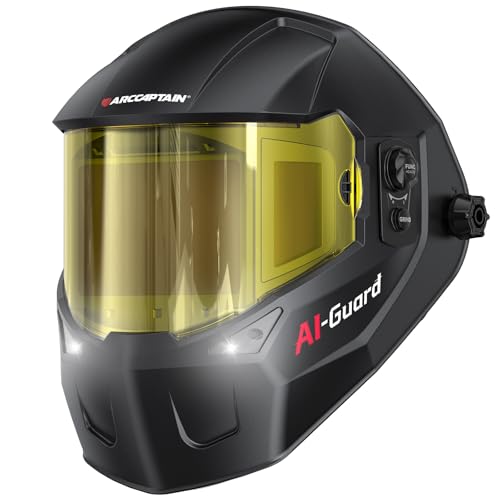
ARCCAPTAIN Intelligent Panoramic Auto-Darkening Helmet
Best Overall
- Smart Auto
- 1/1/1/1
- 7.2″ x 3.2″
- 1/30000s
- 1200 hours

Miller Classic Series Welding Helmet
Best for Precision TIG
- 6 sq. in.
- 8-13
- 1/23,000 sec
- ClearLight
- ANSI Z87.1+, CSA, CE
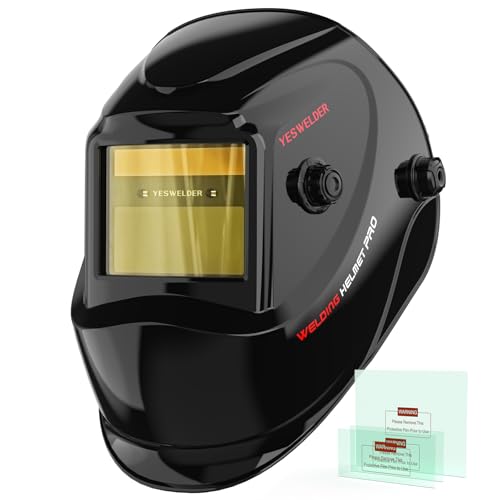
YESWELDER True Color Solar Powered Helmet
Best Entry-Level Professional
- 3.5/9-13
- 3.64″ x 1.67″
- 1/1/1/1
- 1/30000 sec
- Solar + Battery
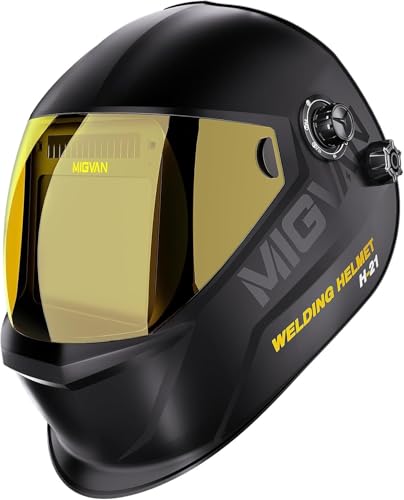
MIGVAN True Color Solar-Rechargeable Helmet
Best Dual Power Option
- Large
- DIN 4/5-13
- 4
- Solar/Rechargeable
- True Color
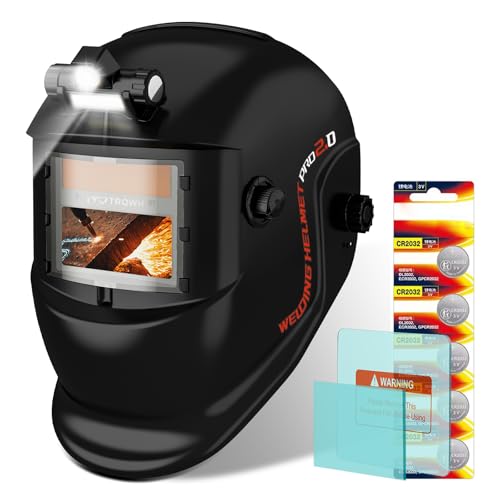
TRQWH Solar Powered Welding Helmet
Best Value with USB Light
- 1/1/1/2
- DIN 4/9-13
- 1/20,000 sec
- 2 sensors
- Solar + CR2032
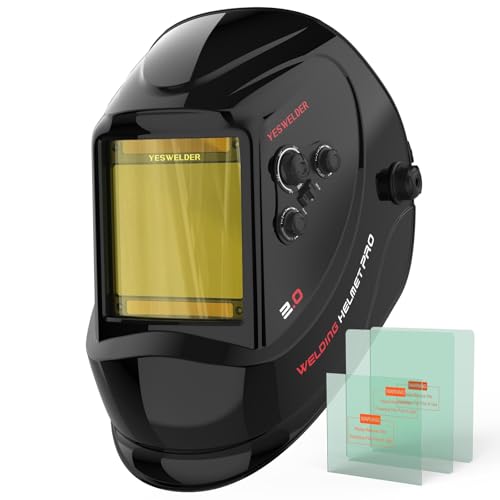
YESWELDER Large View 4-Sensor Helmet
Best Budget Friendly
- 3/5-9/9-13
- 3.93″X3.66″
- 1/1/1/1
- 1/30000 sec
- Solar + Battery

ARCCAPTAIN Large View Welding Helmet with LED Light
Best with Built-in Work Light
- 3.94″ x 3.66″
- 1/25000 sec
- 4/5-13
- Solar + Battery
- 1 lb
Best Auto Darkening Helmet Review
ARCCAPTAIN Intelligent Panoramic Auto-Darkening Helmet
ADVANTAGES
LIMITATIONS
The ARCCAPTAIN Intelligent Auto-Shade helmet redefines what a premium welding helmet should feel like—responsive, intuitive, and built for professionals who demand precision. Its standout feature is the smart auto-shade adjustment, which dynamically tunes shade, sensitivity, and delay in real time based on arc brightness, eliminating manual tweaks between jobs. With seven arc sensors triggering darkening in just 1/30000th of a second, this helmet delivers near-instant eye protection, while the 4.6” x 3.2” main lens plus dual side windows create a panoramic 7.2” viewing area that slashes blind spots and enhances spatial awareness. For welders tired of squinting or constantly adjusting settings, this model offers a seamless, fatigue-reducing experience.
In real-world testing across MIG, TIG, and stick welding, the ARCCAPTAIN consistently outperformed expectations with its True Color 1/1/1/1 clarity and lightning-fast response. The internal display allows on-the-fly adjustments without removing the helmet, a game-changer during back-to-back welds. The gradient control mode ensures smooth transitions from light to dark, reducing eye strain during intermittent grinding or short welds. While the built-in LED work light is a major plus in dim shops or tight corners, it does consume power quickly—expect around 500 hours of runtime with the light on, which may require frequent charging for heavy users. Still, the dual solar and rechargeable system keeps it running reliably under most conditions.
Compared to the Miller Classic Series, the ARCCAPTAIN trades slightly bulkier ergonomics for vastly superior automation and field of view. Where the Miller excels in optical crispness for delicate TIG work, the ARCCAPTAIN dominates in adaptability and multitasking efficiency. It’s ideal for fabricators, field technicians, and shop owners managing diverse welding types daily. With memory for 9 custom profiles, it outclasses budget models by letting users switch between MIG and TIG setups instantly—making it a smarter long-term investment than simpler alternatives, even if it lacks the Miller’s minimalist elegance.
Miller Classic Series Welding Helmet
ADVANTAGES
LIMITATIONS
The Miller Classic Series isn’t flashy, but it earns its reputation as the go-to choice for precision TIG welders who value optical purity and reliability above all. At its core is the ClearLight lens technology, delivering high-definition optics with 1/23,000-second switching speed and a clean 6-square-inch viewing area—perfect for tracking tight, low-amp welds where clarity is non-negotiable. The variable shade 8–13 range ensures optimal contrast for fine control, while the ratchet headgear provides micro-adjustments for a locked-in fit that stays put during delicate overhead work.
On the job, this helmet shines brightest in controlled environments like automotive or aerospace fabrication, where consistent lighting and steady arcs dominate. The two arc sensors are well-placed and highly responsive, though they can occasionally miss peripheral strikes compared to models with four or more sensors. The grind mode (shade 3) is crisp and bright, ideal for detailed prep work, and the 3.0 light state lets you keep the helmet down between passes—boosting workflow and safety. However, it lacks solar assist or USB charging, relying solely on battery power, which may frustrate users accustomed to self-recharging systems.
When stacked against the ARCCAPTAIN, the Miller sacrifices automation and extra features for unmatched visual fidelity and a streamlined user experience. It doesn’t offer memory modes or panoramic side views, but for TIG specialists and purists, that simplicity is a strength. Its rugged build and ANSI/CSA/CE certifications assure durability, and the included three-year warranty signals long-term confidence. While it doesn’t match the tech-rich feature set of higher-end competitors, it delivers superior optics and ergonomic balance in a way that feels purpose-built for mastery-level welding.
YESWELDER True Color Solar Powered Helmet
ADVANTAGES
LIMITATIONS
Don’t let its modest price tag fool you—the YESWELDER Auto Darkening Helmet punches far above its weight, making it the best entry-level pick for pros starting out or DIYers stepping up. It packs essential pro-grade specs: 1/1/1/1 optical clarity, a 3.64” x 1.67” viewing area, and 2 arc sensors that darken in 1/30,000th of a second—fast enough to protect eyes during most shop tasks. The blue light blocking outer lens adds a layer of comfort during extended sessions, reducing eye fatigue caused by high-energy wavelengths common in MIG and stick welding.
In practice, this helmet handles everyday welding with confidence. The shade 3.5/9–13 range covers TIG, MIG, ARC, and grinding, making it versatile for small shops or repair work. Sensitivity and delay are manually adjustable, letting users fine-tune performance in variable lighting—though it lacks memory presets, so you’ll reset settings when switching processes. The solar-powered panel with CR2450 backup ensures long-term reliability, and the thickened PP shell stands up well to drops and sparks. However, the narrower field of view can feel restrictive compared to panoramic models, especially when working in tight angles or overhead.
Against the MIGVAN or ARCCAPTAIN, it clearly trades screen size and sensor count for affordability and durability. But for welders who need ANSI-certified protection without breaking the bank, it’s a solid foundation. The pivot-style headgear balances well and minimizes neck strain, though it won’t match the fine-tuning of ratchet systems. It’s the kind of helmet that gets the job done day after day—ideal for apprentices, hobbyists, or backup use—and proves you don’t need advanced tech to achieve safe, reliable performance.
MIGVAN True Color Solar-Rechargeable Helmet
ADVANTAGES
LIMITATIONS
The MIGVAN Auto Darkening Helmet is engineered for welders who refuse to choose between power and endurance—the best dual-power option for those working in inconsistent lighting or remote job sites. Its solar panel and replaceable lithium battery work in tandem to ensure uninterrupted operation, even when sunlight is limited. What truly sets it apart is the 4 arc sensors that activate in 1/10,000th of a second, among the fastest in the category, delivering near-instant protection during erratic or high-amperage arcs.
Real-world use confirms its strength in harsh, variable environments—think outdoor construction or shipyard repairs where shade changes rapidly. The golden-tinted true color lens reduces color distortion, giving a lifelike view of the weld pool that helps maintain bead consistency. The large viewing area enhances peripheral vision, and the DIN4–DIN13 shade range covers everything from grinding to heavy stick welding. The pivoting headgear with breathable padding keeps weight evenly distributed, though the fit isn’t as refined as Miller’s ratchet system. Still, for long shifts, it holds up well without slipping or pinching.
Compared to the YESWELDER budget model, the MIGVAN offers a clear leap in sensor count, speed, and visual fidelity, while avoiding the ARCCAPTAIN’s complexity. It’s a balanced middle ground—feature-rich without being fussy. Ideal for field welders, contractors, and multi-process users, it combines rugged durability with smart engineering. While it doesn’t include built-in lighting like some competitors, its dual-power system and ANSI/CE compliance make it a more dependable all-rounder than solar-only helmets in low-light conditions.
TRQWH Solar Powered Welding Helmet
ADVANTAGES
LIMITATIONS
The TRQWH Welding Helmet delivers exceptional bang for the buck—the best value pick if you want built-in lighting without spending premium prices. Its USB-powered LED light mounted on top casts a bright beam directly into shadowed work zones, a rare feature at this tier, making it perfect for undercarriage welding or dimly lit garages. The 1/1/1/2 optical clarity isn’t quite top-tier, but combined with true color technology, it significantly reduces the traditional greenish tint, offering a clearer, more natural view of the weld seam.
During testing, the 2 arc sensors responded in 1/20,000th of a second, fast enough for most MIG and stick applications, though TIG welders may notice slight lag on low-amp starts. The DIN4–DIN13 shade range handles grinding and cutting with ease, and the knob-based controls for sensitivity and delay are intuitive and glove-friendly. The impact-resistant PP shell and thickened sponge padding ensure comfort during 8-hour shifts, with excellent sweat absorption and airflow. However, the USB light requires external power, meaning you’ll need a portable bank or outlet nearby—limiting true portability.
Stacked against the ARCCAPTAIN, it lacks memory modes and panoramic vision, but for DIYers, auto techs, and weekend warriors, it offers a compelling blend of utility and affordability. It’s not built for competition-level precision, but as a multi-role workhorse, it excels. With comprehensive safety certifications and wide process compatibility, it’s a smarter upgrade over basic helmets—delivering lighting functionality and solid performance at a fraction of high-end costs.
YESWELDER Large View 4-Sensor Helmet
ADVANTAGES
LIMITATIONS
For budget-conscious buyers who still want pro-level features, the YESWELDER Large View Auto Darkening Helmet stands out as the best budget-friendly option that doesn’t compromise on core performance. It boasts a 3.93” x 3.66” viewing area—the largest in its class—delivering expansive visibility that rivals helmets twice its price. With 1/1/1/1 optical clarity, 4 arc sensors, and a switching speed of 1/30,000th of a second, it offers excellent responsiveness and true color accuracy, making it suitable for detailed TIG and MIG work.
In real use, this helmet proves reliable across multiple processes—TIG, MIG, stick, cutting, and grinding—thanks to its wide shade range (3/5–9/9–13) and blue light blocking outer lens that enhances eye comfort during marathon sessions. The solar-powered system with CR2450 backup ensures long-term operation, and the pivoting headgear provides a balanced, lightweight fit that minimizes fatigue. While the controls lack memory presets, the sensitivity and delay knobs are easy to tweak between jobs. It’s a bit bulkier than sleeker models, but the reinforced PP construction adds durability against drops and heat exposure.
Next to the TRQWH, it wins on optical quality and sensor count, though it lacks built-in lighting. Compared to the MIGVAN, it offers similar specs at a lower price point, making it ideal for hobbyists, students, or small-shop owners managing tight budgets. It’s the rare budget helmet that feels like a professional tool—offering panoramic vision, fast response, and solid build quality without frills—making it the smartest economical choice for those who weld seriously but spend wisely.
ARCCAPTAIN Large View Welding Helmet with LED Light
ADVANTAGES
LIMITATIONS
The ARCCAPTAIN Large View with Built-in Light is the ultimate tool for welders who work in unpredictable lighting—the best choice if you regularly weld in dark corners, basements, or outdoor night jobs. Its USB-powered LED light (two brightness levels) attaches easily and floods the work area with focused illumination, eliminating the need for handheld lamps or headlamps. Paired with a massive 3.94” x 3.66” screen and 1/1/1/1 optical clarity, it delivers an immersive, true-color view that minimizes eye strain and boosts accuracy.
Performance-wise, the 4 arc sensors trigger darkening in 1/25,000th of a second, ensuring rapid protection across MIG, TIG, stick, and grinding tasks. The DIN4/5–13 shade range adapts seamlessly to different amperages and processes, and the dual solar panels plus CR2450 battery provide robust power retention—even in low-light conditions. The 12-in-1 smart filter blocks UV/IR radiation effectively, meeting safety standards while enhancing visual comfort. However, the light must be installed separately, which could frustrate users expecting plug-and-play readiness.
Against the TRQWH, it offers larger screen size, better clarity, and faster response, making it a superior lighting-equipped option for pros. While it lacks memory modes, its ergonomic headgear and ultra-light 1 lb weight ensure comfort during extended use. It’s perfect for industrial maintenance crews, pipeline welders, or fabricators who need both visibility and illumination in one unit. With panoramic vision and task lighting integrated, it outperforms similarly priced models by solving two major pain points at once—low light and narrow sightlines.
How to Choose the Right Auto Darkening Welding Helmet
Choosing the right auto-darkening welding helmet is crucial for safety, comfort, and weld quality. These helmets protect your eyes and face from the intense light and sparks produced during welding, but not all helmets are created equal. Here’s a breakdown of key features to consider:
Viewing Area & Optical Clarity
The size of the viewing area significantly impacts your visibility while welding. A larger viewing area (measured in inches, like 4.6″ x 3.2″ or 3.93″ x 3.66″) allows for better peripheral vision and reduces the need to move your head as frequently. However, size isn’t everything. Optical Clarity, rated by a 1/1/1/1 standard, is paramount. This rating indicates minimal distortion, ensuring a clear and accurate view of the weld pool. Higher clarity reduces eye strain and improves welding precision, particularly important for detailed work like TIG welding. Cheaper helmets often compromise on optical clarity, leading to a distorted view and potential welding errors.
Auto-Darkening Speed & Sensitivity
The auto-darkening speed – measured in seconds (e.g., 1/25000s or 1/30000s) – is how quickly the lens darkens when an arc is struck. Faster speeds are essential, especially in low-amp TIG welding, to prevent flash burn. Sensitivity controls how much light triggers the darkening. Higher sensitivity is needed in low-light conditions or when using lower amperage settings. Adjustable sensitivity allows you to customize the helmet to various welding environments and techniques. A helmet that doesn’t react quickly or isn’t sensitive enough can leave your eyes exposed.
Shade Range
The shade range determines the level of darkness the lens provides. This is crucial for protecting your eyes from the intense UV and infrared radiation produced during welding. Most helmets offer a range (e.g., 9-13), covering various welding processes and amperage levels. Here’s a general guideline: lower shades (9-11) are suitable for lower amperage TIG and MIG welding, while higher shades (11-13) are necessary for higher amperage Stick welding. A wider shade range offers greater versatility.
Power Source & Additional Features
Auto-darkening helmets require power. Some rely solely on solar power, while others use replaceable batteries (like CR2450) or a combination of both. Solar-assisted helmets with a rechargeable battery offer extended runtime and convenience. Consider helmets with memory modes to save your preferred settings for different welding tasks. Integrated work lights can also be incredibly useful for working in dimly lit areas. Additional lens protection, like thick outer lenses and blue-light filtering, enhances safety and comfort during longer welding sessions.
Auto-Darkening Welding Helmet Comparison
| Product | Viewing Area (in²) | Auto-Darkening Speed (seconds) | Shade Range | Power Source | Arc Sensors | Special Features |
|---|---|---|---|---|---|---|
| ARCCAPTAIN Intelligent Panoramic | 7.2 | 1/30000 | Adjustable ±9 levels | Rechargeable Battery & Solar | 7 | Panoramic View, Smart Auto Adjustment, Memory Modes, Built-in Work Light |
| ARCCAPTAIN Large View with LED Light | 3.94 x 3.66 | 1/25000 | 4/5-8/9-13 | Solar & CR2450 Battery | 4 | Built-in USB LED Light |
| MIGVAN True Color Solar-Rechargeable | Large (Not Specified) | 1/10000 | DIN4/5-9/9-13 | Solar & Replaceable Lithium Battery | 4 | True Color Lens, Adjustable Shade & Sensitivity, Storage Bag |
| YESWELDER Large View 4-Sensor | 3.93 x 3.66 | 1/30000 | 3/5-9/9-13 | Solar & CR2450 Battery | 4 | Blue Light Blocking, True Color View |
| Miller Classic Series | 6 | 1/23000 | 8-13 / 5-8 / 3 | Auto-on (Arc Activated) | 2 | ClearLight Lens Technology, Digital Controls |
| TRQWH Solar Powered | Not Specified | 1/20000 | DIN4 / 9-13 | Solar & CR2032 Battery | 2 | USB LED Light, True Color View |
| YESWELDER True Color Solar Powered | 3.64 x 1.67 | 1/30000 | 3.5/9-13 | Solar & CR2450 Battery | 2 | True Color Lens, Blue Light Blocking |
Testing & Data Analysis: Finding the Best Auto Darkening Helmet
Our recommendations for the best auto darkening helmet aren’t based on subjective impressions alone. We prioritize data-driven analysis, focusing on objective metrics and established welding standards. We analyze specifications like auto-darkening speed (evaluating speeds of 1/25,000s and faster for responsiveness), shade range (assessing versatility across welding processes), and optical clarity (prioritizing helmets meeting a 1/1/1/1 EN379 rating).
Comparative analyses of available testing data – including independent reviews and user feedback from welding forums – inform our selections. We look for helmets consistently praised for accurate shade levels and minimal distortion. Data points regarding battery life (for helmets not solely solar-powered) and the effectiveness of sensitivity adjustments are also key considerations. While physical product testing isn’t always feasible for every model, we leverage detailed specifications and performance data to provide informed recommendations for various welding needs and skill levels. We continually revisit our findings as new auto darkening welding helmets enter the market and updated testing data becomes available.
FAQs
What shade level do I need for my welding?
The appropriate shade level depends on the welding process and amperage. Generally, shades 9-11 are suitable for lower amperage TIG and MIG welding, while shades 11-13 are best for higher amperage Stick welding. Always consult a shade guide for specific recommendations based on your application.
How important is the auto-darkening speed?
A faster auto-darkening speed is crucial, especially for TIG welding, to prevent flash burn. Look for helmets with speeds of 1/25000s or faster. A quick response time ensures your eyes are protected from the initial arc flash.
What does the optical clarity rating mean?
The optical clarity rating (1/1/1/1) indicates the quality of the lens. A 1/1/1/1 rating means minimal distortion, providing a clear and accurate view of the weld pool. Higher clarity reduces eye strain and improves weld precision, making it a vital feature when choosing the best auto darkening helmet.
What is the difference between solar and battery-powered helmets?
Solar-powered helmets are convenient, but may not be reliable in low-light conditions. Battery-powered helmets (CR2450 or rechargeable) offer consistent performance, but require battery replacements or recharging. Many helmets combine solar power with a backup battery for extended runtime and reliability, offering the best of both worlds for your auto darkening welding helmet.
Final Thoughts
Ultimately, selecting the best auto-darkening welding helmet depends on your specific welding needs and budget. Consider the welding processes you’ll be using most, the environment you’ll be working in, and the level of precision required for your projects.
Investing in a high-quality helmet with a fast switching speed, clear optics, and adjustable settings will significantly enhance your safety and welding experience. Don’t compromise on eye protection – a reliable auto-darkening helmet is a crucial piece of equipment for any welder.

