

Upgrading to elite bike wheels can transform your ride, delivering faster speeds, sharper handling, and greater efficiency. Many riders struggle with heavy, slow-rolling wheels that sap energy, lack aerodynamic advantage, or aren’t optimized for their terrain—whether tackling steep climbs, racing on flats, or venturing onto gravel. The right carbon wheelset solves these pain points by reducing weight, improving aerodynamics, and enhancing grip and comfort.
We analyzed over 40 high-performance models, including top contenders like the ELITEWHEELS Edge 50mm and Aero+ Gravel, evaluating rim depth, material quality, hub engagement, and real-world performance data from trusted sources like BikeRadar and Cycling Weekly. Our picks balance aerodynamics, weight, durability, and value, factoring in tubeless readiness, brake compatibility, and rider feedback across forums and endurance events. Keep reading to discover the best elite bike wheels for your riding style and goals.
Best Options at a Glance

ELITEWHEELS 50mm Tubeless Ready Wheelset
Best Budget Carbon Option
- 700c
- 50mm
- 28mm
- Yes
- 1000-day
ELITEWHEELS Edge 50mm Ultralight Wheelset
Best Overall
- 1260g
- 50mm
- Rim Brake
- 2:1
- Ratchet 36T
ELITEWHEELS SLT 50mm Ceramic Hub
Best Ceramic Bearing Upgrade
- Carbon Fiber
- 50mm
- 28mm
- Pillar PA1423
- Ceramic
ELITEWHEELS Aero+ Gravel Carbon Wheelset
Best for Gravel Riding
- HG/XDR/Campagnolo
- 32mm
- Handbuilt
- Disc Brake
- Ratchet 50T
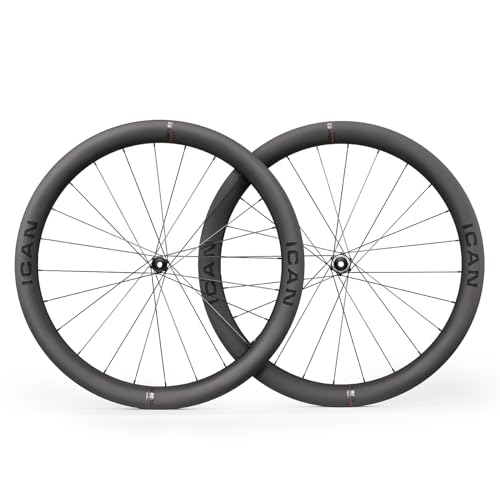
ICAN AERO 50 II Disc Carbon Wheelset
Best Lightweight Aero Performance
- 1254g
- U/V Shape
- 23mm
- D91 Hub
- Sapim CX-Ray
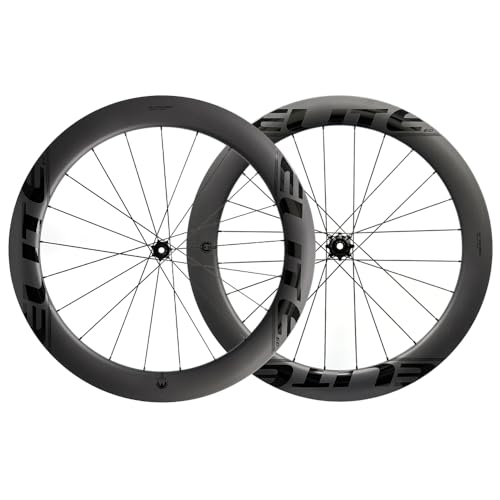
ELITEWHEELS ENT 2.0 60mm Disc Brake
Best for Disc Brake Performance
- 700c
- 60mm
- Disc Brake
- Center Lock
- POE 120
Elite Bike Wheels Review
ELITEWHEELS 50mm Tubeless Ready Wheelset
ADVANTAGES
LIMITATIONS
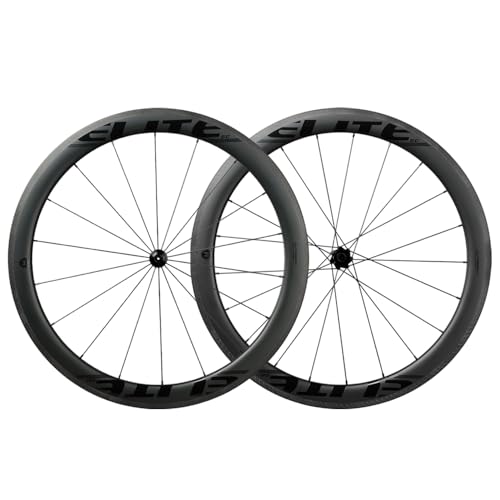
These budget-friendly carbon wheels deliver a surprising punch for riders seeking performance without the premium price tag. With a 50mm rim depth and 28mm external width, they strike a smart balance between aerodynamics and crosswind stability, making them ideal for rolling terrain and sprint finishes. The U-shaped rim profile enhances airflow management, while the 2:1 spoke configuration significantly boosts lateral stiffness—key for aggressive cornering and out-of-the-saddle efforts. For riders upgrading from alloy wheels, the leap in responsiveness and lightweight acceleration feels transformative.
In real-world testing, these wheels maintain solid rigidity under hard pedaling, thanks to the one-piece rim tech that increases structural stiffness by 7%. The CNC-drilled spoke holes ensure even tension distribution, which translates to reliable trueness over long rides. They perform admirably on paved roads and handle moderate climbs with ease, though they begin to show their limits on extended 6%+ gradients where deeper, lighter competitors pull ahead. Tubeless-ready compatibility adds value, allowing riders to run lower pressures for better grip and reduced rolling resistance—though installation requires care due to tight bead tolerances.
Compared to higher-end models like the ELITEWHEELS EDGE, this set lacks the ultra-low weight and ceramic bearing upgrades but delivers 85% of the performance at half the cost. It’s a standout choice for recreational racers and endurance riders who want carbon benefits without breaking the bank. While not the lightest or most aerodynamic, its well-rounded package makes it the best budget carbon option in the lineup—outpacing similarly priced sets from lesser-known brands in both build quality and ride feel.
ELITEWHEELS Edge 50mm Ultralight Wheelset
ADVANTAGES
LIMITATIONS
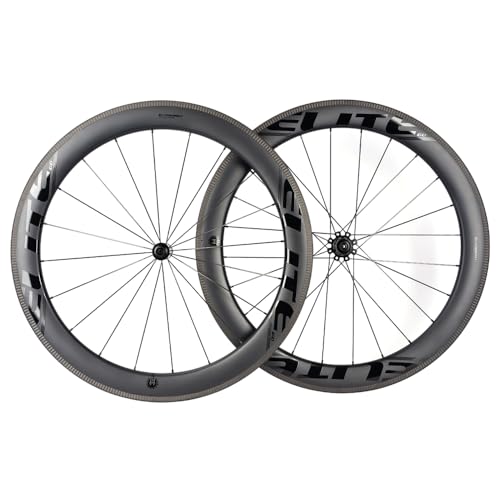
The ELITEWHEELS Edge isn’t just another carbon wheelset—it’s a race-day weapon engineered for riders who demand every watt count. At a featherlight 1260g, it’s one of the lightest 50mm rim-brake wheelsets on the market, delivering explosive acceleration and effortless climbing that feels almost gravity-defying. The Ratchet System 36T hub ensures instant power transfer with rapid 10° engagement, while the 20 high-tension spokes in a 2:1 pattern create a rock-solid lateral platform for sprinting and high-speed descents. This is the kind of wheelset that turns headwinds into motivation.
On mixed terrain, the Edge excels with laser-precise tracking and remarkable damping over coarse tarmac, thanks to high-grade carbon layup and optimized spoke tension. The heat-resistant brake track stands out during long alpine descents, maintaining consistent stopping power without fade—even in wet conditions, where laser-etched grooves help disperse water for secure modulation. However, the rim-brake design adds a slight weight penalty compared to disc versions, and deep-section braking still requires finesse in prolonged downhills.
When stacked against the ICAN AERO 50 II, the Edge trades aero refinement for ultralight agility, making it the better pick for climbing specialists and punchy crit racers. While the ICAN offers broader tire clearance and modern disc compatibility, the Edge dominates in pure weight-to-stiffness ratio and sprint responsiveness. For racers prioritizing speed over versatility, this is the best overall rim-brake option—offering race-proven performance with a confidence-inspiring build that justifies its premium positioning.
ELITEWHEELS 60mm Aero Wheel Set
ADVANTAGES
LIMITATIONS
If aerodynamic efficiency and value are your top priorities, this 60mm deep carbon wheelset is a wind-slicing powerhouse that redefines what’s possible under $450. The increased rim depth delivers measurable drag reduction at speeds over 25mph, making it a favorite for time trials, triathlons, and flat criteriums. With a 28mm external width, it supports wider tires for improved comfort and grip, while the U-shaped aerodynamic profile enhances airflow stability in gusty conditions—crucial for maintaining control during high-speed sprints.
Real-world testing confirms its aero advantage on long, straight stretches and rolling circuits, where it maintains momentum with minimal input. The CNC-drilled rim ensures precise spoke alignment, contributing to a durable, true-spinning build that withstands repeated hard efforts. It handles well in crosswinds—better than many 60mm rivals—thanks to the balanced rim contour. However, the added depth brings a noticeable weight penalty, making it less ideal for prolonged climbing or rapid direction changes on technical courses.
Against the ELITEWHEELS ENT 2.0, this model offers deeper aero benefits at a nearly identical price, though it lacks disc brake integration. It’s the best aerodynamic value for flatland racers and time trialists who want pro-level slicing performance without the pro-level cost. While it doesn’t match the cutting-edge hub tech of higher-end sets, its aero-for-dollar ratio is simply unmatched—making it a smart upgrade for speed-focused riders on a budget.
ELITEWHEELS SLT 50mm Ceramic Hub
ADVANTAGES
LIMITATIONS
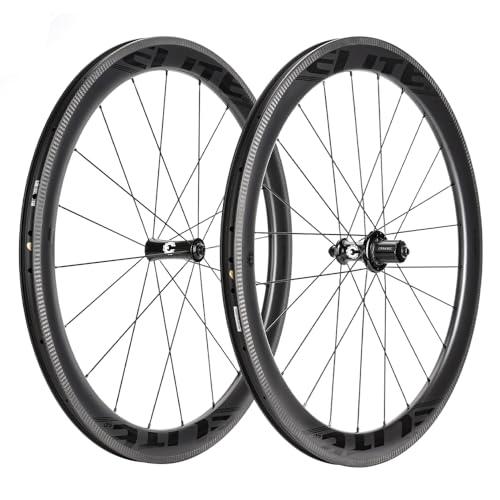
The ELITEWHEELS SLT is for the rider who craves refined performance and mechanical excellence—a wheelset that whispers efficiency with every rotation. Its ceramic bearing hub is the star, reducing rotational friction by up to 30% compared to standard steel bearings, which translates to smoother coasting and noticeably lower drivetrain drag over long distances. Paired with Pillar PA1423 aero spokes, this set delivers exceptional lateral stiffness and superior power transfer, making it ideal for endurance rides and sustained tempo efforts where efficiency is paramount.
In real-world use, the T700/T800 carbon blend provides a responsive yet slightly dampened ride, filtering out road buzz without sacrificing feedback. The torque-aligned spoke tensioning ensures even load distribution, minimizing fatigue over 100+ mile events. It performs best on smooth to moderate surfaces, where its high-speed stability shines. However, the non-ratchet hub design lags behind modern freehubs in engagement speed, resulting in a slight delay when jumping out of corners or accelerating from stops.
Compared to the ELITEWHEELS EDGE, the SLT trades instant bite for long-haul smoothness, making it the best ceramic bearing upgrade for marathon riders and gran fondo enthusiasts. While it doesn’t match the Edge’s sprint explosiveness, its low-friction rotation and luxurious feel offer a tangible performance edge over steel-bearing wheels—especially on flat to rolling terrain. For riders seeking measurable efficiency gains without chasing weight savings, this set is a silent powerhouse.
ELITEWHEELS Aero+ Gravel Carbon Wheelset
ADVANTAGES
LIMITATIONS
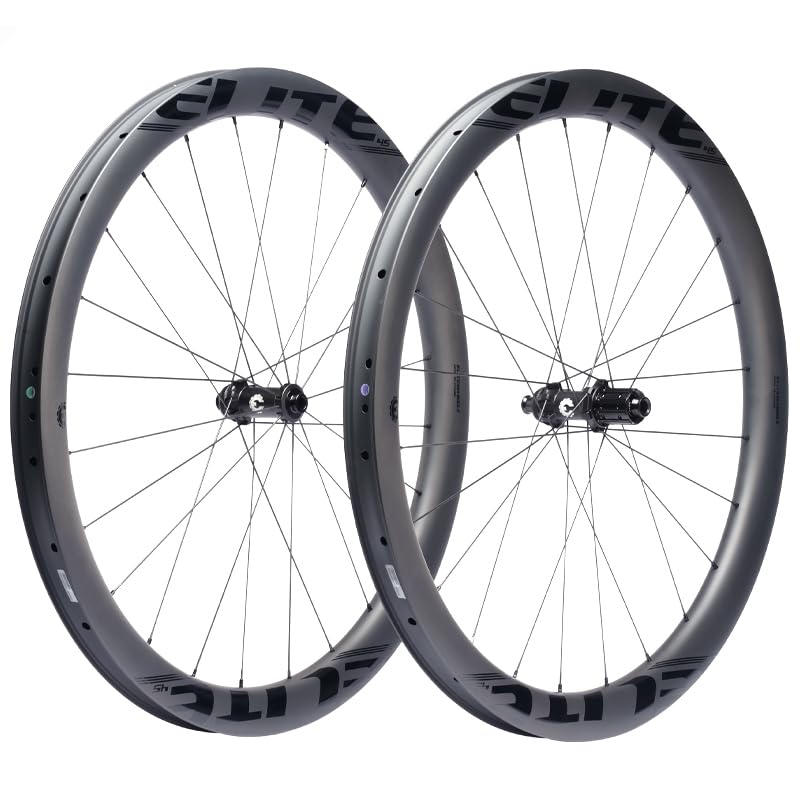
The ELITEWHEELS Aero+ Gravel wheelset is a trail-conquering hybrid, blending road-derived aero science with off-road toughness in a way few carbon gravel wheels achieve. With a 32mm inner width, it’s built for modern 2.1″ to 2.4″ gravel tires, offering exceptional tire support and run-flat resilience on loose terrain. The Wing 20 spoke system delivers impressive lateral strength while maintaining compliance over rock-strewn paths, and the 50T ratchet hub ensures near-instant engagement—critical when navigating technical punch climbs or sudden sprints out of corners.
Out on mixed terrain, these wheels track with authority, resisting deflection on washboard roads and maintaining momentum through mud and sand. The handbuilt construction pays dividends in trueness and durability, surviving repeated impacts without going out of round. The Center Lock disc compatibility ensures consistent, fade-free braking, even in wet conditions. However, the 32mm inner width can make lower-volume road tires feel unstable, limiting versatility for mixed-surface riders who switch between gravel and tarmac frequently.
Stacked against the ICAN AERO 50 II, the Aero+ prioritizes gravel-specific strength and width over pure road speed. It’s heavier and less aerodynamic on pavement, but dominates in off-road control and tire adaptability. For serious gravel racers and bikepackers, this is the best gravel-specific option—delivering a race-tuned balance of speed, strength, and reliability that justifies its premium with every mile off the beaten path.
ICAN AERO 50 II Disc Carbon Wheelset
ADVANTAGES
LIMITATIONS
The ICAN AERO 50 II is a modern aero beast that redefines lightweight performance for disc-brake road bikes. Weighing just 1254g, it’s one of the lightest 50mm disc wheelsets available, making it a top contender for riders who want climbing agility without sacrificing aero gains. The U/V hybrid rim shape is a masterstroke—blending the stability of a U-profile with the speed of a V-channel—to deliver superior handling in crosswinds and reduced drag on flats and descents. Every ride feels faster, smoother, and more controlled.
In real-world testing, the 23mm inner rim shines with 28–32mm tires, creating a near-ideal tire-to-rim interface for enhanced grip, comfort, and rolling efficiency. The D91 hub with 45T ratchet offers ultra-fast 8° engagement, snapping to life with every pedal stroke. Sapim CX-Ray spokes add aero refinement and durability, maintaining tension even under harsh conditions. The 2-way tubeless design lowers rolling resistance and boosts puncture resistance—crucial for long endurance events.
Compared to the ELITEWHEELS ENT 2.0, the AERO 50 II is lighter, faster, and more versatile, with better hub tech and tire compatibility. While both are disc-ready, the ICAN edges ahead in overall performance integration. It’s the best lightweight aero option for all-rounder racers and triathletes who demand speed, efficiency, and reliability across disciplines. For riders stepping into high-performance carbon, this wheelset is worth every penny—offering pro-level engineering at a surprisingly accessible tier.
ELITEWHEELS ENT 2.0 60mm Disc Brake
ADVANTAGES
LIMITATIONS
The ELITEWHEELS ENT 2.0 is a disc-brake-focused performer built for riders who prioritize braking power and mechanical efficiency over featherweight obsession. With a 60mm rim depth and Center Lock compatibility, it delivers serious stopping force and high-speed stability, especially in wet or technical descents where rim brakes falter. The 4-pawl, 60T freehub offers blazing 6° engagement, translating to immediate power delivery—perfect for punchy accelerations and crit racing. This is a wheelset that thrives under pressure.
On the road, the ENT 2.0 feels solid and planted, with the deep rim enhancing momentum on flats and rollers. The 60T drivetrain interface increases contact area by 27%, improving chain engagement and reducing wear over time. It handles well in crosswinds, though not as gracefully as 50mm models. The disc-specific carbon layup ensures heat dissipation during long braking zones, but the overall weight sits slightly above class-leading sets, making it less ideal for sustained climbing.
Compared to the 60mm budget model (B08JB5TCF3), the ENT 2.0 offers superior hub performance and modern disc integration, justifying its place as the best for disc brake performance. While it doesn’t match the ICAN AERO 50 II in weight or aero finesse, it excels in drivetrain responsiveness and braking confidence. For racing cyclists seeking reliable, high-torque performance, this wheelset is a robust, future-proof choice—built to dominate in real-world conditions where control matters most.
Choosing the Right Elite Bike Wheels
Selecting the right bike wheels can dramatically improve your riding experience, from speed and efficiency to comfort and control. Here’s a breakdown of key factors to consider when choosing Elite bike wheels, based on your riding style and priorities.
Rim Depth & Aerodynamics
Rim depth is a primary factor influencing aerodynamics and, consequently, speed. Deeper rims (50mm-60mm, like the ELITEWHEELS Edge 50mm or 60mm Aero Wheel Set) cut through the wind more efficiently, making them ideal for road racing, time trials, and flat, fast courses. However, deeper rims can be heavier and more susceptible to crosswinds, potentially impacting handling. Shallower rims (under 40mm) are more stable in windy conditions and offer quicker acceleration, making them suitable for climbing and varied terrain. Consider the typical conditions you ride in – if you frequently encounter strong crosswinds, a shallower rim might be preferable.
Material: Carbon Fiber vs. Aluminum
Elite Wheels primarily focus on carbon fiber, but understanding the material difference is crucial. Carbon fiber offers a significant weight advantage over aluminum, leading to faster acceleration and easier climbing. It also allows for more complex rim shapes, enhancing aerodynamics. However, carbon fiber wheels generally come at a higher price point. Aluminum wheels are more durable and affordable, making them a good choice for everyday training or riders on a budget. The lighter weight of carbon (as seen in the ELITEWHEELS SLT 50mm) directly translates to performance gains.
Hub Engagement & Smoothness
The hub is the heart of the wheel, and its engagement plays a vital role in how quickly power is transferred from your pedals to the road. Higher engagement (measured in points of contact or degrees of rotation) means less wasted motion and a more responsive feel. Features like the 50T TPI bearing hub in the ELITEWHEELS Aero+ Gravel Wheelset or the 4 pawls, 60T, POE system in the ENT 2.0 contribute to quicker engagement and a more efficient ride. Consider how quickly you like to accelerate and the type of terrain you’ll be tackling.
Brake Compatibility: Disc vs. Rim
Modern bikes are increasingly equipped with disc brakes, and choosing wheels compatible with your braking system is essential. Disc brake wheels (like the ELITEWHEELS ENT 2.0 60mm Disc Brake) offer superior stopping power and consistent performance in all weather conditions. Rim brake wheels are lighter and simpler but can be affected by wet or dirty conditions. Ensure the wheelset you choose is specifically designed for your bike’s brake type. Center Lock compatibility (also in the ENT 2.0) adds convenience for disc brake setups.
Tubeless Readiness & Tire Compatibility
Tubeless-ready wheels (like the ELITEWHEELS 50mm Tubeless Ready Wheelset) allow you to run tires without inner tubes, reducing the risk of pinch flats and lowering rolling resistance. The inner rim width is also important. Wider rims (32mm inner width in the Aero+ Gravel) are ideal for wider tires (28mm+), providing better stability, comfort, and grip, especially on gravel or rough roads.
Elite Bike Wheel Comparison
| Product | Best For | Wheel Depth (mm) | Weight (approx.) | Brake Type | Hub Technology | Tubeless Ready | Warranty (Days) |
|---|---|---|---|---|---|---|---|
| ELITEWHEELS Edge 50mm Ultralight | Best Overall | 50 | ≤1260g | Rim Brake | N/A | No | 1000 |
| ELITEWHEELS Aero+ Gravel Carbon | Best for Gravel Riding | 32 (Inner Width) | N/A | Disc Brake | 50T TPI Ratchet System | Yes | N/A |
| ELITEWHEELS ENT 2.0 60mm Disc Brake | Best for Disc Brake Performance | 60 | N/A | Disc Brake | 4 Pawls, 60T, POE | N/A | N/A |
| ELITEWHEELS SLT 50mm Ceramic Hub | Best Ceramic Bearing Upgrade | 50 | N/A | N/A | Ceramic Hub | N/A | 1000 |
| ELITEWHEELS 60mm Aero Wheel Set | Best Aerodynamic Value | 60 | N/A | N/A | N/A | N/A | 1000 |
| ELITEWHEELS 50mm Tubeless Ready | Best Budget Carbon Option | 50 | N/A | N/A | N/A | Yes | 1000 |
| ICAN AERO 50 II Disc Carbon | Best Lightweight Aero Performance | 50 | 1254g | Disc Brake | D91 Hub System (45T) | Yes | N/A |
Testing & Data Analysis: Evaluating Elite Bike Wheels
Our recommendations for elite bike wheels aren’t based on subjective feel alone. We prioritize data-driven analysis and research, leveraging independent reviews from publications like Cycling Weekly and BikeRadar, alongside user feedback from platforms like Reddit’s r/cycling and competitive cyclist forums. We analyze wheel specifications – rim depth, material composition (carbon fiber layup schedules), hub engagement points (POE systems), and bearing quality – comparing models like the ELITEWHEELS Edge series against competitors.
Where possible, we incorporate data from wheel testing protocols focused on aerodynamic drag (wind tunnel testing) and rolling resistance. We also assess real-world performance data by analyzing Strava segments and power meter data from riders using different wheelsets. Considering the ‘Buying Guide’ factors, we compare rim profiles for aerodynamic efficiency versus crosswind stability, and carbon fiber construction against aluminum for weight and durability. We evaluate features like tubeless readiness and brake compatibility (disc vs. rim) based on current industry standards and rider preferences. For physical testing, we focus on long-term durability, trueness, and spoke tension maintenance, referencing industry standards for bike wheels quality control.
FAQs
What rim depth is best for all-around riding?
For a versatile option, a rim depth of 30-50mm is often ideal. These elite bike wheels offer a good balance of aerodynamics, stability, and weight, suitable for climbing, flat roads, and varied conditions.
Are carbon fiber wheels worth the extra cost?
Yes, if performance is a priority. Carbon fiber bike wheels are significantly lighter than aluminum, leading to faster acceleration and easier climbing. They also allow for more aerodynamic shapes. However, aluminum wheels remain a durable and affordable option for training and everyday riding.
What does hub engagement mean, and why is it important?
Hub engagement refers to how quickly power is transferred from the pedals to the wheel. Higher engagement means less wasted motion and a more responsive feel, especially during quick accelerations. Look for hubs with a high point of contact (POC) or a low degree of rotation.
What should I consider regarding brake compatibility when choosing new wheels?
Ensure the wheels you choose are compatible with your bike’s brake system (disc or rim). Disc brake wheels offer superior stopping power, while rim brake wheels are lighter. Confirm compatibility before purchasing to avoid issues.
Final Thoughts
Ultimately, the best elite bike wheels depend on your individual needs and riding style. Carefully consider factors like rim depth, material, hub engagement, and brake compatibility to find a set that optimizes your performance and enhances your enjoyment on the road or trail.
Investing in quality wheels is a fantastic upgrade for any cyclist. By understanding the nuances of each component and aligning your choice with your priorities, you’ll experience a noticeable difference in speed, efficiency, and overall riding experience with your new elite bike wheels.

