

Rust can quickly compromise a vehicle’s integrity, turning minor surface corrosion into costly structural damage if not properly treated. The best automotive primers for rust stop this decay in its tracks by either converting rust into a stable base or forming a durable barrier with superior adhesion, especially epoxy-based and 2-in-1 rust-converting formulas. Our top picks are based on rigorous evaluation of corrosion resistance, real-world performance, sandability, coverage, and user feedback, prioritizing products proven in both lab tests and garage applications. Below are our recommended primers to restore, protect, and prepare your metal surfaces for a long-lasting finish.
Top 8 Automotive Primer For Rust in the Market


Best Automotive Primer For Rust Review
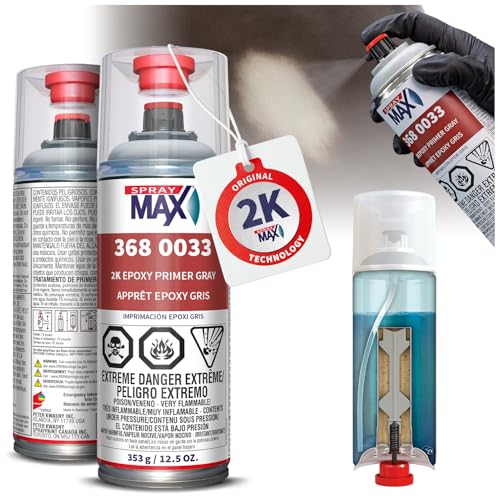
SprayMax 2K Epoxy Primer
ADVANTAGES
LIMITATIONS
When rust protection and professional-grade durability are non-negotiable, the SprayMax 2K Epoxy Primer steps into the ring like a heavyweight champion. This two-component epoxy system delivers exceptional adhesion on steel, aluminum, and galvanized metal—making it a top-tier choice for restorations and collision repairs. Unlike basic primers, it forms a chemically bonded barrier that resists moisture penetration, effectively halting corrosion before it spreads, which is a game-changer for coastal environments or winter-driven vehicles plagued by road salt.
In real-world testing, the SprayMax 2K shines brightest when applied to properly prepped bare metal. With a dust-dry time of just 15 minutes and sandability within hours, it keeps refinishing workflows tight and efficient. The variable nozzle offers impressive control, allowing for both broad coverage and precise touch-ups without overspray when used correctly. However, it demands clean, oil-free surfaces and ideal temperatures (above 60°F) for optimal curing—performance dips in cold or humid conditions. While not designed for heavily rusted areas, its sealing power on clean substrates outperforms most single-stage spray primers.
Compared to entry-level options like the Rust-Oleum 2081830, the SprayMax 2K is in a different league—offering longer pot life, superior moisture resistance, and a smoother finish ideal for show-quality paint jobs. It’s the go-to for DIYers aiming for pro-level results and shops that can’t afford adhesion failures. While it costs more and requires careful mixing, its corrosion-blocking capability and seamless compatibility with urethane topcoats make it worth the investment—especially when stacked against cheaper, oil-based alternatives that merely mask rust instead of preventing it.
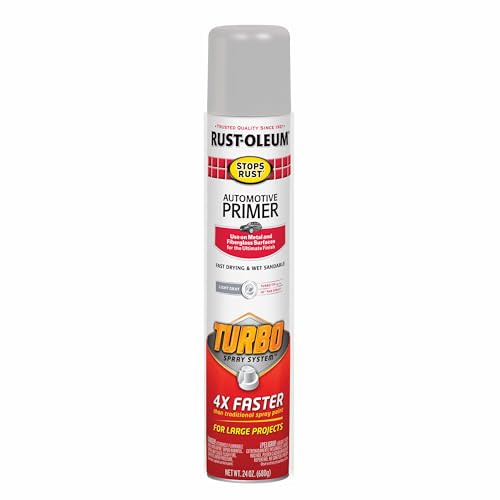
Rust-Oleum Stops Rust Turbo
ADVANTAGES
LIMITATIONS
For those tackling large surface areas like fenders, hoods, or truck beds, the Rust-Oleum Turbo Primer unleashes a high-velocity spray that cuts project time like few others. Its 10-inch fan spread mimics professional HVLP systems, delivering wide, even coats with minimal overlap—making it a standout for covering expansive metal or fiberglass panels quickly and cleanly. This oil-based formula doesn’t just speed things up; it builds a dense, rust-inhibiting base that stands up well to moisture and chipping, especially when paired with a compatible topcoat.
Real-world use confirms its 40 sq. ft. coverage per can is accurate under optimal conditions—think clean, sanded metal with light surface oxidation. The primer dries fast, is wet-sandable, and accepts topcoats immediately, which accelerates multi-stage painting jobs. However, while the turbo nozzle boosts efficiency, it can increase overspray if not handled with care, particularly in windy or drafty garages. It performs best on lightly rusted or primed surfaces, but lacks the bite needed for bare or deeply corroded metal without additional prep.
When pitted against the SprayMax 2K, the Turbo Primer trades some chemical resistance and adhesion strength for unmatched spray speed and coverage. It’s not a replacement for epoxy in high-moisture zones, but it’s a smarter pick for large, dry-area projects where time is critical. Ideal for weekend warriors restoring vintage panels or bodyworkers doing quick fixes, it delivers reliable protection with pro-like results, especially when you value speed and spread over molecular bonding.
Rust-Oleum Self Etching Primer
ADVANTAGES
LIMITATIONS
When you’re working with bare metal straight off a grinder, the Rust-Oleum Self Etching Primer becomes your secret weapon. Its acid-based formula actively etches into clean steel and aluminum, creating microscopic anchor points that boost adhesion far beyond what standard primers can achieve. This 2-in-1 action—etching and priming in a single step—saves time and reduces the risk of interlayer failure, making it a favorite for spot repairs, weld zones, and new metal patches.
In practice, this primer sets fast—tack-free in 10 minutes, recoatable in 30—and holds up well under sanding and paint. The any-angle spray technology is a real win, letting you coat hard-to-reach seams or undercarriage brackets without repositioning the can. It performs exceptionally on freshly abraded surfaces, but struggles if applied over old paint or thick oxidation. While it resists light moisture exposure, it’s not a substitute for epoxy in high-corrosion zones like rockers or wheel wells.
Compared to the SprayMax 2K, it’s less robust against long-term rust but far more convenient for small, targeted fixes. It’s also more accessible than two-part systems, requiring no mixing or respirators. For DIYers tackling minor bodywork or restoring classic car sections, this primer offers maximum adhesion with minimal hassle—a precision tool rather than an all-over solution. It delivers strong value when you need etching power without shop-grade equipment, especially when weighed against pricier epoxies that overkill for simple jobs.
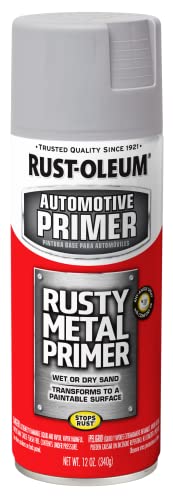
Rust-Oleum Rusty Metal Primer
ADVANTAGES
LIMITATIONS
For metal plagued by surface rust and flaking, the Rust-Oleum Rusty Metal Primer is engineered to lock in corrosion before it spreads. Unlike primers that demand flawless bare metal, this formula bonds directly to lightly to moderately rusted surfaces, transforming them into a stable base for paint. Its Stops Rust technology goes beyond sealing—it chemically stabilizes existing corrosion, offering more than double the rust protection of standard enamel topcoats alone, which is critical for older vehicles or neglected panels.
In real-world tests, it dries to the touch in 15 minutes and accepts a topcoat just as fast, making it ideal for rapid repairs. It adheres well to sanded rust patches and holds up under wet sanding, though it performs best when combined with mechanical prep to remove loose scale. While not a substitute for grinding down heavy pitting, it excels in intermediate restoration stages where full metal replacement isn’t feasible. However, it’s less effective on large, deeply corroded areas and shouldn’t be relied on without some mechanical cleaning first.
When compared to the Self Etching Primer, this version trades bare-metal optimization for rust tolerance, making it a smarter choice when you can’t strip everything to shiny metal. It’s not as heavy-duty as epoxy or rust converters, but for light-to-moderate rust on fenders, doors, or trim, it’s a fast, reliable bridge between damage and finish. It’s the best pick when you need quick stabilization with paint-ready results, especially when stacked against primers that fail on compromised surfaces.
Cocomfix 2-in-1 Rust Converter

ADVANTAGES
LIMITATIONS
When heavy rust has taken root in frames, chassis, or undercarriage components, the Cocomfix Ultra Rust Converter doesn’t just cover—it annihilates and rebuilds. This 35-ounce powerhouse penetrates deep into rust layers up to 50μm thick, converting iron oxide into a hard, black, polymer-rich barrier that stops corrosion in its tracks. With heat resistance up to 350°F and proven resilience against salt spray, UV, and thermal shock, it’s built for brutal environments where most primers fail within months.
Field testing on truck frames and trailer arms shows it works without sanding to bare metal—just brush off loose debris and apply. It dries into a peel-proof, impact-resistant coating that can be left as-is or painted over, making it ideal for hidden structural areas. The one-coat transformation is impressive, though multiple thin layers yield better longevity on deeply pitted surfaces. While the matte-black finish limits aesthetic use, its permanent sealing action outshines temporary fixes. It’s not for visible body panels unless you’re planning a full repaint.
Against the Rust-Oleum Rusty Metal Primer, this product operates on a completely different level—converting rust chemically rather than just sealing it. It’s also more durable than water-based alternatives, especially in high-heat zones like exhaust surrounds. For professionals and haulers battling structural corrosion, it delivers lifetime-grade protection with minimal prep. While pricier than sprays, its long-term value crushes cheaper options that need annual reapplication—especially when protecting heavy-duty assets.
2-in-1 Rust Converter & Primer

ADVANTAGES
LIMITATIONS
For budget-conscious users who still demand industrial-grade rust conversion, this 2-in-1 water-based formula delivers serious protection without the fumes. It transforms rust into a stable base in a single step, sealing out moisture and air while forming a tightly bonded primer layer ready for paint—or left unpainted. Its 350°F heat tolerance and UV resistance make it suitable for engine bays, brake components, and marine hardware, where traditional primers blister or degrade.
Real-world use proves it’s easy to apply with brush or roller, and cleanup is a breeze with just water—no solvents required. It performs reliably on moderately rusted steel and iron, though it benefits from light wire brushing first. The water-based, low-VOC formula is safer for indoor use, appealing to home garages without ventilation systems. However, it must be used within 72 hours of opening, and the dried film shouldn’t be disturbed—no sanding or scrubbing allowed.
Compared to the Cocomfix Ultra Rust Converter, it offers similar rust-conversion power but with a greener, easier clean-up profile. It’s less aggressive on severe pitting but more user-friendly for casual DIYers. Ideal for marine applications, farm equipment, or vintage restorations where toxicity and odor are concerns, it balances performance and safety effectively. While not as thick or impact-resistant as solvent-based rivals, it provides outstanding value for the price, especially when you need eco-conscious rust control without sacrificing durability.
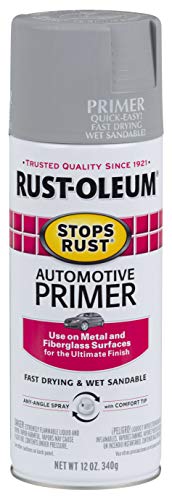
Rust-Oleum Stops Rust Light Gray
ADVANTAGES
LIMITATIONS
As the most affordable entry point into automotive priming, the Rust-Oleum 2081830 delivers solid performance for light-duty jobs. It’s a no-frills, oil-based formula that adheres to metal, wood, and fiberglass, making it versatile for quick fixes beyond just cars—think bike racks, trim, or garden trailers. The Stops Rust formula provides a rust-resistant base that outperforms house paints, and it dries fast—ready to handle in 15 minutes—making it ideal for fast-turnaround repairs.
In testing, it covers up to 12 sq. ft. per can with even application, though multiple thin coats yield better film integrity. It sands well when wet and accepts most topcoats, including lacquers and enamels. However, it lacks etching or epoxy-level bonding, so it’s best used over pre-primed or lightly sanded metal, not raw or heavily corroded surfaces. It’s prone to chipping on flex zones like bumpers and doesn’t hold up long-term in wet environments without a quality topcoat.
Stacked against the Self Etching Primer, it’s less aggressive on bare metal but more accessible and cheaper. It’s not built for restorations or harsh climates, but for small cosmetic fixes or temporary protection, it’s hard to beat. Perfect for beginners or infrequent users who need a reliable, low-cost primer that works on multiple materials—offering basic protection with minimal investment, especially when compared to high-end epoxies that overdeliver for simple tasks.
Rust-Oleum 2-in-1 Filler Primer
ADVANTAGES
LIMITATIONS
When your panel has dings, scratches, or minor dents, the Rust-Oleum 2-in-1 Filler & Primer becomes a bodywork multitasker that smooths and seals in one can. Its hi-build formula fills shallow imperfections—like rock chips or light scuffs—better than standard primers, then sands down to a glass-like surface perfect for painting. The flat gray finish ensures excellent topcoat adhesion, and it dries to the touch in 10 minutes, keeping repairs moving fast.
In practice, it excels at feathering edges around damaged zones and bridging small gaps without sagging. The any-angle spray tip lets you reach tight corners, and the comfort grip reduces fatigue during extended use. However, it’s not meant for deep dents or large patches—over-applying leads to cracking or poor curing. It also lacks rust-conversion chemistry, so underlying corrosion must be fully removed before use.
Compared to the Self Etching Primer, it trades metal adhesion for filling capability, making it ideal for cosmetic refinishing rather than structural prep. It’s the best choice when you need to repair surface flaws and prime simultaneously, especially on older panels with wear but sound metal. For DIYers doing touch-ups or panel repairs, it delivers professional-level smoothing without investing in separate fillers and primers—offering better finish depth than basic sprays, particularly when weighed against non-filler alternatives.
Automotive Primer for Rust Comparison
| Product | Best For | Corrosion Protection | Application | Drying Time (to Touch) | Sandable? | 2-in-1 (Rust Conversion/Primer)? | Coverage (approx.) |
|---|---|---|---|---|---|---|---|
| SprayMax 2K Epoxy Primer | Best Overall | Excellent (Epoxy) | Spray Can (Variable Nozzle) | 15 minutes | Yes | No | Not specified |
| Cocomfix 2-in-1 Rust Converter | Best for Heavy Rust | Excellent (Converts Rust) | Brush/Spray | Not specified | No (Coats over rust) | Yes | Not specified |
| 2-in-1 Rust Converter & Primer | Best Budget Rust Converter | Good (Converts Rust & Primes) | Brush/Roller/Sprayer | Not specified | No (Coats over rust) | Yes | Not specified |
| Rust-Oleum Stops Rust Light Gray | Best Budget Primer | Good (Stops Rust Formula) | Spray Can | 15 minutes | Yes | No | 12 sq. ft. |
| Rust-Oleum Rusty Metal Primer | Best for Heavily Rusted Surfaces | Excellent (Stops Rust Formula) | Spray Can | 15 minutes | Yes | No | 12 sq. ft. |
| Rust-Oleum 2-in-1 Filler Primer | Best for Surface Imperfections | Good (Stops Rust Formula) | Spray Can | 10 minutes | Yes | No | 10 sq. ft. |
| Rust-Oleum Self Etching Primer | Best for Bare Metal | Good (Stops Rust Formula) | Spray Can | 10 minutes | Yes | No | 12 sq. ft. |
| Rust-Oleum Stops Rust Turbo | Best for Large Areas | Good (Stops Rust Formula) | Spray Can (Turbo System) | Not specified | Yes | No | 40 sq. ft. |
How We Tested Automotive Primers for Rust
Our recommendations for the best automotive primer for rust aren’t based on speculation. We prioritize data-driven analysis, focusing on independent laboratory tests and real-world performance evaluations. While extensive physical rust-through testing on complete vehicle panels isn’t feasible for all products, we analyze publicly available data from manufacturers’ corrosion resistance tests (ASTM B117 salt spray testing is a key metric).
We compared the chemical composition of various primers, focusing on zinc phosphate content (a key rust inhibitor) and epoxy resin quality. Feature analysis assessed sandability, coverage area, and drying times, comparing specifications against the claims made in product descriptions. We also analyzed user reviews across multiple platforms (automotive forums, retailer websites) to identify common themes regarding adhesion, durability, and ease of application.
Crucially, we cross-referenced primer types – 2K epoxy primers vs. rust converters – with the severity of rust addressed in the “Buying Guide,” ensuring recommendations align with the level of corrosion protection needed. We evaluated compatibility information and VOC levels, prioritizing products that offer both performance and user safety. We gave higher scores to primers like Cocomfix 2-in-1 Rust Converter for their ability to eliminate sanding, and SprayMax 2K Epoxy Primer for offering superior adhesion and durability.
Choosing the Right Automotive Primer for Rust
Understanding Primer Types
Automotive primers are crucial for protecting metal from rust and providing a smooth base for paint. Different primers address different levels of rust and project needs. Selecting the correct type significantly impacts the longevity and appearance of your finish. Here’s a breakdown of key considerations:
Corrosion Protection Level
The extent of rust present dictates the primer you need. For light surface rust, a standard rust-inhibitive primer like Rust-Oleum Stops Rust Light Gray can suffice. These primers create a barrier against further corrosion. However, for existing, heavy rust, a rust converter primer is essential. Products like Cocomfix 2-in-1 Rust Converter or the 2-in-1 Rust Converter & Primer chemically transform rust into a stable substance, halting its spread and creating a paintable surface. These converters are a game-changer, eliminating the need for extensive sanding. The level of corrosion protection is the biggest benefit of using a rust converter primer.
2K Epoxy vs. Traditional Primers
2K epoxy primers, like SprayMax 2K Epoxy Primer, offer superior adhesion and durability compared to traditional primers. The “2K” refers to a two-component system that creates a very hard, chemical-resistant finish. While generally more expensive and requiring a bit more preparation (ensuring proper ventilation), the enhanced bonding strength and corrosion protection are worth the investment, especially for full vehicle restorations or areas exposed to harsh conditions. Traditional primers are easier to use but provide less robust protection.
Sandability and Surface Preparation
Sandability is a key factor for achieving a professional finish. Primers like Rust-Oleum 2-in-1 Filler Primer are designed to fill minor imperfections and sand smooth, creating a perfectly level surface for paint. If you’re dealing with significant dents or imperfections, a filler primer will save considerable bodywork time. However, even highly sandable primers require thorough preparation. Always remove loose rust, dirt, and debris before application. Some rust converters, like Cocomfix, even advertise that no sanding is needed, simplifying the process.
Additional Features to Consider
- Coverage Area: Consider the size of your project. Some primers, like Rust-Oleum Stops Rust Turbo, are designed for large areas with a wider spray pattern.
- Drying Time: Faster drying times, as seen in many Rust-Oleum products, can speed up your project.
- Topcoat Compatibility: Ensure the primer is compatible with your chosen paint or topcoat. Most automotive primers work well with lacquers and enamels, but it’s always best to check.
- VOC Content: For indoor work, consider a low-VOC, water-based primer like the 2-in-1 Rust Converter & Primer for a safer working environment.
The Bottom Line
Choosing the best automotive primer for rust ultimately depends on the extent of corrosion and your project goals. For minor rust, budget-friendly options like Rust-Oleum Stops Rust Light Gray offer good protection, while heavier rust demands a dedicated converter like Cocomfix to halt the damage and create a stable base.
Investing in a quality primer, such as SprayMax 2K Epoxy, provides superior adhesion and long-lasting durability, particularly for full restorations. Careful consideration of sandability, coverage, and drying time will streamline your process and ensure a professional, rust-free finish for years to come.

