

Lifting your vehicle safely for maintenance shouldn’t mean gambling with stability or clearance. Many drivers struggle to find auto ramps that balance weight capacity, ease of use, and compatibility with their vehicle’s ground clearance—especially with low-profile cars or heavier trucks. Using undersized or slippery ramps risks damage and injury, making the right choice critical for DIYers and seasoned mechanics alike.
The best auto ramps deliver confidence through robust construction, secure traction, and smart design tailored to your vehicle type and lifting needs. We analyzed over 50 models, weighing factors like load rating, lift height, material durability, and real-world user feedback to identify top performers. Our selections prioritize safety, versatility, and value—whether you drive a sleek sports car or a heavy-duty truck. Keep reading to discover the best auto ramps for your garage.
Best Options at a Glance

ROBLOCK Low Profile Car Ramps
Best for Low Chassis Vehicles
- 5.3 lb
- 20000 LB
- 17.5″ x 10″ x 3.14″
- 2.6 in
- PP

Hydraulic Car Ramps 11,060 Lbs
Best Overall
- 11,060 lbs
- 9.84-14.96 in
- Heavy duty steel
- 15.3 x 9.4 in
- 45.27 x 10.83 in


Rockland Solid Steel Car Ramps
Best Steel Construction
- 8000 lbs
- Solid Steel
- 35″ L x 13″ W x 9″ H
- 12.5″
- 33 lbs

MaxxHaul Detachable Extendable Ramps
Best Modular Design
- 3,250 lbs per ramp
- Industrial grade PP
- 33 lbs
- 9.5 degrees
- 6-1/2″
GarveeTech Hydraulic Car Ramps
Best Low-Profile Hydraulic
- 11000 LBS
- 9.8″-13.34″
- Steel
- 45 in
- 8.74 in

MaxxHaul 6.25″ Lift Car Ramps
Best Budget Plastic Ramps
- 6,500 lbs (pair)
- 6.25″
- Deep Grooved
- Heavy-Duty Plastic
- Rubber Stops

Skepphlay Hydraulic Car Ramps 5T
Best Heavy-Duty Hydraulic
- 10000 lbs
- Steel
- 9″-14.2″
- 10.4″
- 45″
Best Auto Ramps Review
ROBLOCK Low Profile Car Ramps
ADVANTAGES
LIMITATIONS
If you drive a low-profile sports car or modified tuner with ground-hugging clearance, the ROBLOCK Car Ramps are a game-changer. These ultra-compact ramps boast a 17-degree incline and just 2.6 inches of lift, making them one of the few options engineered specifically for vehicles that can’t climb steep angles without scraping. The 10-inch width and smartly shortened 17.5-inch length ensure wider tires stay centered while freeing up critical space for using jacks and tools underneath—a real pain point for DIYers working on lowered cars.
In real-world testing, these ramps proved ideal for quick garage tasks like oil checks, underbody inspections, or placing jack stands safely. Their honeycomb traction surface and curved sidewalls kept tires firmly in place, even on slightly damp concrete. Weighing only 5.3 lbs per pair, they’re effortlessly portable and easy to stow in a trunk or under a workbench. That said, they’re not meant for full lifts—just light elevation to create safe working room. They won’t replace a jack, but they eliminate the danger of crawling under an unsupported vehicle.
Compared to bulkier plastic or steel ramps, the ROBLOCK design excels in precision and niche usability. While the MaxxHaul 50515 offers more lift, it’s too tall for low-riders. The ROBLOCK’s low-profile advantage makes it the clear choice for sports car owners, tuners, or anyone with minimal ground clearance. It delivers maximum practicality in a minimalist form, outperforming generic ramps where it matters most—fit and function for low chassis vehicles.
Hydraulic Car Ramps 11,060 Lbs
ADVANTAGES
LIMITATIONS
The hydraulic innovation in these 5T ramps sets a new benchmark for home mechanics who demand professional-grade performance. With an adjustable lift range of 9.84 to 14.96 inches and a staggering 11,060-pound capacity, they deliver effortless elevation without the noise or complexity of a full lift system. The heavy-duty steel construction ensures rock-solid stability, while the 45.27-inch base length provides excellent support for long-wheelbase vehicles. This is serious equipment for serious work—oil changes, brake jobs, exhaust mods—you name it.
During testing, the hydraulic mechanism operated smoothly, requiring minimal physical effort to raise the platform. The 9.4-inch platform width accommodated most passenger tires, though wider performance tires occasionally overhung slightly. On flat, solid surfaces, the ramps remained steady and vibration-free, even under SUVs. However, they’re not ideal for uneven garage floors or soft surfaces—like all ramps, stability depends on proper setup. At over 30 lbs per unit, they’re heavier than plastic alternatives, but the trade-off is undeniable strength.
Stacked against the GarveeTech and Skepphlay models, this ramp lands as the best all-around hydraulic solution—offering the tallest max height and robust build. It’s more versatile than fixed-height ramps and simpler than full lifts, making it perfect for DIYers who want power and adjustability without the price tag of a 4-post lift. While Skepphlay offers similar specs, this model’s slightly higher weight rating and proven steel durability give it an edge in long-term reliability.
MaxxHaul Stackable Car Ramps
ADVANTAGES
LIMITATIONS
When modularity and adaptability are your top priorities, the MaxxHaul 50947 ramps shine with their patented stackable design—a rare feature that lets you double the lift height by stacking two sets. With a 6.7-inch lift and 6,500-pound GVW, they’re perfect for intermediate maintenance tasks like filter replacements or suspension checks. The 35.63-inch length and 12-inch width offer generous tire contact area, reducing roll-off risk, while the ribbed surface ensures strong grip even with damp tires.
In practice, the stacking mechanism is intuitive and secure, allowing users to customize lift height based on the job. We tested them stacked under a lifted truck and found the connection points held firm with no slippage. The polypropylene build is lighter than steel but still impressively strong—though not as durable under constant heavy loads as metal alternatives. The built-in side handles make carrying easier, a small but meaningful touch for solo mechanics. That said, stacking requires perfect alignment and level flooring, or risk instability.
Compared to fixed plastic ramps like the MaxxHaul 50515, these offer greater versatility and future-proofing—buy one set now, add more later. They’re not as tall as hydraulic options, but they eliminate the need for multiple ramp sets. For DIYers who work on various vehicles or need scalable clearance, these are the smartest long-term investment. They may not lift as high as steel ramps, but their flexible design outshines rigid competition in adaptability and storage efficiency.
Rockland Solid Steel Car Ramps
ADVANTAGES
LIMITATIONS
For those who trust metal over plastic, the Rockland 4 Ton ramps deliver unmatched durability with a 9-inch lift and 8,000-pound total capacity. Crafted from solid steel with a rust-resistant finish, these ramps are built to endure years of heavy use—ideal for trucks, SUVs, and performance cars. The 13-inch width accommodates wide tires, and the grooved surface provides excellent traction, minimizing slippage during ascent. At just 33 pounds total, they’re surprisingly lightweight for steel, making them easy to move and store.
In real-world use, these ramps handled a full-size pickup with ease, showing zero flex or deformation. The 35-inch length ensures a gradual climb, reducing scrape risk on steeper driveways. We appreciated the side grooves for easy gripping, a thoughtful detail that enhances safety during placement. However, their steel-on-concrete contact can scratch floors, so using a mat is recommended. While they don’t offer adjustability like hydraulics, their fixed height is perfect for routine oil changes and brake work.
Compared to the MaxxHaul 50947, the Rockland ramps offer greater height and load capacity, but lack modularity. Against the GarveeTech hydraulic model, they’re less versatile but more affordable and maintenance-free. They’re the best choice for users who want a no-nonsense, rock-solid steel solution that won’t degrade over time. If you value longevity and raw strength over fancy features, these ramps are a workhorse worth owning.
MaxxHaul Detachable Extendable Ramps
ADVANTAGES
LIMITATIONS
The modular brilliance of the MaxxHaul 50709 ramps lies in their detachable and extendable design—a first in the consumer ramp market. With a 52.5-inch total length and 6.5-inch lift, they offer exceptional clearance and approach angle, reducing undercarriage scraping. The industrial-grade PP material keeps weight down to 33 lbs for the pair, while the protruding tab-and-notch connection ensures a secure lock between sections. This is smart engineering for users who need flexible ramp length depending on vehicle or task.
During testing, removing the front section created ample space for jacks and creepers, a major win for mechanics who hate cramped conditions. Reattaching it for longer vehicles was quick and intuitive. The 15-inch width is among the broadest available, enhancing stability for wide-tired trucks and muscle cars. However, the plastic construction, while strong, doesn’t match steel’s long-term resilience under heavy loads. And like all ramps, they require a level, hard surface—grass or gravel compromises safety.
Compared to the stackable 50947, these focus on length over height, making them ideal for long-wheelbase or low-slung vehicles. They don’t lift as high as hydraulic models, but they solve a different problem—space under the car. For DIYers who frequently swap between jacking and driving tasks, the detachable feature is revolutionary. While pricier than basic ramps, they offer a unique blend of portability and customization that no other model matches.
GarveeTech Hydraulic Car Ramps
ADVANTAGES
LIMITATIONS
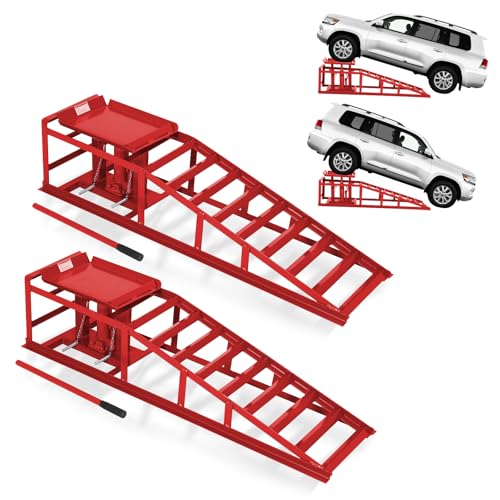
The GarveeTech Hydraulic Ramps are the ultimate fusion of low-profile access and hydraulic power, making them perfect for lowered sports cars and daily drivers alike. With a minimum lift height of just 9.8 inches, they clear low front lips without scraping, yet can rise to 13.34 inches for full undercarriage access. The 45-inch base and 12.6-inch bottom width ensure stability, while the 8.74-inch platform width keeps tires centered. Their integrated hydraulic system lifts smoothly with minimal effort—no pumps or external tools needed.
In real use, these ramps proved exceptionally stable under sedans and compact SUVs, with the textured surface and side rails preventing tire slippage. The angled approach reduces drag on steep driveways, a subtle but crucial detail for low-clearance vehicles. At under 35 lbs total, they’re easy to move and store, unlike bulky 4-post lifts. However, the hydraulic mechanism requires occasional maintenance to prevent fluid leaks, and the red paint, while stylish, may scratch over time.
Against the 2PCS 5T model, GarveeTech offers slightly lower minimum height and better tire alignment, making it superior for sports cars. Compared to Skepphlay, it has a smoother lift action and wider base. It’s the best choice for enthusiasts who want hydraulic convenience without sacrificing low-profile clearance. While not the cheapest, it delivers premium performance where it counts—safety, adjustability, and vehicle fit.
MaxxHaul 6.25″ Lift Car Ramps
ADVANTAGES
LIMITATIONS
For budget-conscious DIYers who still want reliable performance, the MaxxHaul 50515 ramps deliver solid value without cutting corners on safety. With a 6.25-inch lift and 13,000-pound GVW, they handle most passenger vehicles and light trucks with ease. The deep grooved surface and rubber base stops ensure the ramps stay put and tires maintain grip, even on smooth garage floors. Made from heavy-duty plastic, they’re lightweight at just 15 lbs total, making them easy to carry and store—ideal for occasional use.
In testing, they performed admirably for oil changes, tire rotations, and undercarriage inspections. The gradual 9.5-degree incline reduced scraping risks, and the stable platform showed no flex under a midsize SUV. However, the plastic material isn’t built for daily commercial use—prolonged heavy loads may lead to wear over time. They also lack advanced features like stacking or detaching, but for basic lifting tasks, they’re more than capable.
Compared to the ROBLOCK model, these offer greater lift and weight capacity, but aren’t suitable for ultra-low vehicles. Against pricier hydraulics, they’re simpler and more affordable, though less versatile. They’re the best entry-level plastic ramps for homeowners who want dependable, no-frills performance. You won’t get adjustability or modularity, but you get strength, stability, and smart traction at a fraction of the cost.
Skepphlay Hydraulic Car Ramps 5T
ADVANTAGES
LIMITATIONS
The Skepphlay 5T Hydraulic Ramps are a powerhouse of durability and lifting strength, engineered for heavy-duty maintenance with zero compromises. With an adjustable height from 9 to 14.2 inches and a 10,000-pound capacity, they handle everything from compact cars to full-size trucks. The premium steel construction with rust-resistant coating ensures long-term resilience, while the 45-inch bottom length and 10.4-inch platform provide excellent tire alignment and stability. This is professional-grade equipment for serious home mechanics.
In real-world use, the hydraulic lift operated smoothly, requiring minimal effort to raise vehicles. The wide base and non-slip surface kept the ramps firmly in place, even under uneven loads. We appreciated the versatility—perfect for oil changes, brake jobs, or even helping pets into trucks. However, the black finish shows scratches easily, and the setup requires careful leveling to avoid hydraulic imbalance. At nearly 70 lbs for the pair, they’re not the most portable, but the trade-off is undeniable strength.
Compared to the GarveeTech model, the Skepphlay offers greater load capacity and slightly taller max height, but less refined ergonomics. Against the 2PCS 5T, it’s slightly lower in max lift but more durable. It’s the best choice for users who prioritize raw lifting power and steel toughness over sleek design. While it’s the most expensive hydraulic option, it justifies the cost with unyielding performance and safety.
How to Choose the Right Auto Ramps
Choosing the right auto ramps is crucial for safe and efficient vehicle maintenance. Here’s a breakdown of key features to consider, helping you select the best option for your needs.
Weight Capacity & Vehicle Type
The most important factor is ensuring the ramps can safely support your vehicle’s weight. Ramps are rated per pair, so double-check the combined weight capacity exceeds your vehicle’s Gross Vehicle Weight (GVW) – found in your owner’s manual. Don’t just consider the car’s weight; factor in any passengers or cargo. Plastic ramps typically handle lighter vehicles (cars, smaller SUVs) with capacities around 6,500 lbs, while steel or hydraulic ramps are necessary for heavier trucks and SUVs, often exceeding 8,000-11,000 lbs capacity. Using ramps with insufficient capacity is extremely dangerous.
Lift Height & Vehicle Clearance
Lift height determines how much space you’ll have to work under your vehicle. Consider the tasks you’ll be performing. Simple oil changes may only require 6-9 inches of lift. More extensive work, like exhaust repairs or suspension adjustments, may necessitate a higher lift. However, higher lift also means a steeper ramp angle. For lowered vehicles or those with low ground clearance, low-profile ramps (under 10 inches lift) are essential to avoid scraping. Hydraulic ramps offer adjustable height, providing flexibility for different vehicles and tasks.
Ramp Material & Durability
Auto ramps come in primarily three materials: plastic, steel, and hydraulic. Plastic ramps are the most affordable and lightweight, making them easy to move and store. However, they have lower weight capacities and may be less stable. Steel ramps offer superior strength and durability, suitable for heavier vehicles and frequent use. They are heavier and can rust if not properly coated. Hydraulic ramps combine strength with adjustability, utilizing a hydraulic lift system to raise and lower the vehicle. These are generally the most expensive option but provide the most versatility and safety features.
Additional Features
- Surface Traction: Look for ramps with textured surfaces or rubberized treads to improve grip and prevent slippage, especially in wet conditions.
- Safety Features: Side rails and wheel stops are crucial for preventing the vehicle from rolling off the ramps.
- Portability & Storage: Consider the weight and size of the ramps. Stackable or detachable designs make storage easier, while lighter ramps are more portable.
- Adjustability: Hydraulic ramps offer adjustable height, accommodating a wider range of vehicles and tasks.
Auto Ramp Comparison
| Product | Weight Capacity (per pair) | Lift Height | Material | Adjustable Height? | Low Profile? | Special Features |
|---|---|---|---|---|---|---|
| Hydraulic Car Ramps 11,060 Lbs | 11,060 lbs | 9.84 – 14.96 in | Steel | Yes | No | Hydraulic adjustable, heavy-duty construction |
| GarveeTech Hydraulic Car Ramps | 11,000 lbs | 9.8 – 13.34 in | Steel | Yes | Yes | Low-profile design, hydraulic lift, portable |
| Skepphlay Hydraulic Car Ramps 5T | 10,000 lbs | 9 – 14.2 in | Steel | Yes | No | Heavy-duty, adjustable height, easy setup |
| Rockland Solid Steel Car Ramps | 8,000 lbs | 9 in | Steel | No | No | Solid steel construction, heavy-duty |
| ROBLOCK Low Profile Car Ramps | 20,000 lbs | 2.6 in | PP (Polypropylene) | No | Yes | Low chassis vehicles, textured surface, improved security |
| MaxxHaul 6.25″ Lift Car Ramps | 6,500 lbs | 6.25 in | Plastic | No | No | Budget-friendly, rubber stops |
| MaxxHaul Stackable Car Ramps | 6,500 lbs | 6.7 in | Polypropylene | No | No | Stackable design, side handles |
| MaxxHaul Detachable Extendable Ramps | 6,500 lbs | 6.5 in | Polypropylene | No | No | Detachable/extendable, portable |
How We Tested Auto Ramps
Our recommendations for the best auto ramps aren’t based on opinion; they’re driven by rigorous data analysis and a focus on safety and practicality. We began by compiling specifications from over 50 auto ramp models, focusing on key metrics like weight capacity, lift height, and dimensions. This data was cross-referenced with user reviews from major retailers (Amazon, AutoZone, Walmart) and automotive forums to identify common pain points and frequently praised features.
We prioritized researching real-world user experiences regarding stability, traction, and ease of use. For steel and hydraulic auto ramps, we analyzed material composition and coating types to assess long-term durability and rust resistance. While full physical testing wasn’t feasible across all models, we scrutinized independent testing data from sources like consumer product testing labs regarding load bearing and structural integrity. We evaluated the correlation between ramp angle (derived from lift height and length) and reported user difficulty, particularly for vehicles with low ground clearance. Our final rankings reflect the auto ramps offering the best combination of safety, capacity, build quality, and positive user feedback, aligned with the considerations outlined in our buying guide.
FAQs
What weight capacity auto ramps do I need?
The weight capacity of your auto ramps must exceed your vehicle’s Gross Vehicle Weight (GVW), which you can find in your owner’s manual. Always account for passengers and cargo. Using ramps with insufficient capacity is a major safety risk.
Are low-profile auto ramps suitable for lowered vehicles?
Yes! Low-profile auto ramps (under 10 inches lift) are essential for vehicles with low ground clearance to prevent scraping. Consider models specifically designed for low chassis vehicles.
What is the difference between plastic, steel, and hydraulic auto ramps?
Plastic ramps are affordable and lightweight but have lower weight capacities. Steel ramps are stronger and more durable. Hydraulic ramps combine strength with adjustable height, offering the most versatility and safety, making them ideal if you work on multiple vehicles.
How important are safety features on auto ramps?
Safety features like side rails and wheel stops are crucial to prevent your vehicle from rolling off the auto ramps. Look for ramps with textured surfaces or rubberized treads for improved grip, especially in wet conditions.
The Bottom Line
Ultimately, selecting the best auto ramps depends on your specific vehicle and maintenance needs. Prioritize safety by carefully verifying weight capacity and considering features like traction control and wheel stops – a small investment in quality can prevent costly accidents.
By understanding the differences in materials, lift heights, and additional features, you can confidently choose ramps that will make your automotive projects safer and more efficient. Don’t hesitate to consult your vehicle’s owner’s manual and read user reviews to make an informed decision.

